
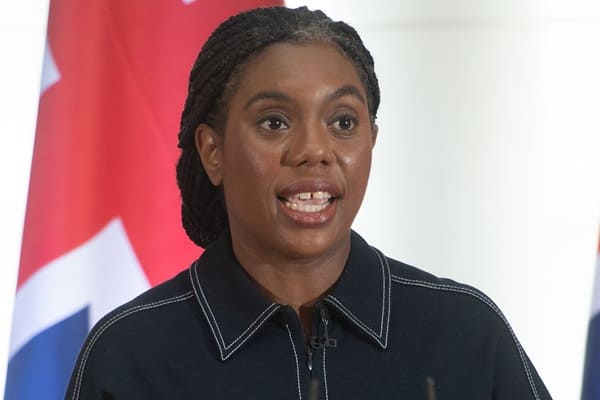
Kemi Badenoch has accused Labour of leaving taxpayers facing an additional £1,700 a year per household to plug a projected £49bn hole in the public finances, escalating the political battle over the cost of the government’s spending commitments.
The Conservative leader warned that the financial consequences of Labour’s first Budget would intensify over the coming years, arguing that expensive promises on social care, council housing and welfare had left ministers with difficult choices between raising taxes, cutting other spending or borrowing more.
“The worst is yet to come,” Badenoch wrote in The Telegraph, warning that proposals for a National Care Service and additional council housing would create a “£49billion black hole” by 2030-31.
“Who’s going to pay for it?” she asked, accusing Prime Minister Andy Burnham of signalling that he wanted greater freedom to raise taxes when he said he would have written Labour’s 2024 election manifesto differently.
“Let me translate that. He wishes he had more room to raise taxes even further,” Badenoch said. “To fund their promises and appease their MPs, Labour are going to have to raise taxes by £1,700 for every household.”
The figures represent the Conservatives’ assessment of Labour’s future spending commitments, rather than an independently established tax increase announced by the government. The Treasury rejected the opposition’s claims, describing them as “fiction”.
The dispute has intensified after Chancellor John Healey declined to set out a detailed timetable for increasing defence expenditure, promising instead to outline the path at the next spending review.
Badenoch estimates that the government faces an £11bn shortfall in defence funding by 2030-31. She has also put the potential cost of Burnham’s proposed National Care Service at £17bn, while estimating that the council house programme would require another £4bn.
The prime minister has said the care service would be financed through changes to the state pension from April 2030, although the precise implications for public spending and households remain central to the political argument.
The confrontation comes as Britain’s welfare bill is projected to reach £431.3bn by 2031-32. Burnham has repeatedly rejected what he calls “crude cuts” to benefits, while the government has delayed its promised welfare overhaul until next year.
For the Conservatives, the combination of rising welfare expenditure and unfunded policy commitments provides an opportunity to challenge Labour’s claim to be managing the public finances responsibly. Badenoch argued that ministers were prioritising benefits while allowing the tax burden to climb.
“Next year, under Labour, the tax burden will be the highest in our country’s history, and our benefits bill is going up by tens of billions of pounds because this Government has put welfare first,” she told the Commons.
She added: “We are overspent, over-borrowed, overtaxed and drowning in an out-of-control welfare system.”
Healey’s Budget sought to provide cost-of-living support while maintaining Labour’s manifesto pledge not to increase the headline rates of income tax, national insurance or VAT. Instead, frozen income tax thresholds will gradually pull more workers into higher tax bands, increasing receipts without an immediate rise in headline rates.
The Treasury defended the package, insisting that it complied with the government’s fiscal rules, fully funded its defence investment plan and placed borrowing on a clear downward path.
“This Government has a consistent track record of meeting these targets,” a spokesman said, arguing that careful management of the public finances had created room to support households and businesses.
The underlying question is whether Labour’s spending ambitions can be reconciled with its fiscal commitments without further tax increases. Badenoch has framed the projected £49bn gap as evidence that the government’s promises do not add up. Ministers insist their plans are funded.
With welfare spending rising and defence commitments still awaiting a detailed funding timetable, the political argument is likely to centre on who ultimately bears the cost: taxpayers, public services or future borrowing.


Leave a Comment