
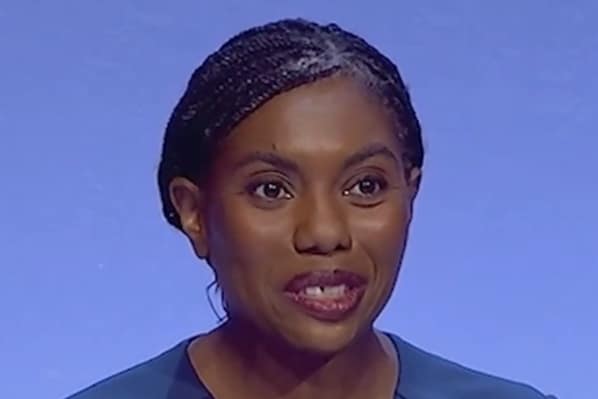
Kemi Badenoch has promised sweeping cuts to inheritance tax, a £10bn national air defence system and a sharp reduction in employment taxes for younger workers as she seeks to reposition the Conservatives around wealth, growth and national security.
Addressing the Conservative Party conference in Birmingham, the Conservative leader said a future Tory government would legislate to ensure that family homes passed to children or grandchildren would no longer face inheritance tax.
She also pledged to raise the inheritance tax threshold by £1mn for couples, a measure she said would more than halve the number of families paying the tax.
The proposals were met with strong applause from activists, as Badenoch sought to draw a political dividing line over the taxation of wealth accumulated by households and passed between generations.
“The Labour Party think it is selfish to pass on what you have earned to your children. We don’t,” she said.
Badenoch argued that inheritance tax had originally been intended to target the wealthiest households but had increasingly affected middle-class families as property values rose.
“Inheritance tax was supposed to be a tax on the super wealthy … it is not a tax on ordinary middle-class families in every part of the country,” she said.
The Conservative leader said her party remained committed to home ownership and that a future government would “legislate so nobody will ever pay inheritance tax on their family home”.
She added that “every inheritance tax bill will be cut and the number of families paying inheritance tax will fall by more than half”, while setting out a longer-term ambition “to abolish inheritance tax altogether as soon as we can afford it”.
The pledge forms part of a broader attempt by Badenoch to make economic growth the central mission of a future Conservative government. She also promised to “scrap every job-killing measure in Labour’s Employment Rights Act”, arguing that the burden placed on employers was restricting hiring and investment.
The party separately pledged to halve employer National Insurance contributions for workers aged 21 to 24, cutting the rate from 15 per cent to 7.5 per cent at an estimated cost of £2.3bn.
The Conservatives said the policy could help tens of thousands of young people into work, increasing the number of workers paying taxes rather than relying on out-of-work benefits.
The proposals form part of a wider “tough love” approach towards unemployment among younger people. Under plans announced by the party, people aged 16 to 24 who have not worked continuously for six months would be prevented from moving directly from school into Universal Credit.
Badenoch also used her conference speech to sharpen her attack on Prime Minister Andy Burnham, accusing him of seeking to reopen the Brexit debate.
“Can you imagine going through all that again?” she said.
She added: “He’s not going to be Prime Minister after the next election. Not if I have anything to do with it.”
The speech framed the next general election as a broader ideological contest.
“There is a fight coming in British politics. A fight that we have not seen in this country for more than half a century. It will be a battle for the soul of this nation,” Badenoch said.
She argued that a “renewed Conservative Party” could provide the principal alternative to a leftwing Labour government and prevent Reform from becoming the dominant force on the right.
“We are the only party with the team and the plan to get Britain working again,” she said.
National security was another central element of the conference pitch. Badenoch pledged to create a £10bn British “Iron Dome” air defence system, branded the “Britannia Shield”, designed to protect the UK from missile and drone attacks.
The proposed system, modelled on Israel’s layered air defence architecture, would represent one of Britain’s most significant military programmes in decades if implemented.
Taken together, the conference announcements point towards a Conservative offer built around lower taxation on family wealth, reduced employment costs, tighter welfare conditions and increased defence spending.
The political challenge will be reconciling those ambitions with the fiscal constraints involved in delivering them.
Badenoch’s inheritance tax proposal, in particular, would reduce receipts from a tax that has become increasingly significant to the Treasury as property and asset values have risen.
Her broader argument is that the tax burden should be reduced where it discourages work, investment or the transfer of family wealth, while economic growth provides the fiscal space for further cuts.
The conference speech therefore sought to turn the Conservatives’ pitch away from simply opposing Labour and towards a longer-term argument over the role of the state, taxation, work and national security.
Badenoch’s message was explicit: a future Conservative government would seek to make it easier for families to retain and transfer wealth, cheaper for businesses to employ young people and more expensive for the state to leave Britain exposed to emerging security threats.


Leave a Comment