
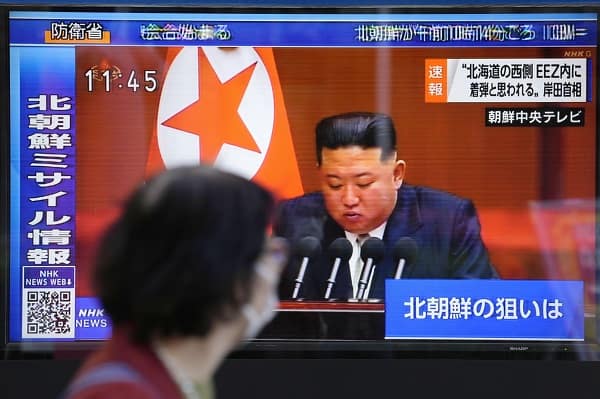
South Korea has put North Korea’s nuclear arsenal at as many as 120 warheads, highlighting the widening uncertainty over the scale of
Pyongyang’s weapons programme as Donald Trump prepares to revive his personal diplomacy with Kim Jong Un.
South Korean Defence Minister Ahn Gyu-back said on Thursday that Seoul estimated the North possessed between 80 and 120 nuclear warheads.
The assessment is substantially above the figure cited by Trump a day earlier, when the US president said Kim’s regime had 57 “very powerful” nuclear weapons.
The conflicting estimates underline a central problem confronting any renewed US-North Korean negotiations: Washington and Seoul do not have a settled public assessment of the size of the arsenal they would ultimately seek to dismantle.
The Stockholm International Peace Research Institute estimated in June that North Korea had potentially assembled about 60 warheads and possessed enough fissile material to produce at least another 30. South Korea’s latest estimate suggests the stockpile could be considerably larger.
For Trump, the numbers add weight to a diplomatic challenge he has previously approached through personal chemistry with Kim rather than conventional arms-control negotiations.
Speaking at the White House on Wednesday, Trump said he expected to meet Kim later this year and argued that his relationship with the North Korean leader remained an important strategic asset.
He also said Kim had inherited an arsenal that should never have been allowed to develop, while describing the weapons as a fact of the current security environment.
The comments came as Trump ordered the Pentagon to reduce the scale of US military exercises with South Korea, arguing that the drills sent an unnecessarily hostile signal to Pyongyang.
Trump described North Korea as “unthreatening and respectful” and said he had instructed Defence Secretary Pete Hegseth to substantially reduce the exercises, although the drills were too advanced to cancel outright.
The move has potentially significant implications for Seoul, where officials have sought to balance support for renewed dialogue with concerns over the credibility of the US security commitment.
South Korea said it remained hopeful of meaningful dialogue with Washington after Trump’s announcement.
The history of Trump’s relationship with Kim offers both a precedent and a warning.
The two leaders moved rapidly from threats of nuclear war during Trump’s first term to a landmark summit in Singapore in 2018, where they issued a joint statement committing to work towards denuclearisation.
The diplomatic momentum subsequently stalled. Their second summit, in Hanoi in 2019, collapsed over disagreements about sanctions relief and the scope of North Korea’s nuclear concessions.
Trump later met Kim at the Demilitarised Zone, becoming the first sitting US president to enter North Korean territory.
Since then, Pyongyang’s nuclear and missile capabilities have continued to dominate the regional security calculation.
A larger-than-expected arsenal would make any future agreement more difficult, while simultaneously increasing the value of direct diplomacy.
For Trump, the calculation is straightforward but dangerous: if his relationship with Kim can reopen negotiations, he may have an opportunity to constrain an arsenal that has grown beyond previous expectations.
But the higher the starting number, the harder the bargain.
A meeting between Trump and Kim may therefore be easier to arrange than the nuclear deal that Washington ultimately wants.


Leave a Comment