
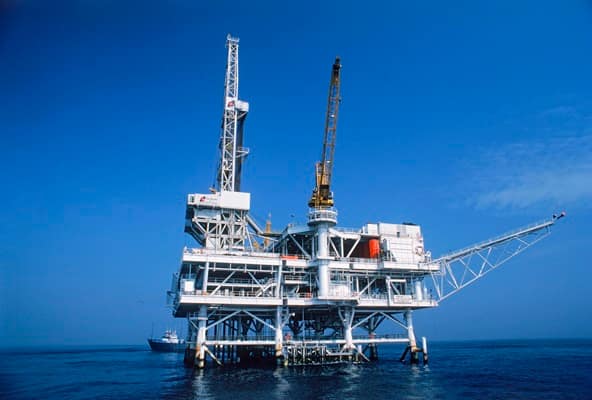
One of Britain’s biggest oil and gas producers is pulling out of the North Sea, warning that high taxes and an uncertain investment climate have made the basin a low-return destination for capital in a fresh blow to the UK’s energy ambitions.
EnQuest, which has operated in the North Sea since 2010, has agreed to sell its UK offshore assets to NEO NEXT+ for up to £730mn, as it shifts its strategic focus towards South East Asia, where it sees stronger growth prospects and more attractive investment opportunities.
The departure is the latest sign of mounting pressure on Britain’s ageing offshore industry. BP put its North Sea assets up for sale in the summer after six decades of production, while other companies have sold holdings, merged operations or scaled back investment.
Industry leaders said EnQuest’s decision should serve as a warning to ministers that the UK’s tax and regulatory framework is driving capital, jobs and expertise towards competing energy markets.
“The UK’s punitive tax regime is driving investment, jobs and economic opportunity out of the North Sea and into other parts of the world,” said Russell Borthwick, chief executive of Aberdeen & Grampian Chamber of Commerce.
“This is exactly what we have warned would happen all along.”
EnQuest said its decision followed an increasingly uneven balance of opportunities between Britain and South East Asia, where it has been building a portfolio of potential investments. The company described the North Sea as a “high-tax, low-return basin” and said it intended to recycle capital into a region it considers structurally short of energy and capable of delivering stronger long-term growth.
The company’s departure highlights the dilemma facing the UK government as it attempts to reconcile its energy transition with the economic importance of domestic oil and gas production. Ministers have banned new exploration licences, while the Energy Profits Levy (EPL), introduced as a windfall tax, is scheduled to remain in place until 2030.
North Sea producers face a headline tax rate of 78 per cent on profits. Industry representatives have repeatedly warned that the levy, alongside uncertainty over future licensing and investment rules, risks making new projects commercially unviable.
EnQuest’s own accounts illustrate the pressure. Its UK operations recorded a £1.5mn post-tax loss in the year to December 2025, including a £94mn accounting charge reflecting the future tax impact of the windfall levy remaining in place until 2030.
The company said the changing investment environment had informed its decision to reshape its portfolio and concentrate on Asia.
“In recent years, in response to an uncertain investment environment within the UK, EnQuest has established a growing opportunity set in South East Asia, where the group sees greater potential to deploy capital, build scale and deliver sustainable long-term growth,” it said.
The sale will release capital from its British operations and, according to EnQuest, leave the remaining business with a materially lower cost base and a stronger balance sheet.
Chief executive Amjad Bseisu said the company was seeking to maximise the value of its UK business after years of investment and operational performance in the North Sea.
“From our genesis as a UK North Sea oil and gas specialist, and following many years of investment and top-quartile operational delivery in the UK North Sea, we are executing on our strategy to maximise value from our UK business at an attractive valuation,” he said.
Bseisu added that Asia offered “compelling opportunities” and that the transaction would strengthen the group’s financial position. EnQuest produced the equivalent of 31,000 barrels of oil a day last year. Staff supporting its UK operations will transfer to NEO NEXT+ under the deal.
The announcement prompted renewed criticism from the Conservatives, who accused Labour of undermining the domestic industry during a period of heightened concern about energy security.
Andrew Bowie, the shadow energy secretary, said the sale was evidence that government policy was putting a “closed for business” sign over the North Sea.
“In the midst of an energy crisis, this Labour government are choosing to ban licences and maintain an extended and increased windfall tax,” he said.
Bowie called for the abolition of the levy and an end to the ban on new licences, arguing that Britain was surrendering jobs, tax revenues and control over its energy supply.
Borthwick said ministers had been repeatedly warned that investors would redirect spending unless the operating environment improved. He argued that retaining the EPL until 2030 risked accelerating the decline of the offshore sector, with further departures likely unless the government acted.
He called for an early end to the levy and a permanent, predictable replacement tax regime from April 2027.
“The Prime Minister has spoken about taking a pragmatic approach to the North Sea. Now is the time to turn those words into action,” he said.
The government defended its approach, insisting that the basin remained a vital national asset and that oil and gas would continue to play an important role in the UK energy system for decades.
A spokesman said ministers were providing the sector with long-term certainty through plans to replace the EPL when it ends by 2030, or earlier if its price floor is triggered.
The government also said the transition to clean power was intended to protect jobs and tackle the climate crisis.
But EnQuest’s exit sharpens the question of whether Britain can sustain a competitive offshore industry while tightening the terms on which companies can explore and produce. The sale does not mean North Sea production will stop immediately, NEO NEXT+ will take over the assets and their workforce.
It does, however, mark the withdrawal of another established producer and the transfer of its investment priorities away from Britain. For an industry that has powered the UK economy for generations, the growing challenge is no longer simply how much oil and gas remains beneath the seabed, but whether companies believe it is worth investing to extract it.


Leave a Comment