
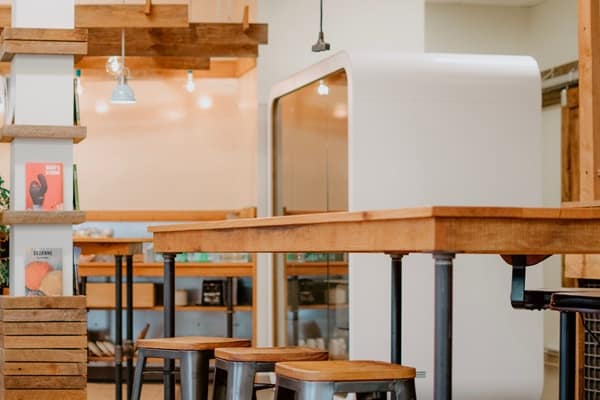
American companies spent years knocking down office walls to boost collaboration, but open layouts ended up creating a different problem: constant noise, zero privacy, and endless distractions. When employees have to fight through background chatter just to host a video call or focus on detailed tasks, work stalls out quickly.
An office pod gives you a practical way to fix your layout without calling in a construction crew. These freestanding, soundproof rooms sit right on your main office floor, giving team members immediate access to quiet space for calls, 1-on-1s, and deep focus work.
In this guide, we will walk through how privacy pods fit into modern American offices, what specs you need to check before buying, and how much they cost.
Why office pods are growing across American workplaces
Commercial real estate trends in major US metropolitan markets have shifted heavily toward flexibility. With commercial leases carrying high square-footage costs in cities like New York, Chicago, and San Francisco, facilities managers must maximize every foot of available space. At the same time, the widespread adoption of hybrid work models means team members spend much of their day on virtual video calls, turning open office floors into noisy environments where finding quiet space is a constant struggle.
Building permanent meeting rooms to solve this noise problem creates significant issues for tenant companies. Commercial build-outs require structural permits, landlord sign-offs, specialized contractors, and weeks of messy construction that disrupt daily business operations. Furthermore, when a lease ends, those invested capital improvements remain behind with the building owner.
Deploying an office privacy pod eliminates these hurdles. Because regulatory frameworks classify modular pods as commercial office furniture, US businesses bypass local building permits and landlord restrictions entirely. Employers can set up soundproof spaces in a single afternoon, easily reposition them as layout needs change, and take them along when scaling into a new office location.
What is an office pod?
An office pod is a freestanding, self-contained room engineered to deliver acoustic isolation within open commercial floor plans. Built using structural aluminum or steel frames, heavy double-glazed acoustic glass, sound-absorbing fabric interiors, and active ventilation fans, these units keep interior conversations private while blocking out ambient office noise.
Unlike permanent drywall rooms, office pods feature pre-wired, plug-and-play electrical systems that run directly into standard 120V wall outlets. They range from compact single-person phone booths designed for solo video calls to full-sized conference pods accommodating six to eight people.
By providing a fully furnished, move-in-ready focus environment on a small footprint, pods give workplace managers a fast, scalable way to manage noise without altering building infrastructure.
Office pod types and their best uses
Choosing the right office pod depends on matching capacity, interior features, and spatial footprint to your team’s daily workflows. Placing small single-user booths near busy desk rows solves phone noise, while larger meeting units replace the need for permanent conference rooms.
Phone booths and one-person focus pods
Single-person phone booths take up a small footprint, typically around four by four feet, making them easy to fit alongside workstation clusters or along perimeter walls. These individual focus booths come equipped with built-in work desks, ergonomic seating or standing-height ledges, and integrated power modules with USB ports.
They give employees a private, soundproof spot to take client calls, host video meetings, or tackle complex tasks without background noise interference.
Meeting pods and team rooms
Multi-person meeting pods accommodate two to eight people, offering a modular alternative to traditional drywall conference rooms. Small two-person booths work exceptionally well for 1-on-1 performance reviews and private manager check-ins, while four- to eight-person team pods serve as dedicated spaces for collaborative brainstorming and client presentations.
These larger units feature integrated conference tables, built-in acoustic sofa seating, and wall mounts for video presentation screens.
ADA-compliant office pods
ADA-compliant office pods ensure full accessibility for wheelchair users and individuals with mobility aids, meeting standards outlined by the Americans with Disabilities Act. These specialized booths feature flush, zero-threshold floor entries, wide clear-opening doors (at least 32 inches), and a 60-inch interior turning radius.
ADA pods allow commercial facilities teams to provide inclusive acoustic privacy across the workplace without undertaking expensive structural renovations.
What to compare before buying?
Purchasing an office privacy pod requires assessing core performance specs alongside build quality and vendor reliability.
Acoustics, ventilation, and comfort
Acoustic performance is the most critical metric when comparing pods. Avoid reliance on unverified marketing terms or standard STC ratings meant for fixed drywall construction. Instead, review test reports using the ISO 23351-1 standard (D_{S,A}), which specifically measures speech reduction for acoustic furniture.
High-performance pods achieve a 30 dB or higher speech level reduction (Class A certification), rendering interior voices completely unintelligible to people nearby.
In addition to sound containment, prioritize airflow and thermal comfort. Choose models featuring continuous, motion-activated ventilation fans that refresh the interior air volume every 60 to 120 seconds.
Ensure fan systems run at low operational volumes, below 35 dB, so background airflow doesn’t interfere with microphone audio during calls.
Dimensions, technology, and customisation
Always measure your intended placement area and ceiling clearance before choosing a pod. Most units stand between 82 and 90 inches tall and need at least 4 to 6 inches of overhead space for exhaust fans to vent air properly. Verify that your floor plan preserves wide walkways to satisfy local building accessibility and emergency egress guidelines.
For technology integration, check that built-in power hubs include standard AC outlets, dual USB-A and USB-C ports, and Ethernet pass-through channels for reliable internet connectivity. Look for dimmable LED lighting set around a neutral 4000K daylight spectrum to keep eyes comfortable during long work sessions.
Customization options like exterior frame colors, interior acoustic fabric finishes, and interchangeable furniture allow you to match the pod to your existing office design.
Warranty, lead time, and customer support
Lead times vary significantly across manufacturers. In-stock, standardized models typically ship within 1 to 2 weeks, whereas customized or imported units require 6 to 8 weeks. Confirm whether the supplier provides white-glove installation services or flat-packed freight delivery that your internal facilities team can assemble in a few hours.
Finally, review the seller’s warranty coverage and post-purchase support options. A comprehensive warranty should cover structural frame components, acoustic glass, ventilation fans, power systems, and motion sensors for 3 to 5 years.
Selecting established vendors with local US customer support ensures quick access to replacement parts and technical help whenever needed.
How much do office pods cost in the USA?
Office pod pricing depends primarily on capacity, acoustic engineering quality, and integrated technology. Understanding entry-level versus enterprise price points helps facilities managers create realistic procurement budgets.
Single-Person Phone Booths ($4,500 – $10,000): Built for solo video calls and private phone conversations. Entry-level options cover basic airflow and electrical power, while certified Class A models feature motion-sensor ventilation, dimmable task lighting, and integrated desks.
Two- to Four-Person Meeting Pods ($9,000 – $18,000): Ideal for 1-on-1 performance reviews, collaborative sessions, and small video meetings. These units include acoustic sofa seating, built-in tables, and expanded power modules.
Large Conference & ADA Pods ($15,000 – $30,000+): Function as full-scale, freestanding meeting rooms or wheel-chair accessible units. They offer high-capacity airflow systems, TV screen mounts, and zero-threshold roll-in access.
Beyond the base unit price, factor in freight delivery, white-glove assembly services ($1,000 – $2,000 depending on pod scale), and local sales tax.
How to choose the right pod for your workplace?
Selecting the best office pod requires matching your team’s specific daily workflows to the physical layout of your office floor.
First, evaluate your noise profile and speech density. If open-floor employees constantly struggle to find private space for brief video calls, deploying two or three individual phone booths alongside workstation rows solves the bottleneck immediately.
Conversely, if your managers frequently occupy four-person conference rooms for private 1-on-1 check-ins, a two-person meeting pod frees up large collaborative space for group work.
Second, consider your long-term real estate strategy. If you operate on a short-term commercial lease, prioritize pods featuring integrated caster wheels or modular panel designs that two facilities workers can disassemble and move without specialized tools.
Are office pods worth the investment?
An office privacy pod delivers clear, quantifiable financial returns by protecting employee focus and bypassing expensive real estate build-outs. Constructing traditional drywall conference rooms in commercial US buildings requires architectural design fees, municipal permits, landlord reviews, and thousands of dollars in contractor labor that disappears when your lease ends.
Because regulatory standards classify modular pods as office furniture, you can depreciate them faster as capital equipment assets while taking them along when relocating. By eliminating noise distractions, preserving acoustic privacy, and offering complete layout flexibility, privacy pods provide a future-proof workplace solution that pays for itself over time.


Leave a Comment