
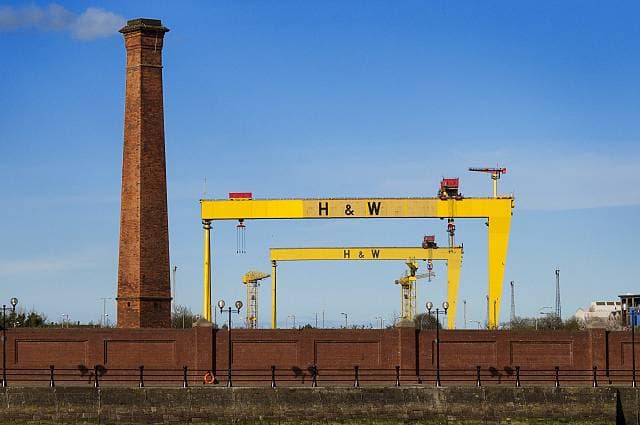
Harland & Wolff’s Belfast shipyard is in a competitive position to secure future Ministry of Defence contracts worth billions of pounds, the government has said, as its new owner invests heavily in upgrading the historic facility.
Lord Coaker, Minister of State at the Ministry of Defence, said the yard’s work on the Royal Navy’s Fleet Solid Support programme, combined with around £90m of infrastructure investment by Navantia UK, had strengthened its prospects in future competitions.
His comments, in a parliamentary answer to DUP peer Lord Browne of Belmont, offer a significant endorsement of the Belfast yard’s potential role in the UK’s future naval construction plans.
Coaker pointed to several major programmes outlined in the Strategic Defence Review and Defence Investment Plan, including the UK-Netherlands Amphibious Transport Ships programme and the Dreadnought-class submarine floating dock scheme, known as Programme EUSTON.
The latter was recently announced as a UK-only competition. Other planned projects supporting the development of the Royal Navy’s Hybrid Navy could also provide opportunities for the shipyard.
The comments come after Navantia UK acquired Harland & Wolff’s shipyards following the company’s collapse into administration, bringing the Belfast facility under the ownership of the Spanish shipbuilding group.
Separately, Luke Pollard, Minister for Defence Readiness and Industry, said the government was seeking to expand Northern Ireland’s wider defence industry through a £50m Northern Ireland Defence Growth Deal.
Responding to DUP MP Jim Shannon, Pollard said the funding would help smaller companies expand their capabilities, win contracts and strengthen the resilience of Britain’s defence supply chain.
He said he had visited Belfast the previous week to see investment at Harland & Wolff, adding that previous visits had also highlighted progress at defence technology company Thales and smaller suppliers.
The government does not allocate defence spending on a regional basis, Pollard said, but maintained that its policies were having a positive and lasting impact.
For Belfast, the prospect of competing for major naval programmes offers a potential route to rebuilding the shipyard’s industrial standing and securing a longer-term role in Britain’s defence manufacturing base.


Leave a Comment