
Ukrainian president accuses Washington of putting lives at risk through pressure over energy attacks and restrictions on military support, deepening a transatlantic crisis as Russian missiles pound Ukrainian cities.
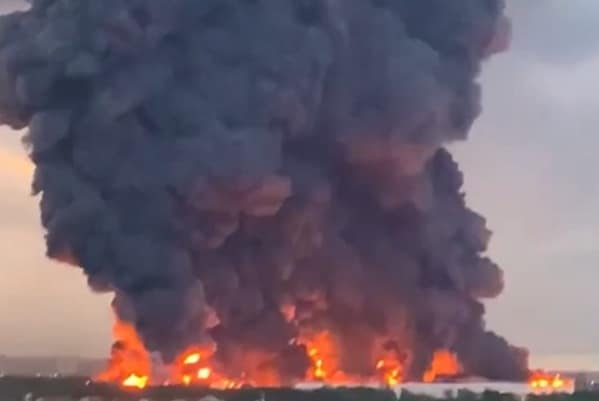
Volodymyr Zelensky has drawn a defiant line under Donald Trump’s efforts to curb Ukrainian attacks on Russian oil infrastructure, declaring Kyiv will resume refinery strikes as relations between the two presidents deteriorate towards a potentially dangerous rupture.
“The block is out. We’re done,” the Ukrainian president told the Financial Times in London, signalling that Washington’s pressure to restrain Ukraine’s campaign against Russia’s energy sector would no longer dictate Kyiv’s response.
The confrontation exposes a widening strategic divide between an American administration seeking to contain fuel prices and push towards a settlement, and a Ukrainian government that sees Russia’s energy revenues as a vital source of funding for its invasion.
Zelensky said Ukrainian military officials had been warned by their US counterparts that Washington could restrict intelligence sharing if Kyiv continued attacking Russian energy facilities. He has also accused the Trump administration of endangering Ukrainian lives through restrictions affecting military satellite communications.
Read more related news:
Putin flexes military muscle in Belarus on NATO’s doorstep ‘escalating’ tensions
Royal Navy chief delivers damning warning to Burnham over Britain’s defences
Former NATO commander asks ‘is the West asleep?’ as Russian shadow war is underway
Britain ‘wants an army, but won’t fight for it’: Poll exposes the political nightmare facing Labour
“It’s a pity that we are losing a strong partner,” Zelensky said.
The language marks a striking deterioration in relations with a president whose support has been central to Ukraine’s defence. Zelensky accused Trump of favouring Moscow rather than maintaining neutrality in a war in which Russia invaded its neighbour.
“This is our country, our body, our home, our children,” he said. “That’s why it’s painful when Trump chooses one side.”
He added: “If you’re in the middle, you have to stay in the middle. Not on the wrong side. This is not the right side of history.”
The immediate dispute centres on Ukraine’s long-range attacks against Russian refineries, which Kyiv regards as legitimate military pressure on the infrastructure that helps finance Moscow’s war. Trump has pushed Ukraine to halt such strikes as Washington pursues lower fuel prices and seeks to advance negotiations.
Last week, the US president announced an agreement involving Russian diesel supplies to US and global markets. Zelensky described the deal as a “simple victory” for the Kremlin, arguing that Moscow stood to benefit while Ukraine faced pressure to limit its ability to strike Russian energy targets.
The arrangement has sharpened questions about the consistency of American policy: Washington is seeking to restrain Ukraine’s attacks on Russian oil infrastructure while exploring energy transactions involving Russia itself.
But the dispute extends beyond oil to the intelligence and communications systems that underpin Ukraine’s ability to fight.
Ukrainian forces depend on satellite connectivity for battlefield communications and drone operations. Reports of restrictions affecting military Starlink services have prompted warnings from Zelensky that the consequences could be measured in lives lost.
“It’s a big mistake,” he said. “This decision will bring a lot of human losses… People will die.”
He urged Elon Musk, whose SpaceX operates Starlink, to restore the service, suggesting he hoped the disruption might be technical rather than deliberate.

Musk subsequently clarified that Starshield, the military-grade satellite system, is owned and controlled by the US government, which determines restrictions on its use. He distinguished it from commercial Starlink, which he said was intended for civilian and defensive purposes rather than offensive military operations.
The distinction leaves Washington facing uncomfortable questions about the extent to which decisions over military communications could affect Ukraine’s battlefield capabilities. The precise responsibility for the reported restrictions, and the operational consequences across Ukrainian units, remain matters requiring further clarification.
More troubling are reports that Ukraine went two consecutive nights without the usual advance Western intelligence warnings of incoming Russian ballistic missiles. Ukrainian officials said warnings for attacks on October 12 and 13 came only as missiles were approaching or striking Kyiv. A European official questioned Washington’s explanation that weather had caused gaps in the warning information.
The timing has fuelled concern that any reduction in intelligence cooperation could weaken Ukraine’s ability to anticipate Russian attacks and protect civilians. Washington’s responsibility for the reported gaps has not been conclusively established.
Meanwhile, Moscow has continued striking Ukraine’s energy infrastructure. Zelensky said Russian attacks had left more than 600,000 people without electricity, intensifying pressure on a country already struggling to protect its power network from repeated bombardment.
The escalation leaves Kyiv confronting two threats: Russian missiles and uncertainty over the reliability of its most powerful ally.
Zelensky has sought to strengthen European backing as doubts over Washington’s commitment grow. During his London visit, he met British Prime Minister Andy Burnham and King Charles III, underlining Ukraine’s effort to secure continued support beyond the United States.
The immediate question is whether the rupture can be contained before it damages Ukraine’s ability to defend itself. The larger question is whether Trump’s pursuit of a negotiated settlement is creating leverage over Moscow — or placing greater pressure on the country that was invaded.
Zelensky’s declaration that the restrictions on refinery attacks are over is more than a military statement. It is a warning that Kyiv will not indefinitely accept limits on its war effort while Russian attacks continue.
For Washington, the consequences could extend well beyond a bitter exchange between two presidents. If Ukraine’s trust in American intelligence, communications and strategic backing continues to erode, the damage could reach the foundations of the Western coalition supporting its defence.
And as Russian missiles continue to fall, the cost of that uncertainty is not merely diplomatic. It is potentially measured in the time civilians have to reach shelter, the ability of Ukrainian forces to intercept incoming attacks, and the resilience of a country still fighting for its survival.


Leave a Comment