
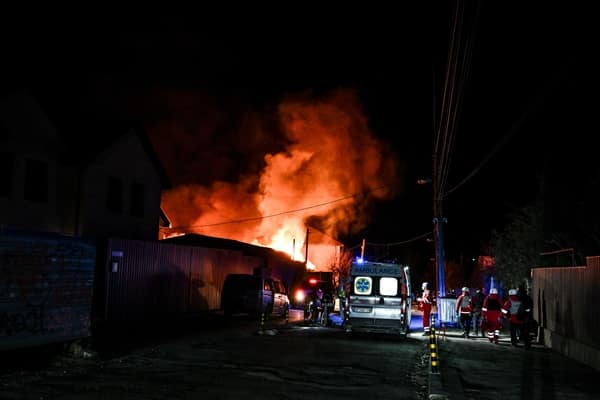
Donald Trump has accused Volodymyr Zelensky of driving up global energy prices after Ukraine resumed attacks on Russian refineries, exposing a widening rift between Washington and Kyiv over a ceasefire that Ukraine says Moscow has repeatedly violated.
Donald Trump has branded Ukraine’s renewed strikes on Russian oil refineries a “disgrace”, escalating his confrontation with Volodymyr Zelensky as a fragile energy ceasefire unravels and the politics of oil threaten to undermine Washington’s leverage over Vladimir Putin.
Speaking to Newsmax overnight, the US president criticised Kyiv’s retaliatory attacks, which followed Russian strikes on Ukrainian energy infrastructure. The intervention places the White House at odds with Ukraine’s argument that it cannot be expected to observe restrictions that Moscow has repeatedly breached.
“The block is out. We’re done,” Zelensky told the Financial Times, declaring an end to Kyiv’s restraint on attacks against energy targets after Russia continued its assaults.
The dispute centres on an arrangement announced by Trump on Sunday under which Russia and Ukraine would pause attacks on energy facilities in their respective countries. Kyiv initially observed the agreement, according to the account provided, but Russian missile strikes continued, leaving millions without electricity.
Read more related news:
Trump cosies to Putin and Zelensky goes for the jugular bombing Russia’s oil wealth
The West’s dangerous contradiction as Ukraine is urged to show restraint while Russia’s attacks continue
Is ‘Trump pulling the plug’ on Starlink to stop Ukraine’s attacks on Russia’s oil refineries?
‘Let Ukrainians do what they’re good at’ as Trump’s ex-envoy backs explosive deep strikes on Russia
For Ukraine, the ceasefire has increasingly looked less like a route to de-escalation than a constraint on its ability to retaliate. For Trump, however, the renewed attacks risk adding pressure to international energy markets already unsettled by the US war on Iran.
The clash exposes a central contradiction in Washington’s approach: an attempt to restrain attacks on energy infrastructure while simultaneously easing restrictions on Russian oil-related exports.
On Friday, Trump announced that Putin had permitted the release of 300,000 tonnes of diesel to the American and global markets, with a further 500,000 tonnes promised for November and another million thereafter. The US Treasury is also pausing certain sanctions on Russian diesel exports until April 7.
The administration has presented the move as a way to ease pressure on energy supplies and prices. Critics argue it risks weakening the economic pressure on Moscow that Washington has used as leverage since Russia’s full-scale invasion of Ukraine.
Zelensky said he felt “betrayed” by Trump, pointing to the easing of Russian oil sanctions and restrictions affecting Ukraine’s access to SpaceX’s Starlink satellite service. He described the diesel arrangement as an “investment in a war that must be ended”.
The backlash has reached Capitol Hill. A group of Republican and Democratic senators has urged Trump to reverse course, warning that the move could conflict with a 2022 law intended to support Ukraine’s defence against Russian forces.
Republican senator Jerry Moran argued that Washington should be tightening sanctions rather than allowing Russian diesel imports that could erode American leverage, damage relations with allies and embolden adversaries.
Trump dismissed criticism from members of his own party, saying they “can’t really be serious”. Restricting oil, he argued, would have severe consequences for the rest of the world.
That calculation places energy prices at the heart of a growing strategic dispute. Higher fuel costs threaten consumers and businesses, but easing restrictions on Russian exports risks delivering Moscow revenue and weakening the pressure intended to constrain its war effort.
For Kyiv, the immediate concern is that restraint is being demanded without reliable reciprocity. For Washington, the challenge is to contain energy-market disruption without undermining its credibility with allies.
Trump has shown little inclination to soften his criticism of Ukraine. He has gone so far as to suggest it is “time for Ukraine to get a new President”, deepening the political rupture with Zelensky.
The result is a ceasefire increasingly overshadowed by competing priorities: Ukraine’s need to retaliate, Russia’s continued attacks and Trump’s determination to manage energy prices.
The central question is no longer simply whether the energy truce can survive. It is whether Washington can persuade Kyiv to exercise restraint while convincing its allies that Moscow will face meaningful consequences for breaking the same rules.


Leave a Comment