
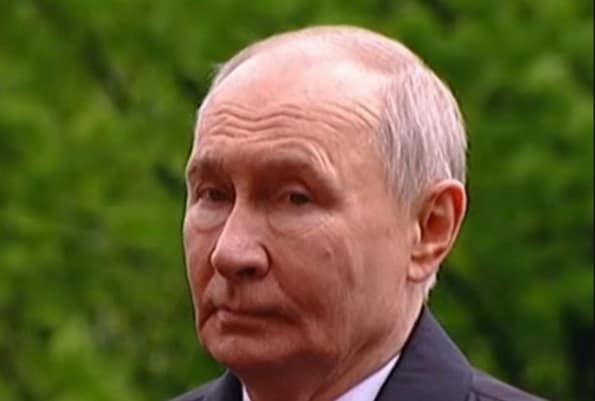
Vladimir Putin appears to have given his war machine roughly another year to deliver the victory it has failed to achieve on the battlefield — or risk being pushed towards negotiations.
According to The New York Times, the Kremlin chief expects Russia to secure full control of the Donbas by autumn 2027.
If his forces fail, Western officials and analysts believe the prospect of talks could become considerably more likely.
The deadline lays bare the extraordinary gap between Moscow’s maximalist ambitions and its battlefield performance.
After more than four years of war, hundreds of thousands of Russian casualties and repeated offensives, Putin is effectively betting that another year of grinding warfare can achieve what years of fighting have not.
Read more related news:
Moscow hit in a massive drone attack as Putin’s Amazon goes up in flames
Britain’s defence industry warned it cannot sustain a Russian war
Burnham warned UK lacks the warships to protect Britain from Putin
Kremlin threatens nuclear retaliation against Britain over Ukraine strikes
The Kremlin’s calculation appears to rest on a winter escalation. Western officials expect Russia to intensify attacks on Ukraine’s civilian infrastructure, seeking to exploit shortages of Ukrainian air-defence missiles and inflict further pressure on the country’s population and economy.
But Moscow may also have to replenish its increasingly expensive army. A new mobilisation is reportedly expected after Russia’s parliamentary elections in September, potentially providing the Kremlin with another pool of manpower for its campaign.
That prospect points to a familiar Russian strategy: when battlefield gains prove elusive, send more men and more weapons into the fight.
The danger is that the gamble could become even broader. Analysts cited by the newspaper fear that a Kremlin increasingly frustrated by its inability to force Kyiv into submission could seek to test NATO’s resolve beyond its existing campaign of hybrid attacks across Europe.
Yet Russia’s position is hardly unchallenged.
Ukrainian forces have intensified attacks against Russian military infrastructure and logistics deep behind the front lines, while July reportedly brought some of Moscow’s heaviest losses of the war. The Kremlin is therefore attempting to prosecute an increasingly expensive war while simultaneously persuading Russians that victory remains within reach.
That contradiction may explain the apparent importance attached to the 2027 deadline.
Putin cannot easily declare victory without controlling the territory he has repeatedly claimed Russia must possess. Nor can he readily abandon those demands without exposing the limits of the Kremlin’s military gamble.
Europe, meanwhile, is wary of allowing Washington and Moscow to determine the outcome over its head. European governments are relying on US pressure to bring Putin towards negotiations, while insisting that any settlement must involve Kyiv and its European allies.
For now, however, Moscow shows little appetite for compromise. Its demands continue to include major territorial concessions from Ukraine.
The Kremlin may call this strategy patience.
The numbers increasingly suggest something closer to a race against time.


Leave a Comment