
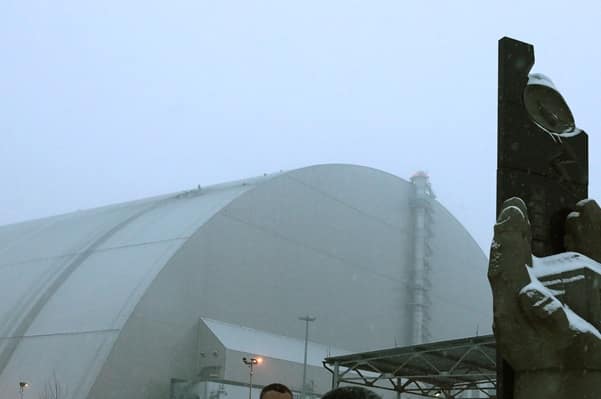
Russia has triggered fresh fears over nuclear safety after a drone strike damaged part of a major nuclear fuel storage facility within the Chornobyl Exclusion Zone.
The overnight attack, which Ukrainian officials said was carried out using a Shahed-type drone, struck the Centralized Spent Nuclear Fuel Storage Facility, a key piece of infrastructure designed to store radioactive waste from Ukraine’s nuclear power plants.
While radiation levels remained normal and no injuries were reported, the strike immediately raised alarm among nuclear experts and international observers given the site’s sensitive nature and its location within the world’s most infamous nuclear disaster zone.
President Volodymyr Zelensky condemned the attack as an act of recklessness, accusing Moscow of once again demonstrating disregard for nuclear safety.
As of now, there is no exceedance of radiation safety limits,” he said. But there is clearly an exceedance of even Russia’s already sky-high arrogance.
According to Ukraine’s state nuclear operator, Energoatom, the drone struck the facility shortly after 2am, partially destroying the container reception building. Fortunately, no spent nuclear fuel was being stored inside the damaged structure at the time.
A fire broke out across approximately 40 square metres before emergency crews extinguished the blaze.
The incident nevertheless marks another dangerous escalation in a war that has repeatedly brought military operations alarmingly close to nuclear infrastructure.
Since the full-scale invasion began, international agencies have repeatedly warned that attacks near nuclear facilities carry potentially catastrophic consequences, even when no direct release of radiation occurs.
The International Atomic Energy Agency confirmed it had been notified of the strike and said inspectors would visit the site to assess the damage.
“Attacks on nuclear sites are completely unacceptable,” the agency said.
The strike is likely to deepen concerns among Ukraine’s Western allies, many of whom have accused the Kremlin of treating nuclear risks with increasing recklessness throughout the conflict.
For Ukraine, the symbolism is particularly potent.
Nearly four decades after the Chornobyl disaster became synonymous with the dangers of nuclear catastrophe, the exclusion zone has once again become a battleground.
This time, however, the threat is not a reactor malfunction or engineering failure.
It is war.
While officials stressed there is no immediate radiological danger, the attack serves as a stark reminder that one of Europe’s most sensitive nuclear regions remains within range of Russian weapons.
And with drone attacks becoming increasingly frequent around energy infrastructure, fears are growing that it may only take one strike in the wrong place to trigger a far more serious crisis.


Leave a Comment