
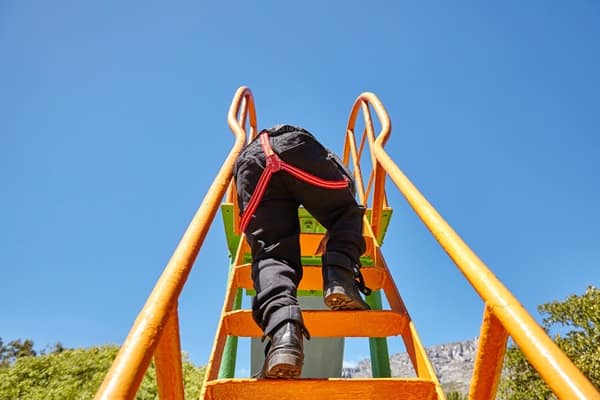
The great British playground has taken on a greyer hue in many of our memories.
Underfunding has led to many public playspaces being abandoned, which itself generates a cycle, while other projects are prioritised in the name of community provision.
But there are many real benefits to public playgrounds, and for those sitting on councils, parish committees, or owning a local business that counts children among its relevant visitors, the case for reinvestment may just be stronger than ever.
1. A documented decline
It’s tempting to see the perceived demise of the playground as a nostalgia trip. After all, many believe the simple reason they are less used is that outdoor play in general is decreasing thanks to children’s preferences for device-driven entertainment like social media and video gaming.
But the statistics suggest that a lack of investment and availability may similarly be a culprit. Park budgets are falling, and closed facilities are not seeing renovation or replacement, meaning that two million children under the age of nine are currently without a local playground within a ten minute walk of their home.
These bleak findings from the Raising the Nation play commission make it clear demand is going unfulfilled, leaving plenty of room for opportunity.
2. Educational benefits
Investing in outdoor spaces has benefits for communities and public spaces, but it is of particular value to schools and teachers.
A playground environment with a diverse range of equipment and activities is an opportunity for children to explore group play and develop their social skills. Playtime is also essential to the development of physical co-ordination and gross motor skills, as well as developing the imagination.
Meanwhile, a study by the Youth Sport Trust found that 71% of children and young people wanted the opportunity to be more active at school, and even more of them said they highly valued PE lessons as part of their education. A playground space can be part of playtime, but it can also contribute to structured lessons and activities centred around fitness and wellbeing.
It also helps bring classroom lessons to life – a maths lesson might involve measuring distances around the playground, while science lessons can explore plants, weather, and habitats. With a little creativity, the educational benefits of an outdoor space which fosters independent and group play as well as providing opportunities for structured teaching are varied and wide-reaching.
3. Inclusion at the heart of the landscape
With a greater understanding of the diverse needs of children in education, modern playgrounds are more inclusive than ever.
Accessible features such as sensory play tools which cater to children with special educational needs include textured panels, sound, and light features. Meanwhile, wheelchair-accessible routes mean every child can engage in play.
Creative Play is one of the leading designers of outdoor play spaces, with ready-made solutions as well as extensive experience in bespoke projects for schools, councils, and a range of other public and commercial spaces.
Investment in outdoor play spaces has the capacity to transform learning environments and communities to create lively and enriching experiences for the next generation.
Whether you’re building from scratch or renovating an existing set-up, the question is not simply what your space looks like, but what it can offer for the children who use it.




Leave a Comment