
It is easy to dismiss official statements from Moscow as routine propaganda, but they often reveal more than the Kremlin intends.
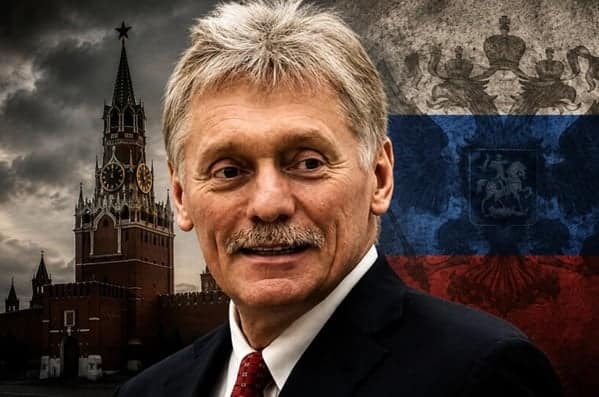
Following recent comments by Kremlin spokesman Dmitry Peskov insisting Russia’s economic difficulties are “not critical”, a familiar pattern has once again emerged.
Throughout the war, Moscow has repeatedly denied problems, reassured the public that everything remains under control, and only acknowledged difficulties once events made further denial impossible.
It is a political instinct rooted in the Soviet era.
The symbolism has become increasingly difficult to ignore. Foreign Minister Sergei Lavrov appeared at the controversial Alaska summit wearing a CCCP sweater, reinforcing the image of a leadership shaped by Soviet political culture. That same mindset continues to influence how the Kremlin manages information today.
Meanwhile, Ukraine’s campaign has moved far beyond the front line.
Rather than concentrating solely on trench warfare, Kyiv has steadily expanded its long-range strike capability, targeting oil refineries, fuel depots, logistics hubs, rail infrastructure and military-industrial facilities deep inside Russia. Overnight, industrial facilities in the Lipetsk region were reportedly struck, adding to a growing list of targets stretching from Crimea to Russia’s industrial heartland.
Two industrial facilities in Russia’s Lipetsk region were reportedly struck overnight, according to local authorities.
Regional Governor Igor Artamonov said the attacks caused fires at two industrial sites, though he did not identify the facilities. Residents reported explosions… pic.twitter.com/88TH2cIWMa
— Shaun Pinner (@ShaunPinnerUA) July 21, 2026
Peskov’s reassurances therefore deserve attention.
As the Kremlin’s chief spokesman, he is almost certainly fully aware of the impact Ukraine’s growing drone and missile capabilities are having. His role is not simply to inform but to shape domestic perceptions, maintaining confidence while reinforcing official narratives that increasingly struggle to match observable reality.
Only recently, the Kremlin continued claiming Ukraine had effectively been “demilitarised”, despite Ukrainian-produced drones and missiles regularly reaching targets hundreds of kilometres inside Russia.
This is not the first time Moscow has followed such a script.
For months, Ukrainian strikes targeted fuel infrastructure across occupied Crimea and southern Russia while officials dismissed suggestions of any meaningful impact. Only after fuel shortages became impossible to conceal did President Vladimir Putin publicly acknowledge the problem.
First came denial. Then reassurance. Finally, reluctant admission.
It would be premature to suggest Russia faces imminent collapse. Similar predictions have circulated throughout the war and have repeatedly failed to materialise.
However, the widening gap between official messaging and reality has become increasingly difficult to ignore. Public reassurances from senior officials, particularly when delivered unprompted, often indicate that pressures are growing beneath the surface rather than disappearing.
At the same time, Ukraine faces political challenges of its own. Protests following President Volodymyr Zelenskyy’s dismissal of Defence Minister Mykhailo Fedorov have highlighted genuine debate over military reform and leadership. Yet despite wartime conditions, democratic criticism continues openly, providing a striking contrast to Moscow’s tightly controlled information environment.
While Kyiv debates its future openly, the Kremlin continues insisting everything remains under control.
Increasingly, however, Ukraine’s actions appear to tell a more convincing story than Russia’s words.



Leave a Comment