
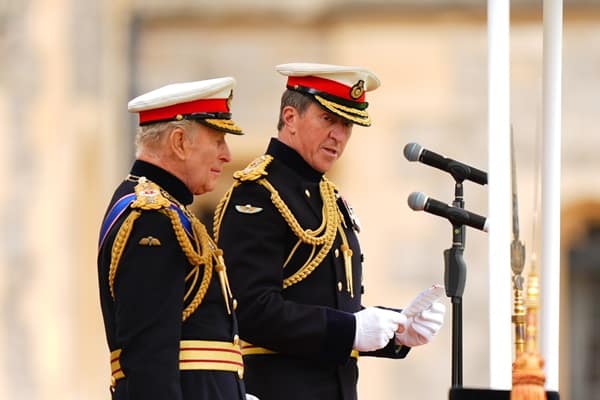
Russia will continue to probe Britain and its allies for signs of weakness as the risk of conflict rises, the head of the Royal Navy has warned, calling for a rapid rebuilding of the country’s military strength to deter potential adversaries.
General Sir Gwyn Jenkins, the First Sea Lord, said the prospect of war was not inevitable, but depended on whether hostile states believed Britain was prepared to defend itself.
His warning comes as NATO allies confront a more dangerous security environment and the prospect of sustained confrontation with Russia.
“Prepare for war if you want peace,” Jenkins told the International Sea Power Conference. “That saying is 1,600 years old – and it remains true today.”
The expression is attributed to the late fourth-century Roman military writer Publius Flavius Vegetius Renatus. Jenkins said its lesson was that Britain must continue building its military strength, adapt more quickly and demonstrate that it was ready to fight if required.
Read more related news:
UK is ‘not ready’ for war and Burnham warned ‘Russia will not wait for Whitehall’ as Lords demand faster action
‘There’s not a snowball’s chance in hell of Putin just going away’ as Brits face chilling war warning
“We are not powerless,” he told delegates, while acknowledging that the return of state-on-state competition was unsettling for military personnel who had spent much of their careers operating in a different strategic environment.
“I have said before that we are back in an era of state-on-state contest,” he said. “For many of us in this room, even those of us with long careers in uniform, that is unfamiliar territory. It feels unsettling, and we shouldn’t pretend otherwise.”
Jenkins was speaking aboard HMS Prince of Wales, the Royal Navy’s flagship, which was alongside in Oslo for the conference. His remarks underline the pressure on Britain’s armed forces to move from long-term plans for modernisation to a credible posture of readiness as tensions with Moscow persist.
The First Sea Lord, who took up the post 18 months ago, said his central mission had been to rebuild the Royal Navy and return it to what he described as its fundamental purpose: to “lead, fight and win”.
The challenge is considerable. Defence Secretary John Healey has set the armed forces a target of being ready to fight within 1,000 days. Jenkins said the Navy was concentrating its efforts on the end of the decade, with the aim of protecting Britain alongside NATO and other allies.
“Each month we are building,” he said, adding that the service had “turned a corner” and entered a period of renewal. “And you can see that renewal in steel.”
That renewal includes the fighting fleet, the UK’s nuclear deterrent and the support infrastructure needed to keep both operating at sea. Jenkins argued that investment in ships and submarines should send a clear signal to both allies and adversaries that Britain remained committed to maritime power.
But he cautioned that replacing hardware alone would not be enough. The Navy must also change how it generates and deploys combat power to meet the threats facing the country.
That is the rationale behind what Jenkins called the “Hybrid Navy” – an effort to reshape the service’s fighting capability rather than simply renew its existing fleet.
He described the future as “undeniably bright”, while acknowledging that the rebuilding effort remained challenging and had a long way to go.
The underlying message, however, was one of urgency; deterrence depends not simply on Britain’s intentions, but on whether Russia and other potential adversaries believe the country has the capability and resolve to act.


Leave a Comment