
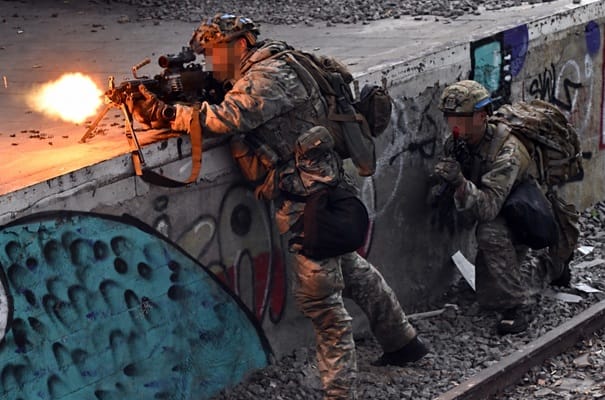
Wes Streeting warns Moscow could be capable of attacking by 2030 as Britain faces mounting questions over military spending, glaring Arctic defence gaps and the country’s readiness for a major conflict.
Britain has just over 1,000 days to prepare for the possibility of a major war, the Defence Secretary has warned, as the growing military strength of Russia threatens to leave the UK and its NATO allies facing an increasingly dangerous security environment.
Wes Streeting said Britain must be ready to fight and win alongside its allies by 2030, warning that Moscow’s expanding military capabilities and wartime economy could place it in a position to attack by the end of the decade.
Writing in The Telegraph, Mr Streeting said Britain had long understood the willingness of its adversaries to cause it harm. What had changed, he argued, was their ability to do so.
“By 2030 their force strength and war economy could put them in a position to attack. That gives us a little over 1,000 days to complete our mission: to be ready with our allies to fight and win,” he wrote.
Read more related news:
‘We’ll be under someone else’s rule’: Former officer delivers terrifying warning over the lack of UK’s defences
UK braces for war as ministers admit gaps in tracking 95,000 former troops
Brits told ‘our nation is going to need you’ as Britain prepares for war and the ‘unthinkable’
UK prepares for full-scale war as ‘Britain is back in the business of making weapons’
The warning places renewed pressure on the Government to demonstrate that Britain’s armed forces have the equipment, personnel and industrial capacity required to withstand a major conflict — and raises fresh questions over whether ministers are prepared to commit the money needed to meet that challenge.
Mr Streeting argued that preparing for the worst was essential precisely because Britain needed to deter it from happening.
In the first instance, he said, the country must strengthen its military capabilities sufficiently to make potential adversaries think twice before attacking. But deterrence could not be taken for granted.
“Should that fail, we must ensure that Britain is ready for war,” he added.
The intervention comes days before the Chancellor’s Budget on Wednesday, October 28, when decisions on military funding are expected to come under intense scrutiny.
The spending debate has become increasingly contentious following John Healey’s resignation as Defence Secretary under former prime minister Sir Keir Starmer. Mr Healey accused the Treasury and the former Government of refusing to commit the resources required to defend Britain amid rising international threats.
His resignation letter reportedly condemned the failure to commit to spending 3 per cent of gross domestic product on defence by 2030, intensifying the political pressure that preceded the end of Mr Starmer’s premiership.
Under his successor, Andy Burnham, Mr Healey was appointed Chancellor, putting him at the centre of the same spending dispute that had helped precipitate his departure from the Defence Department.
Mr Streeting’s latest comments suggest that the Government remains reluctant to make the earlier commitment, with its focus apparently shifting towards meeting Nato’s 3.5 per cent defence-spending target by 2035.
The disagreement exposes a fundamental tension in Britain’s security debate: whether the Government can build the military strength required within the timeframe its own ministers now describe as critical.
Conservative leader Kemi Badenoch has accused Mr Burnham of delaying action while the international security situation deteriorates.
“Our enemies are not going to sit around and wait for Labour to find the money to fight them,” she said in September, as she outlined Conservative plans to raise defence spending to 3 per cent of GDP by the end of the decade through cuts to welfare and other budgets.
Mr Streeting, however, warned against allowing the debate to become dominated by spending targets alone.
He suggested that a “fixation with percentages and dates” risked obscuring the wider objective: ensuring Britain could respond effectively if deterrence failed.
The distinction is significant. Higher spending does not automatically translate into immediate military readiness, particularly where the armed forces need additional equipment, personnel, ships and industrial capacity. But without sustained investment, the Government could struggle to close the capability gaps identified by defence officials.
Britain’s warning comes as Moscow continues to threaten countries supporting Ukraine following Russia’s full-scale invasion in February 2022.
The UK has remained a prominent supporter of Kyiv, exposing it to repeated warnings from Russian officials over its military and political backing for the Ukrainian government.
Concerns have also intensified over Britain’s ability to protect strategically important territory and infrastructure in the High North, where Russian military activity has become a growing focus for Western defence planners.
Earlier this week, the Commons Defence Committee warned that Britain had “glaring gaps” in its military capabilities in the region.
Those weaknesses, MPs said, could leave the British population, the country’s nuclear deterrent and critical subsea pipelines vulnerable to Russian attacks.
The committee called for “dramatic progress” in strengthening Britain’s armed forces and naval presence in the strategically important region by 2030.
The warning adds urgency to Mr Streeting’s deadline. The High North is central to the defence of the North Atlantic, including the routes linking North America and Europe and the infrastructure underpinning Britain’s energy and communications networks.
Any failure to protect those assets could carry consequences extending well beyond the battlefield, potentially threatening critical services and the infrastructure on which the UK’s economy and national security depend.
The committee’s concerns also highlight the challenge facing ministers; Britain must prepare for a range of possible threats while addressing weaknesses that defence officials say already exist.
The Government has also begun encouraging the public to take a more active role in national preparedness.
A new readiness campaign has urged households to keep three days’ worth of essential supplies in case of a national emergency, including a potential conflict.
The advice reflects a broader shift towards treating resilience as a responsibility extending beyond the armed forces and emergency services.
Military readiness would be of limited value if critical infrastructure, supply chains and essential services could not withstand disruption during a crisis. Preparing households for emergencies is therefore part of a wider effort to strengthen the country’s ability to cope with severe shocks.
But the campaign should not be interpreted as a prediction that war is imminent. The Government’s message is that Britain must be better prepared for emergencies, including scenarios that officials hope deterrence will prevent.
The challenge facing ministers is to turn that warning into tangible improvements in the country’s defences.
Britain now faces a narrowing window to strengthen its military capabilities, address vulnerabilities in the High North and convince allies and potential adversaries that it can sustain a major conflict if necessary.
Mr Streeting’s warning is stark, he warned; by 2030, Russia could possess the military strength and economic capacity to pose a direct threat to NATO. Whether Britain can meet that challenge will depend not simply on the targets ministers announce, but on the capabilities they deliver before the deadline arrives.


Leave a Comment