
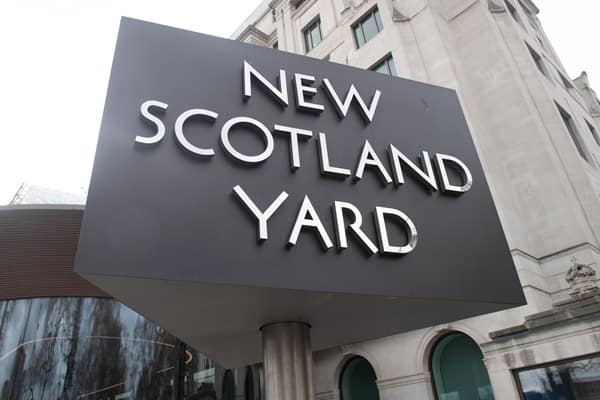
Sir Malcolm Walker has delivered a blistering broadside against the Metropolitan Police after revealing officers allegedly handcuffed an Iceland employee within minutes of receiving a false accusation of racism.
The billionaire founder of the supermarket chain said the incident, which unfolded at an Enfield branch in north London, left him convinced that Britain has developed a system of “two-tier policing” in which allegations of discrimination trigger an immediate response, while ordinary crime is too often ignored.
His intervention comes amid a fierce national debate over policing priorities following the death of Henry Nowak, the Southampton student who was handcuffed by officers after his killer falsely claimed he had been subjected to racist abuse.
For Sir Malcolm, the parallels are impossible to ignore.
According to the retail magnate, the confrontation began when a supervisor challenged a customer who was allegedly opening milk bottles before returning them to the shelves. Rather than co-operate, the man reportedly telephoned the police and accused the employee of racial abuse.
What happened next astonished even a businessman with decades of experience dealing with crime and disorder in Britain’s stores.
Within three minutes, officers had arrived, handcuffed the employee and placed him in a police vehicle.
The staff member was detained for several hours before the allegation was ultimately abandoned.
To Sir Malcolm, the speed and severity of the response raised uncomfortable questions about modern policing.
If officers can arrive within minutes for an uncorroborated accusation, he argued, why are retail workers routinely left to fend for themselves when facing genuine violence?
His frustration reflects a growing concern among shopkeepers across the country. Retail crime has surged in recent years, with workers increasingly subjected to threats, assaults and intimidation. Yet many businesses complain that reports of violence are often met with delayed responses or no response at all.
Sir Malcolm painted a bleak picture of life on Britain’s shop floors, describing a culture in which staff face regular abuse while confidence in the police continues to erode.
The contrast, he suggested, is stark. A claim of racism brought officers racing to the scene. Physical attacks on retail workers often do not.
The Metropolitan Police strongly rejects the accusation that it operates different standards for different groups. The force insists operational decisions are made according to evidence, law and risk rather than politics or identity.
Yet Sir Malcolm’s comments are likely to resonate far beyond the supermarket sector.
At a time when public confidence in policing is already under intense pressure, his account feeds into a broader argument over whether police resources are being directed towards perceived social harms while basic law enforcement is allowed to deteriorate.
For critics, the Enfield incident is another example of a system increasingly preoccupied with accusations and perceptions.
For defenders of the police, it is a single case being used to draw sweeping conclusions.
Either way, the intervention of one of Britain’s most successful businessmen ensures the debate over policing priorities is unlikely to disappear anytime soon.


Leave a Comment