
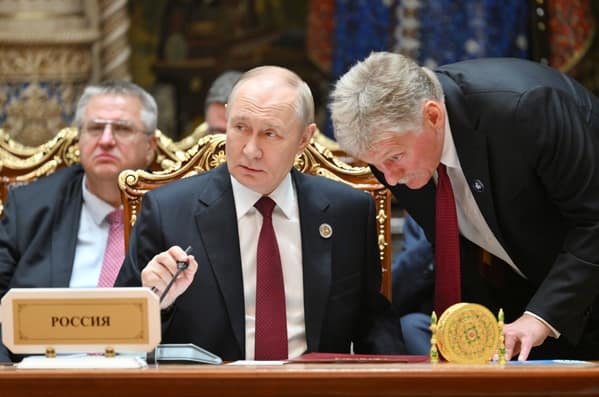
The Ukraine war may be approaching another dangerous crossroads, with Moscow’s political calendar threatening to become as important as the battlefield itself.
Czech President Petr Pavel has warned that Kyiv and its allies face a narrow window to push for negotiations before Russia’s leadership could consider a major escalation following September’s parliamentary elections.
“I believe that the window is there for us to keep pushing and giving Russia a clear message that we are willing to start negotiations,” the Czech president stated.
He warned: “Russia will have parliamentary elections in September. President Putin will hardly declare mobilization before, but once the elections are over, then the window will shrink.”
The warning highlights a growing fear among Western officials and analysts: that the coming months may not represent a pathway towards peace, but instead a final opportunity to prevent the conflict from entering an even more destructive phase.
At the centre of the uncertainty is Vladimir Putin’s calculation over manpower.
A new mobilisation campaign would allow Russia to reinforce its military effort, but it would also carry significant political risks.
The Kremlin has so far avoided a repeat of the partial mobilisation announced in 2022, which triggered public anger, protests and a wave of Russians leaving the country.
Read more related news:
Putin’s war machine left smoking as Ukrainian drones hunt Russian fuel ships
Putin warned ‘Moscow will fall’ as Ukraine drones strike 21 Russian shadow fleet vessels in 72 hours
How Putin accidentally created Europe’s most dangerous defence industry
Putin spits on Trump’s peace bid as Russia readies fresh bloodbath
For a leadership that places enormous importance on maintaining domestic control, expanding the draft before elections would create unnecessary political exposure.
Pavel said: “Russia has a lot of internal problems and challenges at this point. The Russian public is turning increasingly against the war. President Putin will have difficulties keeping calm at home.”
But once the vote is over, Moscow may face fewer constraints.
The Kremlin has repeatedly demonstrated that it is willing to absorb economic pressure, international isolation and battlefield losses in pursuit of its strategic objectives. Western sanctions have damaged Russia’s economy, but they have failed to force a fundamental change in Putin’s approach to the war.
Instead, Moscow appears to be betting that time remains its strongest weapon.
The calculation is straightforward: Ukraine depends heavily on continued Western military assistance, while political patience among some allies is under pressure. If Russia can maintain its position long enough, the Kremlin may believe divisions among supporters of Kyiv will deepen.
That is why President Pavel has urged allies to increase pressure on Moscow and use the coming weeks to create conditions for meaningful negotiations.
However, diplomacy remains complicated by a fundamental problem. Peace talks require both sides to believe compromise is preferable to continued conflict. At present, Moscow appears unconvinced that it has reached that point.
The battlefield tells a similar story.
Ukraine is attempting to strengthen its ability to sustain the war through domestic defence production, including plans to manufacture Patriot air defence missiles with Western technological support. The move reflects a wider shift: Kyiv is preparing not only to survive the current conflict, but to endure a prolonged confrontation.
For Europe, the implications are significant.
The war has exposed weaknesses in Western defence manufacturing, from limited missile stocks to insufficient industrial capacity. Governments that spent decades reducing military inventories are now confronting the reality that modern warfare consumes weapons on a scale unseen for generations.
The coming months will therefore test more than Ukraine’s military resilience.
They will test whether Western governments can maintain unity, expand defence production and sustain financial support while Russia continues to pursue a strategy built around endurance.
September’s elections will not automatically decide the future of the war. But they may influence the choices available to the Kremlin.
If Putin concludes that diplomacy offers fewer benefits than escalation, Ukraine and its allies could face a more dangerous autumn.
The central battle may no longer be only over territory.
It may be a battle over time — and both Moscow and Kyiv understand that the side that controls the clock may ultimately shape the outcome.


Leave a Comment