
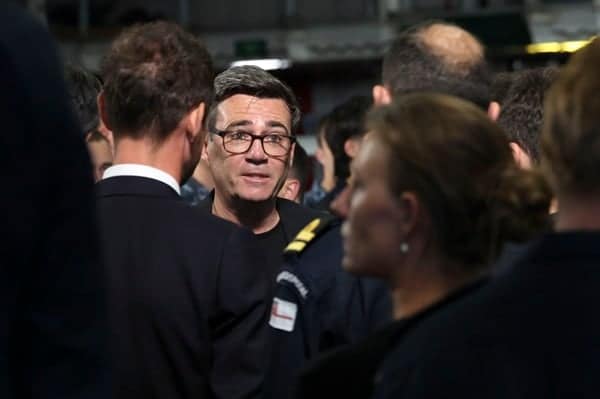
Andy Burnham’s push to reopen Britain’s relationship with the European Union is causing unease inside Labour, with senior ministers and MPs warning that the Prime Minister risks reviving the divisions of Brexit and handing Nigel Farage’s Reform UK a political advantage.
The dispute is threatening to overshadow preparations for a UK-EU summit on November 20, where Burnham is expected to set out his ambitions for closer ties with Brussels.
But concern is growing within government that the public debate is running ahead of any settled negotiating strategy, leaving Labour exposed in constituencies that voted to leave the bloc in 2016.
“He’s opened up a debate without a plan. It has just opened a lot of old wounds and reignited support for Reform that was waning,” one minister told The Telegraph.
The concern is particularly acute among Labour figures representing Leave-voting seats. Cabinet ministers John Healey, Lisa Nandy and Yvette Cooper all preside over constituencies where renewed arguments about European integration could complicate the party’s electoral position.
Another Whitehall insider said ministers were reviewing the referendum results in their constituencies and asking themselves: “Where does this put me at the next election?”
The political anxiety reflects uncertainty over what Burnham actually wants from Brussels. Possible options range from a closer customs relationship to single-market participation or, eventually, a return to full EU membership. Each would carry different implications for trade, migration and Britain’s ability to set its own rules.
Burnham has said he would like Britain to rejoin the EU within his lifetime, but insists he will “not move ahead of the public”. He has also said he has not proposed restoring freedom of movement and that the public should determine the country’s longer-term direction.
Freedom of movement becomes the faultline
The question of migration is proving especially sensitive. Burnham is understood to believe that accepting some form of freedom of movement could help unlock concessions from Brussels, although he has not committed to making such an offer.
That possibility risks colliding with Labour’s pledge to reduce migration and its manifesto commitments ruling out a return to free movement, the customs union or single market during the current parliament.
The EU has also made clear that its single market freedoms cannot be selectively adopted. Former chief Brexit negotiator Michel Barnier said: “As far as the freedom of movement is concerned, I can only repeat that the four freedoms are linked together and are not negotiable.”
The prospect of reopening the issue has reportedly caused friction within the Cabinet. Healey’s remarks that he did not “expect to see” Britain return to Brussels within his lifetime were said to have irritated Burnham, amid concerns that ministers were sending conflicting signals before the summit.
One senior Whitehall source suggested Healey “needs reigning in”. Another warned that few Labour MPs seeking a long-term political future would risk their positions over closer EU ties, naming Healey and Shabana Mahmood among those unlikely to support such a move.
A difficult negotiation at home and abroad
Burnham is also expected to avoid setting out detailed negotiating positions before meeting EU leaders, with insiders arguing that revealing too much would put Britain on the “backfoot”.
But keeping the options deliberately broad carries its own political cost. Without clarity over whether the government is seeking practical trade agreements or a fundamental shift towards European integration, Labour risks allowing opponents to define the debate.
For Reform, which has made opposition to closer EU integration central to its political appeal, the renewed argument offers an opportunity to challenge Labour in Leave-voting areas.
The November 20 summit may produce progress on practical co-operation, but Burnham faces a more immediate challenge: convincing his own party that a closer relationship with Europe can be pursued without reopening the divisions that helped shape British politics for a decade.


Leave a Comment