
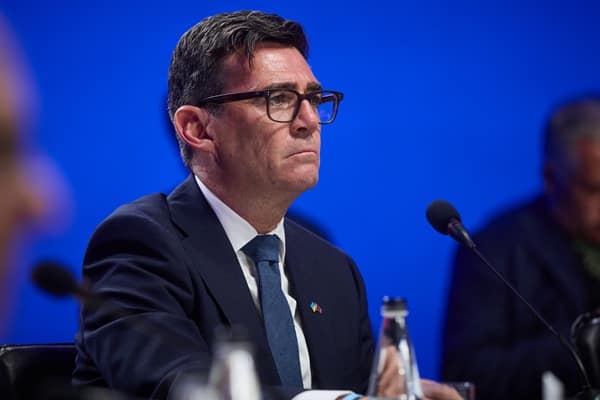
Andy Burnham is facing a fresh political backlash after leaked negotiating documents revealed that Brussels wants Britain to abandon plans to deport European offenders as part of a closer post-Brexit relationship, while demanding financial contributions from British taxpayers.
The draft proposals, seen by Sky News, expose the potentially contentious terms being discussed ahead of the UK-EU summit in Brussels on November 20, as the Prime Minister seeks to deepen economic ties with the bloc.
Among the most controversial demands is a commitment that Britain “not proceed with such removals and deportations” of European offenders to EU countries.
The proposal comes after Labour legislated earlier this year to accelerate the removal of foreign national offenders, partly to ease mounting pressure on Britain’s overcrowded prisons.
European governments have objected to criminals being released early and immediately returned to their countries of origin, arguing that they should receive more advance warning and information.
The leaked document suggests Brussels wants that policy reconsidered, potentially creating an uncomfortable confrontation for Burnham, whose Government has presented immigration enforcement as a priority.
However, the document is an early formulation of the EU’s negotiating position and has not been approved by member states. A UK source told Sky News that Britain would not agree to the proposed demand.
The financial implications could also prove politically sensitive.
The draft states that Britain should make an “appropriate level of financial contribution towards reducing economic and social disparities between the regions of the EU” in exchange for access to the bloc’s single market for electricity.
It adds that both sides want to “conclude these negotiations swiftly”, allowing Britain to access the electricity market “as soon as possible”.
The prospect of additional payments to Brussels risks reigniting arguments over the costs of closer integration, particularly among those who supported Brexit on the grounds of restoring control over Britain’s finances and national policies.
The Guardian has separately reported that a contribution towards the EU’s cohesion budget is being discussed, although this has not been agreed by the UK and is more likely to form part of a future arrangement.
Conservative shadow home secretary Chris Philp seized on the proposals, accusing Labour of prioritising relations with Brussels over the removal of foreign criminals.
“Labour has been caught offering foreign criminals a get-out-of-jail card because the EU doesn’t like Britain deporting them,” he said.
“British prisons are bursting at the seams, with taxpayers are picking up the bill, yet Labour is more interested in keeping Brussels happy than getting foreign criminals out of our country. It is an absolute betrayal of common sense.”
He added that a future Conservative government would “deport every foreign criminal”.
Reform UK leader Nigel Farage has also previously described concessions to the EU as a “betrayal” of the referendum decision to leave the bloc.
The controversy comes as Burnham pursues a broader reset with Brussels, including closer co-operation on trade, energy, agriculture and migration. The Prime Minister has argued that improved relations could deliver substantial economic benefits, while leaving open the possibility of Britain eventually rejoining the EU.
The Guardian reported this week that Burnham is preparing trade agreements covering agricultural exports, youth mobility and emissions trading, with the Government estimating that elements of the proposed arrangements could generate billions of pounds for the British economy.
For Burnham, the challenge is reconciling the economic benefits of closer European integration with political sensitivities over immigration, sovereignty and public spending.
The leaked proposals do not represent a settled agreement, and ministers have yet to accept the EU’s demands. But they provide an indication of the difficult negotiations ahead.
With the Brussels summit approaching, the Prime Minister faces a crucial test: securing closer access to European markets without handing political opponents an opportunity to portray the reset as a reversal of Brexit commitments.


Leave a Comment