
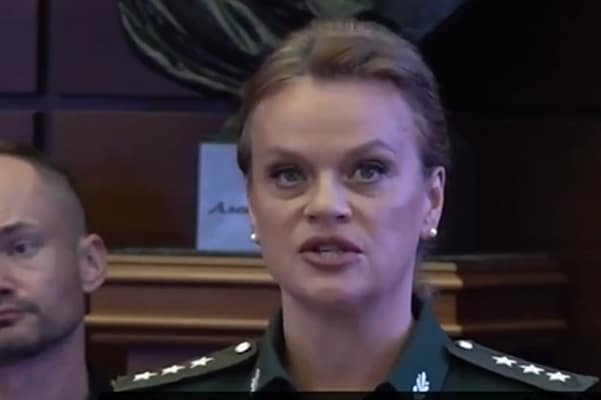
A fresh wave of anger is reportedly sweeping through Russia’s armed forces after Vladimir Putin promoted a relative of his inner circle to one of the military’s highest ranks — triggering accusations that loyalty, not battlefield experience, is becoming the defining qualification for advancement.
Anna Tsivileva, a senior defence official and relative of Putin’s extended family, has been appointed a Lieutenant General, a move that has provoked disquiet among career officers who have spent decades climbing the military hierarchy.
The promotion has fuelled resentment among some serving personnel who argue that Russia’s wartime army is increasingly being shaped by political connections rather than military expertise.
Tsivileva’s background has drawn particular scrutiny. Before entering senior government roles, she worked as a hospital psychiatrist from 1996, with no conventional career path through Russia’s armed forces or battlefield command structures.
Read more related news:
Russia continues to lie and deny by pretending Ukraine isn’t bombing Russia
Occupied Crimea returns to the past as Putin’s deploys payphones amid power crisis
Royal Navy forced to move as Russian warship fires weapons off UK coast
Ukraine prepares for worst-case scenario as Russia seeks to expand the war
Her rise has therefore been viewed by critics as another example of the Kremlin rewarding trusted insiders while many professional officers fighting in Ukraine struggle with shortages of equipment, manpower and recognition.
The controversy comes at a sensitive moment for Russia’s military establishment.
After more than three years of war in Ukraine, the armed forces have suffered enormous casualties, while commanders have faced growing pressure over battlefield setbacks, corruption allegations and the management of a prolonged conflict.
Paranoid Putin, keeping it in the family. https://t.co/kXlXtHycNB
— Shaun Pinner (@ShaunPinnerUA) July 21, 2026
For many career officers, promotions have traditionally been tied to years of military service, operational experience and command responsibility.
Tsivileva’s elevation has instead reinforced fears that Russia’s military hierarchy is becoming increasingly politicised.
The Kremlin has defended the appointment, presenting Tsivileva as an experienced administrator who has played a key role in supporting military personnel and veterans. Supporters argue that modern defence ministries require civilian managers as well as battlefield commanders.
But among sections of the military community, the decision has reportedly deepened frustration over what critics see as a widening gap between those fighting on the front line and those benefiting from proximity to power.
The episode highlights a broader tension inside Putin’s wartime system: the president has built a structure based heavily on personal loyalty, but prolonged conflict places increasing demands on professional competence.
Russia’s army can absorb battlefield losses. What may prove harder to contain is the anger of officers who believe the path to promotion is no longer determined by service, sacrifice or skill — but by access to the Kremlin.
For a military already under strain, the message sent by the appointment is potentially damaging: in Putin’s Russia, the safest route to power may be through the corridors of the state rather than the battlefield.


Leave a Comment