
Vladimir Putin is facing mounting warnings from both friend and foe that Russia’s war in Ukraine is drifting towards failure, as criticism from within the Kremlin’s own orbit grows increasingly difficult to ignore.
In a bruising assessment of the battlefield, retired US four-star General Jack Keane declared that Moscow’s much-vaunted spring and summer offensive had “failed miserably”, arguing that Ukraine was now seizing the initiative after years of grinding warfare.
The stark warning was all the more damaging because it was echoed by voices far closer to the Kremlin itself.
Aleksey Chadaev, a former adviser to Vladimir Putin and a prominent figure in Russia’s military drone sector, warned that the current trajectory could ultimately lead to “a full-scale defeat” for Moscow. His intervention represents a growing unease among nationalist commentators and military insiders who increasingly question whether the Kremlin has a coherent strategy for ending a war now entering its fifth year.
For much of the conflict, criticism from pro-war circles focused on demands for escalation. Now, however, some of Putin’s traditional supporters appear to be questioning whether Russia can realistically achieve its objectives at all.
Among the most striking interventions came from Anastasia Kashevarova, a well-known Russian war correspondent, who launched a furious attack on Russia’s military leadership after a series of successful Ukrainian strikes deep inside Russian territory.
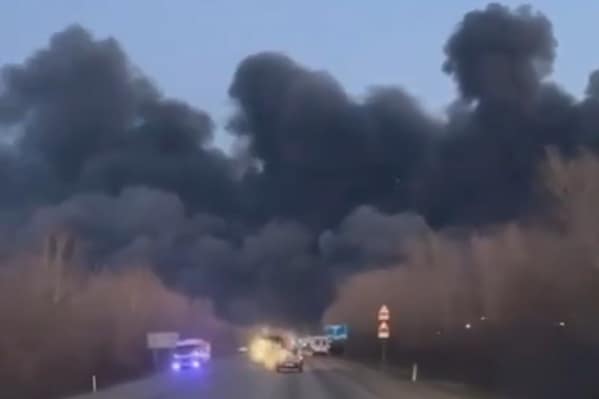
“The enemy is hitting everything that moves on the roads,” she complained, highlighting Ukraine’s growing ability to strike oil facilities, transport networks and military infrastructure far beyond the front line.
Her frustration reflected a broader sense of alarm spreading across sections of Russia’s pro-war establishment. Recent Ukrainian drone attacks have targeted military and energy facilities in Crimea, occupied territories and even St Petersburg, Putin’s home city.
The timing could hardly have been more embarrassing for the Kremlin.
As thousands of delegates gathered in St Petersburg for Russia’s flagship economic forum, Ukrainian drones once again demonstrated their ability to penetrate Russian air defences. Oil facilities burned, transport networks were disrupted and questions were raised over Moscow’s ability to protect strategically important targets.
Kashevarova’s criticism went further still.
“Are you going to fight?” she demanded of Russian commanders, accusing them of failing to respond effectively to increasingly sophisticated Ukrainian operations.
The public nature of such criticism is notable. Throughout much of the war, Kremlin loyalists largely directed blame at local commanders while avoiding criticism of the wider strategy. Increasingly, however, frustrations appear to be reaching higher up the chain.
The battlefield reality has become increasingly uncomfortable for Moscow.
While Russian forces continue to make limited advances in parts of eastern Ukraine, those gains have come at an extraordinary cost in manpower and equipment. Ukrainian officials claim Russia is suffering around 1,000 casualties a day, while Western intelligence assessments suggest Moscow has endured staggering losses since the invasion began.
At the same time, Ukraine has transformed the character of the conflict through its expanding long-range strike campaign.
Drone attacks now regularly target airfields, naval facilities, fuel depots and industrial infrastructure hundreds of miles from the battlefield. Regions once considered insulated from the war are increasingly experiencing its consequences firsthand.
The deployment of air-defence systems onto rooftops across Moscow has become a potent symbol of that shift.
Fresh footage this week showed a Pantsir missile system being hoisted onto the roof of a luxury apartment complex in the Russian capital, underscoring growing fears that Ukraine’s drone campaign is becoming increasingly difficult to contain.
The contrast between Kremlin rhetoric and battlefield reality is becoming harder to ignore.
Putin continues to insist Russia is achieving its objectives and portrays the war as a strategic success against the West. Yet the emergence of increasingly vocal criticism from figures within Russia’s own nationalist camp suggests confidence is beginning to fray.
For a leader who has built much of his authority on projecting strength and control, that may be one of the most dangerous developments of all.
Ukraine’s strikes are damaging infrastructure and military assets. But perhaps more significantly, they are exposing a growing nervousness among those who once championed the invasion.
And as the war grinds on with no clear end in sight, the question increasingly being asked is no longer whether Ukraine can endure.
It is whether Russia can.


Leave a Comment