
Russia is preparing possible provocations against NATO’s eastern flank in an attempt to pressure the West into abandoning support for Ukraine, Latvian intelligence officials have warned.
The warning comes as fears grow that Vladimir Putin could seek to exploit a moment of uncertainty by launching a wave of “hybrid” attacks — including drone strikes, cyber operations and other covert actions — designed to test how far the alliance is willing to go.
Latvian intelligence said Moscow was unlikely to launch a full-scale war against NATO at present, but warned that Russia could attempt smaller-scale attacks intended to send a threatening message.
“We see indications that Russia is preparing military provocations against the Baltic countries or Poland,” officials told Fox News Digital.
“Not a conventional war, because Russia is not capable of that right now, but hybrid attacks, such as missiles, drones or other actions designed to send a signal: stop supporting Ukraine, or you will have your own problems.”
Read more related news:
Putin expected Ukraine to fall, but instead they built a weapons revolution
Putin stages nuclear war drill north of Britain as top Kremlin ally ‘backs atomic strike’
Putin’s riviera has no fuel, no tourists, bridges burning and soldiers fleeing
Kremlin wants talks, but only because Putin is getting ‘his a**e handed to him on a plate’
The Baltic states and Poland are all members of NATO, meaning any serious attack could trigger the alliance’s Article 5 collective defence commitment and risk a dangerous escalation between Russia and the West.
The biggest concern, according to Latvian officials, is not an immediate invasion — but a catastrophic miscalculation inside the Kremlin.
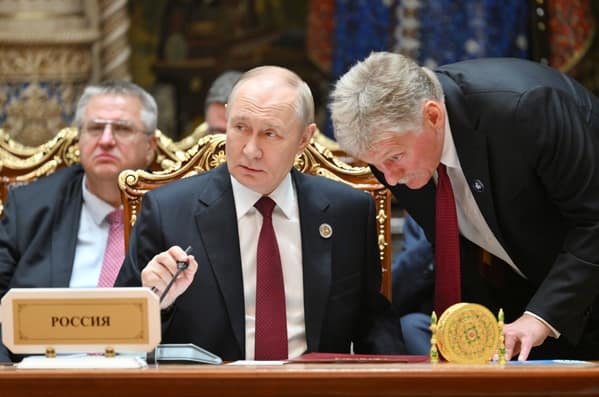
Intelligence officials warned that Putin may be receiving overly optimistic reports from officials around him, creating a distorted picture of Russia’s true position.
“The biggest concern is miscalculation,” Latvian intelligence said.
“Russian institutions are telling Putin what he wants to hear, and that creates a dangerous cycle that can lead to foolish and senseless decisions.”
Officials added that the Russian leader appeared increasingly isolated and surrounded by people unwilling to deliver bad news.
The fear is that this could encourage Moscow to underestimate NATO’s response or believe Western governments lack the will to act.
The warnings come as countries across NATO’s eastern border say they are already facing a growing campaign of pressure from Russia.
Polish officials have previously accused Moscow of using cyber attacks, sabotage and other covert tactics against NATO countries.
Officials in Warsaw have pointed to attacks on infrastructure and attempts to disrupt critical systems as evidence that a wider confrontation is already being fought below the threshold of open war.
Security officials have also raised concerns about Belarus being used as a pressure point, including through migration tactics designed to strain NATO borders.
Despite Moscow’s public claims that Western sanctions have failed, Latvian intelligence said economic pressure was having an impact.
Officials described Russia’s war economy as increasingly strained, arguing that sanctions were limiting Moscow’s ability to expand its military capacity.
“Sanctions are biting,” intelligence officials said.
“They may not change Putin’s mindset, but they limit Russia’s financial resources and force difficult choices regarding recruitment, military spending and pressure on businesses.”
They argued that continued international pressure could be key to pushing Russia towards a settlement.
Latvia’s Constitution Protection Bureau has also warned that Russia is expanding its use of “lawfare” — using legal claims and international institutions as tools of political pressure.
The agency said Moscow was studying previous legal battles involving Iran and looking for ways to challenge Western governments through international courts.
Officials warned that Russia could use claims against Baltic countries as part of a wider narrative aimed at justifying future pressure or aggression.
The concern echoes Moscow’s previous claims before the invasion of Ukraine that it was acting to protect Russian speakers and communities.
Latvian officials fear similar arguments could be used again.
Despite the warnings, Latvian intelligence stressed there was currently no immediate military threat to Latvia.
Officials said Russia would likely need several years to rebuild sufficient forces for a major confrontation with NATO, particularly if fighting in Ukraine continued.
But they warned that smaller attacks could happen much sooner.
“Currently, there are no military threats to Latvia,” officials said.
“We are not concerned about a full-scale invasion right now. What worries us now are provocations — drones, missiles and other hybrid attacks.”
As NATO strengthens its eastern defences, the Baltic region remains one of the most sensitive pressure points between Russia and the West.
The fear among officials is not only what Moscow might deliberately do — but what could happen if the Kremlin makes the wrong calculation.


Leave a Comment