
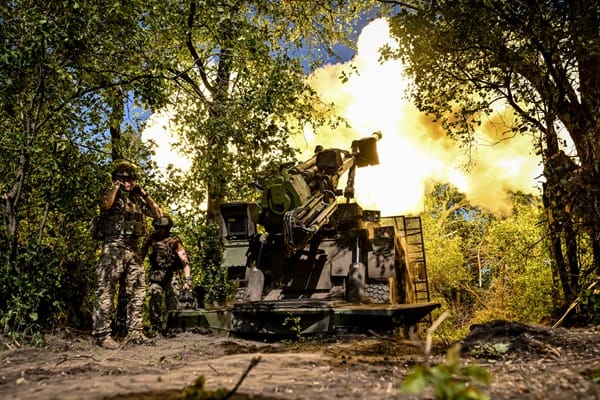
In the digital fog of war, the Russia–Ukraine conflict has generated not only artillery fire and drone strikes, but a relentless stream of viral claims, half-truths and outright myths that ricochet across social media at speed.
From predictions of imminent collapse to sweeping claims about NATO involvement, the online narrative has become almost as contested as the battlefield itself.
But behind the noise, a different picture emerges — one grounded in verified reporting, satellite imagery and intelligence assessments rather than viral certainty.
Myth: Ukraine is about to collapse
One of the most persistent claims circulating online is that Ukraine is on the verge of sudden military collapse.
In reality, the conflict has been defined by gradual territorial shifts, entrenched frontlines and sustained resistance, rather than sudden systemic breakdown.
While the fighting remains intense and costly on both sides, the idea of imminent collapse has repeatedly failed to materialise.
Myth: Russia has already won the war
Another widely shared narrative is that Russia has effectively secured victory due to territorial gains in occupied regions.
But military analysts point out that control of territory does not equal strategic success, particularly in a prolonged war where political objectives, force sustainability and long-term stability remain unresolved.
The conflict remains active, contested and strategically fluid.
Myth: NATO troops are fighting in Ukraine
Claims of direct NATO combat involvement regularly trend online.
However, NATO member states are not officially engaged in combat operations inside Ukraine.
Military support is provided through weapons supplies, intelligence sharing, training and financial assistance — but not direct deployment of alliance forces into the battlefield.
Myth: Sanctions have destroyed Russia’s economy
Social media narratives often claim Russia’s economy has collapsed under sanctions pressure.
The reality is more complex. While sanctions have significantly constrained parts of Russia’s economy, especially in high-tech imports and finance, Moscow has also adapted through redirected trade flows and energy exports.
The long-term economic impact remains contested among economists.
Myth: The war will end quickly with a clear winner
Despite repeated predictions of imminent resolution, most defence analysts describe the war as a protracted attritional conflict, with no clear short-term endpoint.
Negotiations, battlefield conditions and political pressures all remain highly fluid.
Fact: Information itself is now a front line
Perhaps the most important reality is that the information space has become a parallel theatre of war.
Competing narratives circulate across platforms, often amplified by algorithms that reward speed and emotion over accuracy.
This creates an environment where:
- Simplified claims outperform complex analysis
- Emotional narratives spread faster than verified reporting
- And “certainty” often replaces evidence
Fact: Verification still matters
Despite the noise, independent verification still exists through:
- Satellite imagery
- Open-source intelligence (OSINT) analysis
- Government and defence reporting
- Established international journalism
But it requires time, scrutiny and context — all of which are often missing in viral posts.
The bigger picture
The Ukraine war has shown that modern conflict is no longer fought only with weapons and territory, but also with narratives that shape perception, morale and political pressure far beyond the battlefield.
And in that sense, the most viral claim is often not the most accurate — just the fastest.


Leave a Comment