
Ukraine has launched a fresh wave of strikes deep against Russian military infrastructure, targeting vital bridges, drone command centres and fuel facilities in a growing campaign aimed at weakening Vladimir Putin’s ability to sustain the war.
Ukraine’s General Staff said its forces carried out a series of attacks on June 29 and overnight into June 30, hitting key locations used by Russian troops to move soldiers, weapons and supplies.
The strikes targeted two strategically important bridges — including a road bridge near Azov in occupied Zaporizhzhia and a railway bridge near Ichki in occupied Crimea.
Both crossings are reportedly used by Russian forces to transport personnel, ammunition and military equipment towards the battlefield.
The full extent of the damage is still being assessed, but Ukrainian officials said the strikes were part of a wider operation designed to disrupt Russia’s military logistics network.
Alongside the bridge attacks, Ukrainian forces also targeted Russian drone command posts in several areas, including Belgorod, Donetsk and occupied Zaporizhzhia.
A Russian command and observation post near Staromlynivka in Donetsk was also struck.
The latest attacks form part of Kyiv’s increasingly aggressive strategy of taking the fight beyond the immediate frontline — hitting the infrastructure that keeps Russia’s invasion machine moving.
Ukraine has repeatedly focused on logistics hubs, supply routes and energy facilities, arguing that they directly support Russia’s military operations.
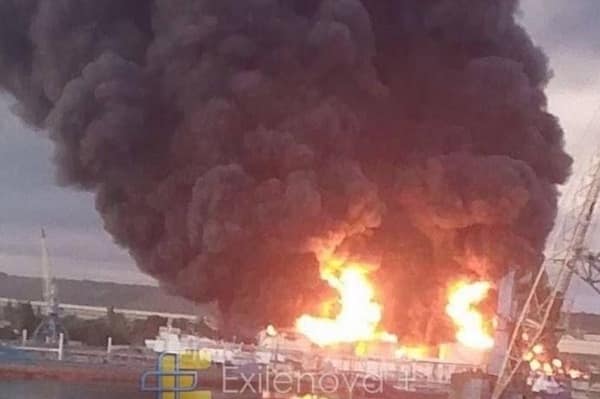
The strikes come after Ukraine confirmed major damage to the Slavyansky oil refinery in Russia’s Krasnodar region following a drone attack.
According to Ukraine’s assessment, four fuel storage tanks with a combined capacity of 35,000 cubic metres were destroyed, while nine additional tanks were damaged.
A refinery processing unit was also reportedly hit.
The facility plays a role in Russia’s domestic fuel production and military supply network, making it a key target in Kyiv’s campaign against Moscow’s ability to maintain its offensive.
Local residents reported hearing multiple explosions around the refinery before a major fire broke out.
President Volodymyr Zelensky later praised the operation, saying Ukrainian forces had carried out the attack with precision.
Ukraine’s Security Service said the refinery strike was part of a wider 40-day campaign targeting Russian military and economic infrastructure.
The aim, officials said, is to reduce Moscow’s ability to finance and supply its war effort.
The attacks highlight a growing challenge for the Kremlin.
While Russian forces continue offensive operations along parts of the front line, Ukraine has increasingly focused on the networks behind those attacks — fuel supplies, transport routes and command structures.
The strategy is designed to force Russia to spend more resources defending territory far from the battlefield while placing additional strain on its military machine.
Ukraine’s General Staff said it would continue operations aimed at reducing Russia’s capacity to continue its invasion.
For Moscow, the message is clear: the battlefield is no longer confined to the front line.


Leave a Comment