
The British government has urged households across the UK to prepare for emergencies, warning that extreme weather, cyberattacks, power failures and wider security threats could leave families without essential services for days.
The advice, promoted through the government’s Prepare campaign, encourages households to plan for at least 72 hours of disruption, with supplies including drinking water, non-perishable food, medication, torches, batteries, first-aid kits, cash and alternative ways of charging mobile phones.
The government has published practical advice on its official emergency preparedness website, and I strongly encourage people to read it and follow the recommendations.
But having lived through precisely the sort of disruption the British government is warning about, I thought I would offer a few additional pointers from someone living at the extreme end of emergency preparedness.
There is a considerable difference between reading about an emergency and living through one.
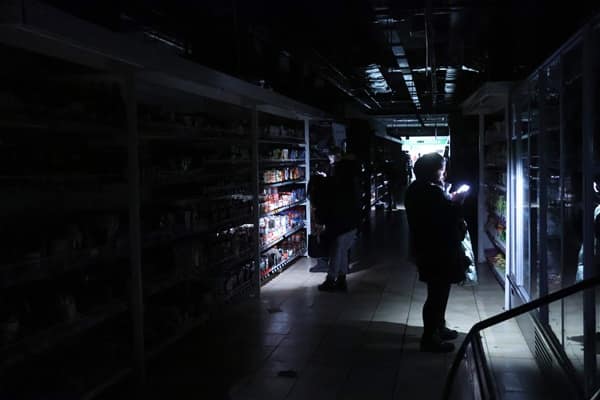
Here in Dnipro, Ukraine, Russia has spent weeks systematically attacking our energy infrastructure, including the systems and repair crews responsible for keeping our cities functioning. Power cuts, air raid warnings and attacks on civilian infrastructure have become part of everyday life while sometimes we have no idea when the electricity will return, whether the heating will work or what Russia will target next.
And while Britain is thankfully not Ukraine, the principles of preparedness are remarkably similar. I have solar panels, an inverter, an EcoFlow portable power station and several battery banks, while if everything really goes to shit, I also have a diesel generator and 25 litres of backup fuel stored in the garage.
Read more related news:
‘Bordering on irresponsible’ as government accused of abandoning millions unable to afford emergency stockpile
Shelves stripped bare’: Britons rush to stockpile bottled water and baked beans after emergency warning
Brits urged to stockpile food as chilling warning says UK could be ‘shut off’ from the world in war
Why? Because electricity isn’t simply about keeping the lights on.
It means communications, refrigeration, heating controls, charging essential equipment and maintaining some degree of normality when everything around you stops functioning.
Electronic warfare in Ukraine can also interfere with civilian GPS, one minute you’re in Dnipro, the next your phone thinks you’re in Lima, Peru, so old-school maps are back in fashion and forget relying entirely on your iPhone or SatNav, sometimes, we’re really back in the 80s and something I didn’t see on the list.
As a journalist and blogger, electricity is also essential to my work, without it, I cannot reliably communicate, publish articles or conduct interviews.
No money, no honey. Let’s not add to my problems by being lazy.
But my family is here with me too, and they will always come first. Keeping them safe, warm and connected is my priority, sometimes that means a Saturday “Date Night” with two headlamps, pizza and wine, as it did this weekend.
I also live by a motto from darker times in Mariupol: “Remember, it can always get worse.” I always thought that was a little more constructive than my friend John’s usual parting advice whenever we went our separate ways: “Don’t get shot in the face.”
It’s dark humour, admittedly, but it keeps me thinking ahead.
I also carry a tourniquet and an Individual First Aid Kit (IFAK), because I could find myself minutes away from a mass-casualty incident. My military background includes Tactical Combat Casualty Care (TCCC) and Combat Lifesaver (CLS) training, and keeping those skills current through refresher training is important to me.
But you don’t need to be a soldier to learn lifesaving skills, take a first-aid course, learn CPR, how to use a defibrillator and how to recognise and control catastrophic bleeding. The British Red Cross and St John Ambulance offer training, while specialist trauma courses can take your knowledge further.
Owning a tourniquet doesn’t make you capable of saving a life, any more than owning a fire extinguisher makes you a firefighter. It’s the training that matters, particularly when emergency services cannot reach you immediately, a serious road accident, terrorist attack or industrial incident can happen anywhere.

Shaun Pinner
While here in Ukraine, you simply can’t assume they will, not because they aren’t capable or willing, quite the opposite. Our paramedics, doctors and emergency responders are extraordinary people, and I know many of them personally, but hospitals are stretched, ambulances are under enormous pressure, and Russian attacks rarely involve just one bomb.
It’s often multiple missiles, followed by waves of drones that can continue for hours, sometimes putting the very people trying to rescue the injured at risk. That means help might not arrive when you need it most, and knowing what to do in those first critical minutes could be the difference between life and death.
The government’s recommendations are sensible, but here are a few things my experience in Ukraine has taught me.
DO have alternative power sources, battery banks are affordable, while solar systems and portable power stations provide additional resilience.
DO learn first aid and keep a properly equipped medical kit. Knowing how to use it matters more than how much equipment you own, also, know where your nearest hospital A&E department is, how to get there and what alternative routes are available if roads are blocked or your SatNav stops working, unless you want to know the location of hospitals in Peru.
DO keep cash, important documents, essential medication, warm clothing, torches, batteries and a battery-powered radio, no power, no cards or ATM’s, cash is king.
DO have a family emergency plan, including alternative meeting points, emergency contacts and somewhere safe to go. It’s not cool to be stupid, particularly when your family’s safety is at stake. My family know where our nearest shelters are, use air raid warning apps and share our locations with each other so we know where everyone is. That’s not being possessive or controlling, it’s about safety, my wife goes missing or communications suddenly fail, I want to know her last known location and where to start looking, because when something goes wrong, knowing where your loved ones were last seen could make all the difference.
DO consider vulnerable neighbours, elderly relatives, children and pets. Here in Ukraine, this happens naturally, people look out for one another, particularly when the power goes out or the bombs start falling. If you don’t know your neighbours now, you certainly will in an emergency.
DON’T assume mobile networks, internet connections, electronic payments, GPS or running water will always function.
DON’T operate generators or outdoor cooking equipment indoors or in attached garages. Carbon monoxide kills. Generators belong outside, away from doors and windows, and fuel must be stored safely in approved containers.
DON’T panic-buy or spend money you cannot afford, build your supplies gradually.

Shaun Pinner
And most importantly, DON’T assume somebody will always be there to rescue you immediately.
Preparedness is about resilience, not fear, Britain is not Ukraine, nobody is suggesting Russian missiles will start falling on British cities tomorrow, but infrastructure failures, extreme weather, cyberattacks and other emergencies can happen without warning, and greatest mistake is assuming that because something has never happened to you, it never will.
I have learned that lesson through experience, sometimes at a terrible human cost, and I’ll say again, I’m obviously at the extreme end of the spectrum, but that doesn’t mean the lessons are irrelevant to somebody living in Manchester, Birmingham or London.
You don’t need a diesel generator or military medical training to become better prepared, start with the government’s recommendations, then think about what else might help your particular circumstances.
Have a backup plan, learn basic first aid, know where your family will go, how you will communicate and what you will do when the electricity disappears.
Because preparedness isn’t simply about what you have in your cupboards, it’s about what you know, what you can do and how you react when something goes wrong. Being prepared isn’t about expecting the worst, it’s about being capable of dealing with it when the unexpected happens.
And believe me, when everything suddenly stops working, you’ll be grateful you thought ahead.


Leave a Comment