
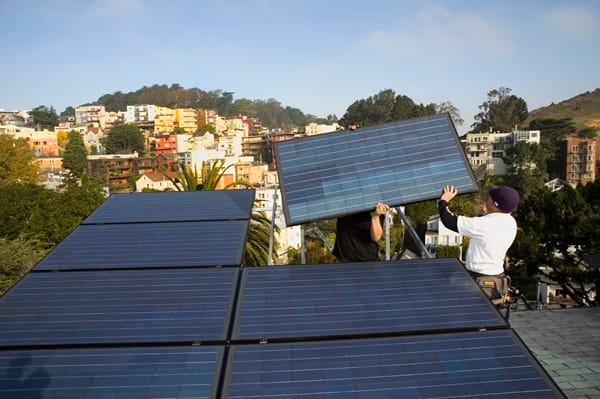
Plug-in solar panels will go on sale across Britain for the first time on Thursday, opening up a cheaper and more flexible route into solar power for households unable to install conventional rooftop systems.
The technology, already widely used in countries including Germany, allows households to feed electricity generated by solar panels directly into their home network through an ordinary plug.
Panels can be mounted on balconies, fences or other suitable locations, potentially reducing the amount of electricity drawn from the grid.
Each kit can generate up to 800 watts, enough to supply as much as 20 per cent of an average household’s electricity consumption when sunlight is available, according to government estimates.
The Department for Energy Security and Net Zero expects initial prices to be relatively high but believes greater competition will eventually push typical costs to about £400 to £600, depending on the size and specification of the system.
Households could recoup the upfront cost within several years, with annual savings of as much as £110 on electricity bills, according to the department.
Miatta Fahnbulleh, Energy Secretary, said: “Plug-in solar is a simple, affordable way for households to take control of their energy bills and start saving straight away.
“From this summer, we’re giving more families the ability to power their homes with clean homegrown energy.”
Argos will begin selling the systems on Thursday, with Amazon expected to follow in the coming weeks. Currys, B&Q, Screwfix and Wickes are also among retailers that have committed to stocking the technology.
The change marks a significant shift in the UK’s approach to small-scale solar. Sales of plug-in systems had previously been restricted because of concerns over electrical safety and wiring standards.
Ministers said the restrictions were lifted following independent safety testing covering the key electrical components, which concluded that compliant systems were safe and compatible with UK domestic wiring.
The government first announced plans to remove the legal barriers earlier this year as it worked with manufacturers and retailers to establish a market for the systems.
Martin McCluskey, the energy minister, said plug-in solar “enables people who might otherwise not be able to get a rooftop solar array to take advantage of solar power”.
That could make the technology particularly attractive to renters, leaseholders and households where conventional rooftop installations are impractical.
But the regulatory change does not mean every household can simply install a panel without permission.
Renters and leaseholders may still need consent from landlords, building owners, councils or freeholders, while some properties could require planning permission or listed building consent.
Officials have urged consumers to establish what permissions apply before buying or installing a system.
Mr McCluskey said the government had written to the National Landlords Association to highlight the potential benefits to tenants and encourage landlords to consider requests on their individual merits.
The launch comes as the war involving the US, Israel and Iran has contributed to volatility in global energy markets, increasing pressure on governments to shield households from higher power costs.
Mr McCluskey said the technology could give households “a little bit of breathing room”, alongside the government’s previously announced plans to reduce VAT on electricity bills.
There will be no central Desnz subsidy scheme for households buying the systems. Mr McCluskey said, however, that local authorities, charities and other organisations could choose to use existing funds to support plug-in solar installations.
The government also plans to require households to register their systems after purchase, providing grid operators with a “proper line of sight” over the amount of additional small-scale generation being connected.
Grid operators have faced growing challenges balancing supply and demand amid extreme weather, network bottlenecks and changing patterns of energy generation.
“We’re not anticipating any issues with this additional capacity of solar, but it’s obviously something we’ll monitor as the rollout progresses,” Mr McCluskey said.
Ministers have also sought to reassure consumers concerned that installation could require costly advice from electricians. Mr McCluskey said independent testing “has given us the assurance that plug-in solar panels are safe and that they’re compatible with UK domestic electrical systems”.
Consumer guidance on installation is due to be published through the Energy Saving Trust.
Joanna O’Loan, knowledge manager at the Energy Saving Trust, said: “As these products become more widely available, access to clear and reliable information is essential to help people make informed choices that are right for their home and budget.”
The arrival of plug-in solar in mainstream retailers gives British households a new way to generate electricity at home, but its success will ultimately depend on whether falling equipment prices, straightforward permissions and reliable savings can persuade consumers to make the switch.


Leave a Comment