
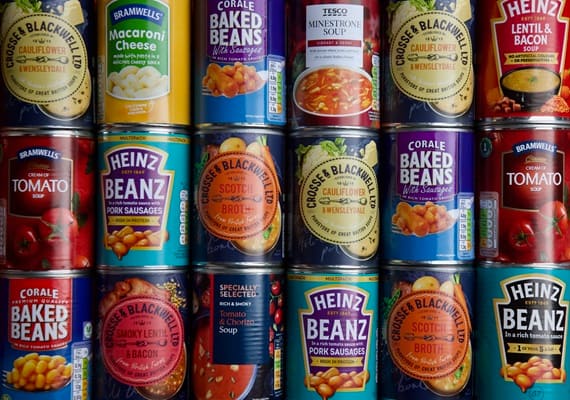
Britons have been urged to consider building emergency food supplies after a stark warning that Britain could be cut off from vital imports if war broke out, raising fresh questions over whether the country is prepared for a major national crisis.
The alarming intervention came from Labour peer Lord Harris of Haringey, who warned that the UK’s heavy dependence on imported food, medicines and industrial materials leaves it dangerously exposed to blockades, embargoes and wider global disruption.
Speaking in the House of Lords, the chairman of the National Preparedness Commission said Britain must begin preparing now for the possibility that essential supplies could suddenly stop flowing into the country during a conflict.
His comments came during a debate on the long-awaited Defence Readiness Bill, legislation designed to ensure Britain can rapidly mobilise its military, industry and wider economy if an international crisis escalates into war.
Lord Harris warned that Britain’s status as one of the world’s most globally connected economies has become a strategic weakness in an increasingly dangerous world.
We have, after all, the most open economy amongst the G20,” he told peers.
“Our food supplies, our pharmaceuticals, plus key industrial materials are imported and vulnerable to blockades and embargoes.
“We need to be ready for those imports to be disrupted or even shut off.
“And in the event of conflict, we will need to be able to divert the nation’s resources to the support of our military and homeland defence.”
His remarks amount to one of the clearest public acknowledgements yet that modern warfare could extend far beyond the battlefield and directly affect everyday life in Britain, potentially disrupting supermarket shelves, pharmacies and critical supply chains.
The intervention comes as European governments increasingly urge citizens to improve their own emergency preparedness amid growing security concerns following Russia’s invasion of Ukraine and mounting fears over future conflict on the continent.
Lord Harris argued Britain should establish a far more comprehensive resilience strategy, extending well beyond military planning.
He said new legislation should mirror the framework used by the Climate Change Act, placing legal obligations on Government departments, local authorities, public bodies and major businesses to prepare for a wide range of national emergencies.
Those threats, he argued, should include war, pandemics, cyber attacks, extreme weather events and failures affecting critical national infrastructure.
His intervention also comes as Labour leader Andy Burnham has made national security one of his central political priorities following his rapid ascent to the top of British politics.
Writing in The Times, Mr Burnham declared that any future government under his leadership would place Britain’s security above all else.
“Our first responsibility is keeping people safe,” he wrote, pledging to rebuild Britain’s military strength, increase sovereign industrial capabilities and reduce dependence on foreign suppliers across critical sectors.
Lord Harris publicly backed the Makerfield MP’s approach, arguing the country urgently needs what he described as a “national conversation” about resilience before a crisis forces difficult decisions.
The debate exposed growing concern inside Westminster that Britain may not be sufficiently prepared for the rapidly changing global security environment.
Former Security Minister Baroness Neville-Jones warned the country could already be “cutting it close” when it comes to national resilience.
She pointed to NATO’s increasingly bleak assessment of the threat posed by Moscow.
“Nato’s assessment is that, by 2030, Russia may decide to step up its existing level of aggression in Europe, something which is truly, truly frightening,” she told peers.
She also questioned whether the forthcoming Defence Readiness Bill could eventually involve some form of compulsory national service or wider mobilisation of civilians in a future emergency.
Urging ministers to be transparent, she said the Government should be “honest with the electorate” about what genuine wartime readiness could ultimately require.
The Defence Readiness Bill was one of the key recommendations of the Strategic Defence Review published more than a year ago.
Despite expectations it would feature prominently in this year’s King’s Speech, the legislation was omitted, prompting criticism from some defence experts who argue Britain cannot afford further delays as international tensions continue to rise.
Responding to the debate, Defence Minister Lord Coaker confirmed the Government still intends to introduce the Bill during the current Parliament.
He said ministers were continuing to refine its scope while making the case for it to receive sufficient funding.
The legislation is expected to provide ministers with powers to mobilise reserve forces, coordinate industrial production and strengthen Britain’s ability to respond rapidly during a major national emergency.
The discussion comes against the backdrop of NATO’s ambitious new defence spending commitments.
Alliance members have agreed to spend five per cent of GDP on defence and national resilience by 2035, with 3.5 per cent dedicated to core military spending and a further 1.5 per cent invested in protecting critical infrastructure such as ports, transport networks, power grids and communications systems.
Earlier this week, Defence Secretary Dan Jarvis insisted Britain already meets the alliance’s resilience target but stopped short of guaranteeing the UK would achieve NATO’s wider spending commitments over the coming decade.
As geopolitical tensions continue to intensify, peers warned that Britain’s ability to withstand future crises may depend not only on the strength of its Armed Forces but also on something far more ordinary: whether the country can keep supermarket shelves stocked, pharmacies supplied and essential goods flowing when they are needed most.




Leave a Comment