
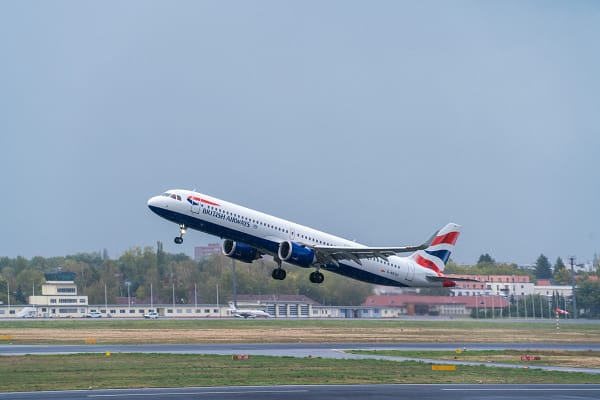
The owner of British Airways has warned of mounting financial pressure from soaring aviation fuel prices and widespread air traffic disruption, revealing that recent outages cost the airline group up to £24.6m as hundreds of flights and tens of thousands of passengers were affected.
International Airlines Group (IAG), which also owns Iberia and Vueling, said the air traffic control incident on September 8 cost the business between €25m and €30m during the third quarter. Approximately 500 flights and 85,000 customers were affected.
The disruption highlights the growing financial vulnerability of airlines to failures in Europe’s increasingly strained aviation infrastructure, with the consequences extending beyond cancelled journeys to lost revenue, additional operating costs and compensation.
More than 2,000 flights were cancelled across the wider aviation sector, while hundreds of thousands of passengers experienced delays, diversions and disrupted travel plans.
The Cyber Monitoring Centre estimated earlier this week that the incident cost the UK economy approximately £33m, with airlines, airports, ground handlers and tour operators all suffering financial losses.
But the disruption was only part of IAG’s problem. The group also faced a 30.4 per cent increase in jet fuel costs, adding €570m (£471.9m) to its quarterly expenses.
Pre-tax profits fell 12.9 per cent to €1.63bn (£1.33bn) in the three months to September 30, while operating profits dropped 15.9 per cent to €1.73bn (£1.42bn).
The results demonstrate how rising fuel prices can rapidly erode airline earnings, even when companies increase fares and pursue operational efficiencies to protect margins.
IAG said it was now forecasting full-year fuel expenditure of €8.9bn (£7.28bn), despite measures to secure fuel prices in advance and limit exposure to market volatility.
The group is attempting to pass the additional costs on to passengers, with British Airways expecting to recover close to 100 per cent of higher fuel expenses over the full year. However, it declined to disclose the extent of fare increases or provide a detailed outlook for ticket prices.
Chief executive Luis Gallego said the group was prioritising profitable routes and managing capacity carefully as it approaches the traditionally quieter final quarter of the year.
“As a result of the actions we are taking, the outlook for the rest of the year, as well as the start of next year, is positive,” he said.
The airline group has also been forced to navigate a fresh wave of aviation security disruption, with bomb threats prompting diversions and emergency inspections across Europe this week.
Gallego defended the industry’s response, arguing that airlines had little choice but to follow established safety procedures whenever threats were reported.
“It’s easy to create a threat – with an email or a phone call you can create a problem,” he said.
“We have to take seriously each threat to comply with protocols.
“We are working always with the authorities to see the best way to address this but we always want to be prudent on these issues.
“We cannot do anything else.”
His comments underline how even unsubstantiated security warnings can generate substantial costs for airlines, disrupting schedules and forcing operators to divert aircraft and reorganise crews and passengers.
The pressure is not confined to IAG. Earlier this week, Ryanair warned that it was considering pay freezes and greater use of artificial intelligence to offset expected increases in fuel costs next year. The budget carrier also warned that air fares across Europe could rise by double digits.
For passengers, the combination of more expensive fuel, operational disruption and security-related diversions threatens to make flying increasingly costly. For airlines, the challenge is absorbing higher expenses without sacrificing profitability or weakening demand.
IAG’s latest figures highlight the extent to which the industry’s recovery and earnings growth remain exposed to forces beyond its control. With fuel bills rising and disruption becoming an increasingly expensive feature of European aviation, passengers may ultimately bear a significant share of the cost.


Leave a Comment