
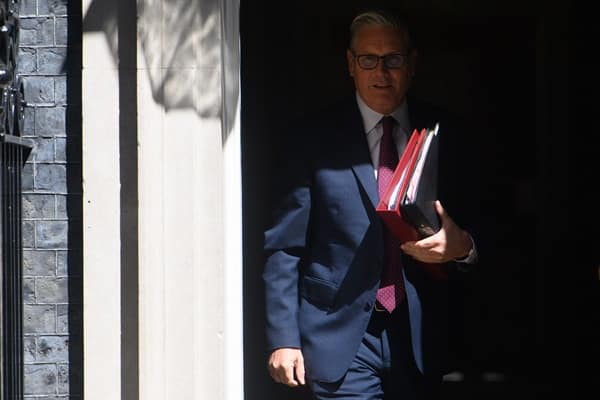
Sir Keir Starmer will unveil his long-delayed Defence Investment Plan on Tuesday, but the package is already facing fierce criticism after claims it falls billions of pounds short of what military chiefs say Britain needs to prepare for a more dangerous world.
The Prime Minister is expected to promise around £14.5billion in defence investment in one of his final acts before leaving Downing Street, with a flagship £5billion programme to expand Britain’s use of drones, autonomous weapons and cutting-edge battlefield technology.
But the announcement has done little to calm fears that the Armed Forces remain dangerously underfunded at a time when Russia’s war in Ukraine and rising global tensions have transformed the security landscape.
The row has been fuelled by the dramatic resignations of former Defence Secretary John Healey and Armed Forces Minister Al Carns earlier this month after both warned the Treasury had failed to provide the resources needed to strengthen Britain’s military.
Mr Healey had secured a £13.5billion settlement before quitting, but argued it represented only a tiny increase in defence spending as a share of the economy and left Britain “less safe”. His successor, Dan Jarvis, is understood to have negotiated the package up to around £14.5billion.
However, defence insiders claim only £1billion of the total represents genuinely new funding.
One defence source dismissed the much-publicised £5billion drone programme as little more than a rebranding exercise.
“This is hardly a revolution,” the source said. “It is utter f*****g waffle. We are still not learning the lessons from Ukraine.
Senior defence figures have repeatedly argued that around £28billion is required if Britain is to modernise its Armed Forces and meet the growing threat posed by Russia.
Those warnings have become more politically awkward given that Sir Keir himself has previously cautioned that Moscow could pose a direct threat to NATO before the end of the decade.
The Conservatives seized on the figures, branding the package “too little, too late.
Shadow Defence Secretary James Cartlidge said the plan offered barely more funding than the settlement which prompted Mr Healey and Mr Carns to resign.
“This plan is not worth the paper it’s written on,” he said. “Keir Starmer is Prime Minister in name only.”
Mr Cartlidge argued Britain needed to prioritise defence spending over welfare if it was serious about protecting national security.
He also claimed the latest settlement would still leave defence spending billions of pounds below the level Mr Healey had argued was necessary.
Liberal Democrat leader Sir Ed Davey also criticised the proposals, describing the plan as “late and underfunded”.
The controversy comes as Britain risks falling behind several NATO allies on military spending.
Germany is expected to spend around 3.7 per cent of GDP on defence by 2030, while Sweden is projected to reach 3.5 per cent. NATO Secretary General Mark Rutte has urged allies to produce credible plans to meet the alliance’s new target of spending the equivalent of five per cent of GDP across defence and wider national resilience.
The United States has also increased pressure on European allies.
The White House said President Donald Trump expects every NATO member to honour the alliance’s new spending commitments, while US Defence Secretary Pete Hegseth has warned that the era of European nations relying heavily on American military protection is coming to an end.
Despite the criticism, ministers insist the Defence Investment Plan represents a major shift in Britain’s military strategy.
Alongside billions for drones and autonomous systems, the Army will receive new first-person-view attack drones, while the Royal Navy will develop hybrid warships designed to command fleets of uncrewed vessels.
The shift has not been without controversy. Plans for a new generation of destroyers have been scaled back in favour of vessels built around autonomous technology, while some programmes — including improvements to military accommodation — have reportedly been pushed down the priority list.
Sir Keir is expected to use Tuesday’s announcement to argue Britain is adapting to the changing nature of warfare before attending next week’s NATO summit in Ankara.
However, with Labour preparing for a leadership contest and Andy Burnham indicating he could review defence priorities if he enters Downing Street, questions remain over whether the plan unveiled this week will survive intact beyond the current Prime Minister’s final days in office.


Leave a Comment