
The Royal Navy has struck a multi-million-pound deal with British technology company Arondite to equip the UK Commando Force with artificial intelligence software designed to bring drones, sensors and battlefield intelligence together in a single operational system.
The agreement will see Arondite’s Cobalt platform deployed across the commandos, with the aim of accelerating decisions in complex and contested environments as Britain strengthens its military presence on NATO’s northern flank.
Air Chief Marshal Sir Richard Knighton, Chief of the Defence Staff, announced the partnership aboard HMS Prince of Wales at the Atlantic Future Forum in Oslo.
The Ministry of Defence said Cobalt would integrate data feeds from sensors and autonomous platforms, giving commanders a consolidated operational picture and enabling them to respond more rapidly to emerging threats. The system is also designed to accommodate new hardware and artificial intelligence capabilities as they become available.
Read more related news:
France warns Germany ‘you could reach the nuclear threshold without realising’ over missile threat to Russia
‘Normal is not coming back’: Norway warns Europe the era of American protection is over
‘We must be ready to fight’ as Royal Navy unveils huge expansion as threat of conflict grows
The technology will support co-ordination between the commandos, other British military units and partner forces within the Joint Expeditionary Force (JEF), a coalition of northern European countries focused on regional security.
The partnership will also extend into Norway. Arondite and UK Commando Force will make Cobalt available to Norwegian units for joint testing during upcoming deployments under the JEF’s Northern Navies Initiative.
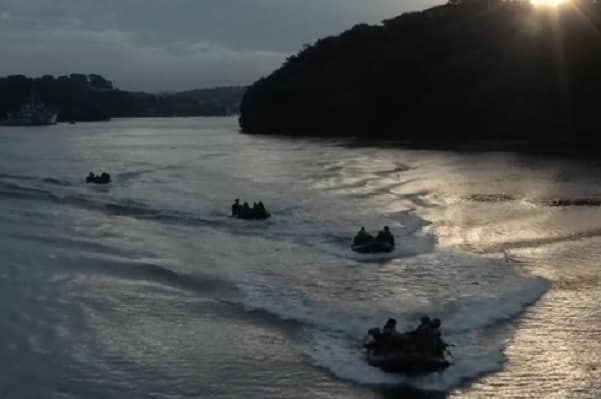
Knighton described the commandos as Britain’s foremost amphibious strike force and said the technology would give them an operational advantage.
“Cobalt will give our commandos a decisive edge, bringing their sensors, autonomous platforms and data together so that they can make decisions faster than any adversary,” he said.
The deal comes as the Government increases investment in the force, with a £100m uplift through the Defence Investment Plan intended to develop specialist maritime and amphibious warfighting capabilities for operations across the High North.
The region has become an increasingly important focus for Nato as Russia’s military activity and the strategic significance of Arctic waters drive demands for stronger surveillance, readiness and rapid-response capabilities.
The Royal Marines have already reshaped their training and operational planning to prioritise the High North, according to Vice Admiral Rune Andersen, chief of the Norwegian Joint Headquarters, who addressed the forum on Wednesday. British troops have also previously tested artificial intelligence during military exercises.
Luke Pollard, Minister for Defence Readiness and Industry, said the agreement demonstrated growing international demand for British defence technology.
“This is a statement of intent from a British scale-up whose work with UK defence will see its workforce double to 150 employees between now and next summer,” he said.
The expansion is expected to create skilled jobs in Britain while increasing the technological capabilities available to UK forces and allies.
UK Commando Force comprises nine units, including six Commando formations, specialist artillery and engineering units, and intelligence and support elements.
The agreement reflects a broader shift in military planning towards integrating autonomous systems, real-time intelligence and artificial intelligence into frontline operations. For the Royal Marines, the ambition is to turn increasingly complex streams of battlefield information into faster, more co-ordinated decisions — an advantage that could prove critical in the unforgiving conditions of the High North.


Leave a Comment