
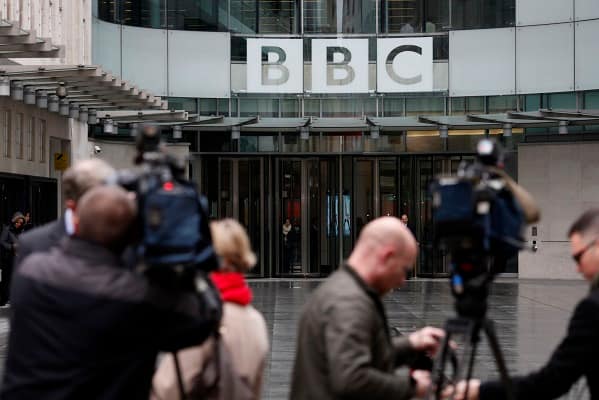
The BBC has drawn up extraordinary contingency plans for a three-day collapse of communications, while ministers urge households to stockpile essentials.
The message is stark: Britain must learn to survive when the systems it takes for granted stop working.
Britain is preparing for a scenario that sounds more like the opening of a dystopian thriller than an official emergency plan: a country plunged into darkness, cut off from the internet, unable to rely on mobile phones and facing the prospect of three days without normal communications.
At the centre of that contingency is the BBC, which has revealed the existence of its closely guarded ‘Black Sky’ plans – an emergency broadcasting blueprint designed to keep the nation informed during a catastrophic breakdown of essential infrastructure.
The scale of the operation is striking. According to reports, only around 100 people worldwide know the full details of the arrangements, which include a dedicated emergency radio studio capable of operating independently of conventional communications networks.
Its mission would be simple but critical: tell millions of people what is happening, what they should do next and how to survive until normal services return.
The emergency facility is designed to remain operational for at least 72 hours without outside assistance. It has secure communications, independent power arrangements and sufficient supplies of food and water to sustain its staff.
Crucially, the BBC would not depend on the internet to reach its audience.
Instead, emergency messages would be transmitted through FM radio towers, supported by diesel-powered generators. Some transmission sites hold substantial fuel reserves, with tanks capable of storing between five and 40,000 litres of diesel.
As the broadcaster explained: “Why FM? Because it works almost everywhere, even in a blackout or a crippling cyber-attack.”
Satellite phones would provide an additional communications lifeline. Should those fail, staff would fall back on pre-agreed protocols and physical meeting points.
The broadcasts themselves would go well beyond conventional news bulletins. Listeners could receive practical instructions covering everything from daily drinking-water requirements to maintaining basic sanitation if disrupted water supplies leave toilets unable to flush.
In a prolonged emergency, such information could prove as important as the restoration of electricity itself.
The revelations come as ministers intensify efforts to persuade the public that national resilience cannot be left entirely to the state.
Under a new Government ‘Be Ready’ campaign, households are being encouraged to maintain at least three days of essential supplies, including bottled water, non-perishable food, torches, cash and a battery-powered or wind-up FM radio.
The advice reflects growing concern about the vulnerability of modern Britain to interconnected failures, whether caused by severe weather, cyber-attacks, infrastructure breakdowns or major disruptions to energy and communications networks.
It also represents a significant shift in the Government’s approach to emergency preparedness as households are being asked to take greater responsibility for their own survival during the crucial first 72 hours of a crisis.
There are already signs that consumers are taking the message seriously.
According to BBC Newsnight, Iceland recorded a 40 per cent increase in sales of tinned food over the weekend, alongside strong demand for bottled water. Retailer Robert Dyas reported an extraordinary 160 per cent increase in radio sales compared with the previous week.
An Iceland spokesperson said supplies remained healthy, adding that consumers appeared to have responded directly to the Government’s advice.
Defence Secretary Wes Streeting welcomed the change in behaviour, saying practical preparations such as keeping tinned food and torches at home could make a difference during flooding, power cuts and burst pipes.
The campaign is the first stage of a three-year effort to improve national resilience, following recent episodes of extreme heat, drought and wildfires that have exposed Britain’s vulnerability to disruptive events.
Households are also being advised to check whether they qualify for priority support during outages and register with their utility providers where appropriate.
Yet the significance of the BBC’s Black Sky preparations extends beyond emergency broadcasting. They offer a glimpse of how seriously authorities are beginning to consider the possibility that the sophisticated systems underpinning everyday British life could fail simultaneously.
For a population accustomed to instant information, electronic payments, online services and uninterrupted utilities, the consequences could be profound.
The BBC’s contingency plan is designed to ensure that, even in such circumstances, the nation is not left completely in the dark.
The message from government and broadcaster is increasingly difficult to ignore: preparedness is no longer simply a matter of stocking a cupboard. It is becoming an essential part of modern national security.


Leave a Comment