
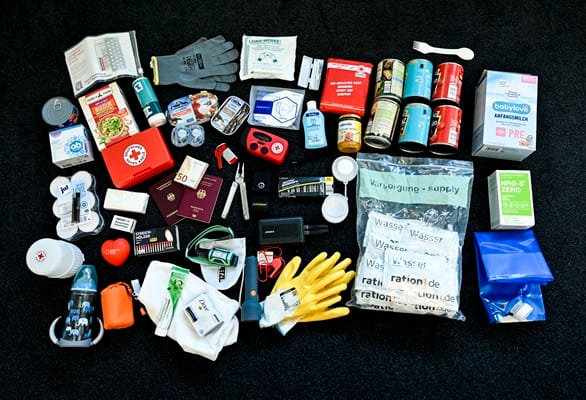
Government updates emergency guidance, urging households to stock essential supplies, keep emergency cash and protect important documents against the possibility of power and internet outages.
Households have been urged to prepare for up to three days of disruption to essential services under updated government guidance, with warnings that losing electricity or internet access could leave everyday necessities suddenly harder to manage.
The latest Be Ready advice encourages people to keep food, water and torches at home to help them cope with an emergency. It also recommends holding emergency cash and keeping copies of important documents readily available, the Mirror reported.
But while preparing for a crisis can help households maintain access to essential supplies, it raises another question: how can people keep those items secure without making them difficult to reach when they are needed most?
Read more related news:
Brits urged to stockpile food as chilling warning says UK could be ‘shut off’ from the world in war
Britons urged to stockpile seven emergency items as flood chaos looms
Brits warned ‘we have a little over 1,000 days’ to prepare for war with Russia
Streeting says ‘we need to be ready’ as Brits told once again to stockpile food and water
Anthony Neary, a security expert at Safe.co.uk, says households should consider not only what they store, but where and how they keep it.
“Most of us rely on our phones, bank cards and electricity for everyday tasks, but if there’s a power cut or disruption to essential services, things we normally take for granted could suddenly become much more difficult,” he says.
“While it’s sensible to have emergency supplies ready, it’s equally important to think about how you’re storing them. Keeping cash, important documents and other essentials secure, but easy to access when needed, could make a real difference in an unexpected situation.”
Cash when contactless payments fail
The growing reliance on electronic payments means that a power cut could create difficulties for people who rarely carry physical money. Card machines and cashpoints may become unavailable during an outage, making a small reserve of cash a useful contingency.
Neary recommends keeping a modest amount of money at home, including a mixture of notes and coins. But he cautions against storing it in obvious places, such as kitchen drawers or bedside tables.
A small lockable cash box or secure compartment can provide a practical compromise, allowing money to remain accessible without being left in plain sight.
Protect documents — but never delay an evacuation
Passports, birth certificates and insurance paperwork can be difficult to replace, particularly during an already stressful emergency.
Neary advises households to keep important papers in a fire-resistant safe with a tested rating suitable for protecting paper documents. Secure digital copies can provide an additional backup.
However, he stresses that protecting possessions must never take priority over personal safety.
“If you ever need to evacuate your home, though, don’t delay leaving to retrieve documents or valuables,” he says.
Keep essential information off your phone
Phones have become repositories for emergency contacts, insurance details and other important information. But a depleted battery or disrupted mobile network could make those records inaccessible when they are most needed.
Neary recommends keeping physical copies of important phone numbers, insurance details and other essential information in a waterproof folder. The folder should be stored somewhere secure that everyone in the household knows about.
Emergency bags also need careful consideration. A bag containing a torch, power bank and medication can make it easier to leave quickly, but leaving it conspicuously beside the front door could advertise the presence of valuables if it also contains cash or important documents.
Instead, Neary advises keeping the bag somewhere discreet but easy to reach, and ensuring every household member knows where it is.
Check what happens when the power goes out
Households with smart locks, electric gates or connected security systems should also establish how their equipment behaves during a power failure or loss of internet connectivity.
Some systems have battery backups or manual overrides, but Neary says people should understand how these features work before an emergency occurs. Having a secure alternative way to enter the property could prevent a disruption from becoming an access problem.
The underlying message is straightforward: emergency preparation involves more than filling cupboards with supplies. Households also need to consider whether they can reach essential items, retrieve vital information and access their homes if the systems they normally depend on stop working.
With the government urging people to prepare for as much as three days of disruption, a few practical checks now could help households manage an unexpected interruption with greater confidence — without leaving cash, documents or other valuables unnecessarily exposed.


Leave a Comment