
Moscow’s reported mobilisation plans underline the Kremlin’s willingness to trade manpower for battlefield pressure, but the move also exposes the economic and political strains of sustaining a prolonged conflict.
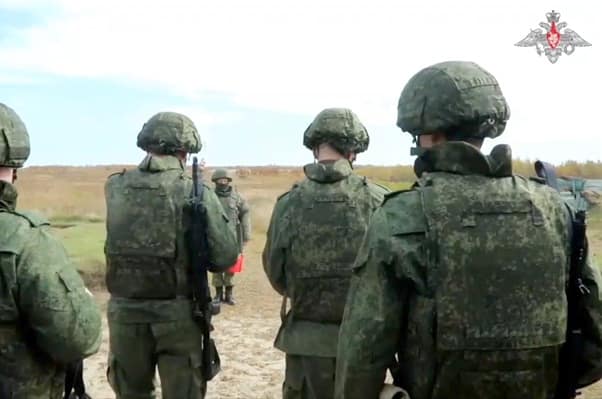
Russia appears to be preparing for another major escalation of its war effort in Ukraine, with Ukrainian officials warning that Moscow could mobilise more than 500,000 people this autumn in a renewed attempt to maintain battlefield momentum.
The scale of the reported call-up would represent a significant expansion of Russia’s wartime mobilisation system and reinforce the Kremlin’s reliance on manpower as its central military advantage.
According to Andrii Kovalenko, head of Ukraine’s Center for Countering Disinformation under the National Security and Defense Council, some newly mobilised personnel could be sent towards the front line within weeks, primarily to reinforce depleted units in eastern Ukraine.
Others, he said, could undergo short training programmes before being prepared for possible operations elsewhere along the front.
The warning comes as both sides enter another potentially decisive period of the war, with Russia seeking to exploit its advantages in troop numbers, artillery capacity and industrial output, while Ukraine attempts to offset those strengths through technology, intelligence and Western military support.
The Kremlin’s war economy calculation
Russia’s approach has increasingly reflected a strategy of sustained attrition.
Rather than seeking rapid breakthroughs, Moscow has relied on continuous pressure designed to exhaust Ukrainian forces and gradually weaken Western political commitment.
A large mobilisation would fit that strategy.
The Kremlin has demonstrated a willingness to accept significant casualties in exchange for incremental territorial gains, calculating that Russia’s larger population and defence industry provide a deeper reservoir of resources.
For Moscow’s military planners, additional troops offer flexibility: exhausted frontline units can be rotated, offensive operations can continue and pressure can be maintained across multiple sectors.
But the strategy carries considerable costs.
Mobilising hundreds of thousands more people would place further strain on Russia’s labour market, regional economies and public finances.
The Kremlin has already increased defence spending dramatically, redirecting industrial capacity towards military production while attempting to shield ordinary Russians from the economic consequences of the war.
The political risk Putin cannot ignore
A nationwide mobilisation remains one of Vladimir Putin’s most politically sensitive options.
The partial mobilisation announced in 2022 triggered widespread anxiety, protests and a wave of Russians leaving the country to avoid conscription.
Since then, Moscow has relied heavily on financial incentives, regional recruitment campaigns and pressure on local authorities to maintain troop numbers without announcing a politically damaging general call-up.
Ukrainian intelligence agencies have repeatedly claimed that Russia is preparing the groundwork for a broader mobilisation while avoiding public discussion of the issue.
The Kremlin’s dilemma is clear: it needs more soldiers to sustain the war, but it must avoid reminding the Russian public that the conflict demands increasing personal sacrifice.
Ukraine faces a manpower challenge
For Kyiv, the threat comes at a difficult moment.
Ukraine has repeatedly warned that manpower shortages represent one of its greatest strategic vulnerabilities after years of fighting.
Russia’s ability to replenish forces has allowed it to maintain offensive pressure despite heavy losses.
The battlefield has increasingly become a contest between industrial capacity and military adaptation.
Ukraine has sought to compensate for fewer troops through expanded drone operations, precision strikes and improved battlefield intelligence.
Russia, meanwhile, has leaned on mass, artillery firepower and a willingness to accept casualties.
The result is a war where small territorial gains can require enormous human costs.
A brutal winter ahead
If Moscow proceeds with a large mobilisation, the coming months could see the conflict enter an even more intense phase.
Ukraine’s forces may face renewed infantry assaults supported by drones, glide bombs and heavy artillery as Russia attempts to exploit fresh manpower reserves.
But mobilisation alone does not guarantee success.
Poorly trained troops can increase casualty rates, while expanding an army rapidly creates logistical challenges involving equipment, command structures and supply lines.
The Kremlin is therefore making a calculated bet: that Russia’s ability to sustain losses will eventually outlast Ukraine’s ability to resist them.
The outcome will depend not only on troop numbers, but on whether Moscow can convert manpower into effective combat power — and whether Ukraine and its allies can ensure that Russia’s numerical advantage does not become decisive.
The next stage of Europe’s biggest war
A new mobilisation would confirm that Russia is preparing for a longer conflict rather than seeking a quick resolution.
The war is increasingly becoming a battle of endurance between two fundamentally different models: Russia’s vast resource base against Ukraine’s reliance on technological innovation and international backing.
The coming winter may reveal which approach can survive the pressure.


Leave a Comment