
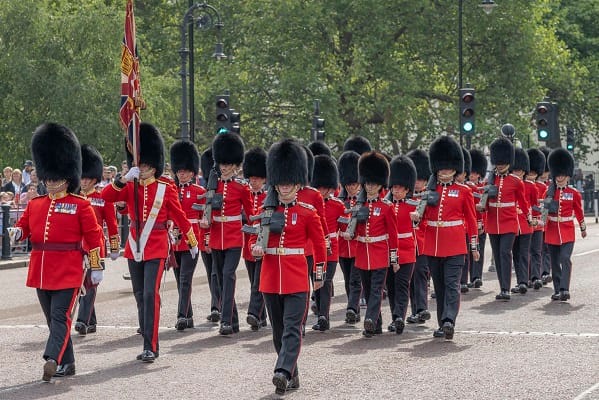
Former Royal Marine Alex Ballinger has urged Andy Burnham to consider introducing national service in Britain, pointing to Finland’s model of military and civilian conscription as European governments reassess their preparedness for a more dangerous security environment.
Britain should consider introducing national service to strengthen its resilience against growing security threats from Russia, a Labour MP and former Royal Marine has suggested, reopening a politically sensitive debate over whether young people should be required to undertake military or civilian service.
Alex Ballinger, who chairs the all-party parliamentary group on the armed forces, said the UK could learn from Finland, where compulsory service forms part of a broader national approach to defence and preparedness.
Speaking at a reception at the Finnish ambassador’s residence on Thursday, Mr Ballinger said he would personally welcome the introduction of national service in Britain.
“There’s a national service setup in Finland, which I think, personally, I would love to have national service in the UK,” he said.
“But I think there’s a lot we can learn in the way you conscript people and get the whole of society behind it.”
Read more related news:
‘We’ll be under someone else’s rule’: Former officer delivers terrifying warning over the lack of UK’s defences
UK braces for war as ministers admit gaps in tracking 95,000 former troops
Brits told ‘our nation is going to need you’ as Britain prepares for war and the ‘unthinkable’
‘Reservists first, then conscription’ as ex-army chief outlines potential UK draft for war
His comments, reported by The Telegraph, come as European countries reassess their defence arrangements in response to Russia’s invasion of Ukraine and the longer-term risks posed by Moscow.
Finland, which shares a lengthy land border with Russia, has maintained a system of conscription and a substantial reserve force. Under its system, men aged 18 to 60 are subject to national defence obligations, with military service for conscripts lasting between 165 and 347 days, depending on their assignment. Civilian service is also available.
Mr Ballinger argued that Britain should study how Finland has organised its response to the threat posed by its neighbour, while recognising that the two countries face different strategic circumstances.
“Those countries like Finland, that are literally sharing a border, have a much larger threat than we do,” he said.
“And I think we need to recognise that and we need to learn some of the lessons from the way you’ve been managing that threat over all of these years. I know you are doing things like shaping your infrastructure.”
The intervention raises questions about how far Britain should go in preparing its population for a potential national emergency, and whether a formal service requirement could help address military recruitment, reserve capacity and wider civil resilience.
It also places national service back on the political agenda less than three years after Rishi Sunak proposed compulsory service during the 2024 general election campaign.
Under the former Conservative prime minister’s proposal, 18-year-olds would have been required to undertake either a military placement or community service. The plan was criticised by Labour, which opposed making national service compulsory.
Mr Ballinger’s remarks do not amount to an announced Labour policy, nor do they establish that the Government is preparing to introduce conscription. They instead add to a debate over what lessons Britain might draw from countries that have built defence preparedness into the relationship between citizens and the state.
Finland’s model reflects decades of planning shaped by its geography and history. Its system combines conscription with a large reserve, territorial defence and preparations intended to support society during crises. Replicating it in Britain would require decisions about the purpose of any scheme, the people covered, its cost and whether service should be military, civilian or voluntary.
Any proposal for compulsory service would also raise questions about individual choice, educational and employment disruption, the availability of training places and the armed forces’ capacity to accommodate large numbers of recruits.
Supporters of national service have argued that a broader programme could improve practical skills, strengthen social cohesion and give the country a larger pool of people trained to respond to emergencies. Critics have questioned whether compulsory schemes would offer better value than targeted investment in professional forces, reserves and voluntary programmes.
For Britain, the challenge is not simply whether to copy Finland’s system, but which elements of its approach could be adapted to the UK’s own defence requirements.
Mr Ballinger’s intervention adds to growing discussion about the responsibilities governments may ask of their populations as security risks evolve. But whether that debate leads to a formal policy shift will depend on decisions that ministers have yet to announce.


Leave a Comment