
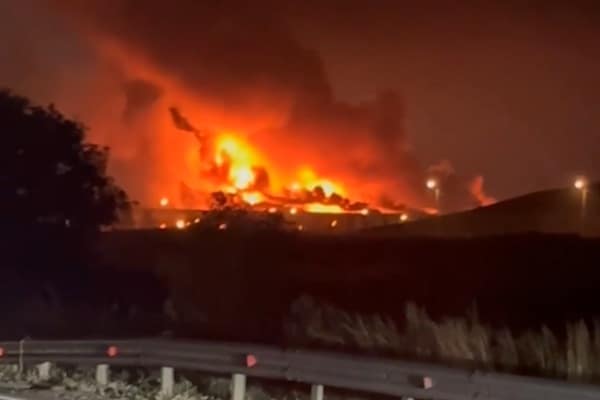
Russians are seeking to leave the country in increasing numbers amid fears of a new military mobilisation, following what Moscow described as an “unprecedented attack” by Ukrainian drones on the capital and surrounding region.
Hundreds of drones targeted Moscow on Sunday as Russia entered the final day of its parliamentary elections, prompting President Vladimir Putin to pledge that Russian strikes on Kyiv would be intensified.
The Russian defence ministry said: “In response to the Kyiv regime’s attacks on civilian targets within Russia, the Russian army will continue and intensify its high-accuracy strikes against military targets in Kyiv.”
The escalation has fuelled concerns among some Russian residents that the government could impose restrictions on departures if another mobilisation is ordered.
Read more related news:
Europe already in a form of ‘World War III’ as Burnham faces pressure to strengthen defences
Intelligence warns of a possible Russian ‘false-flag’ operation against NATO
Russia prepares for ‘stealth’ mobilisation as Europe readies for hybrid attacks on NATO
The anti-war project Ark has reported a sharp increase in requests for assistance from Russians seeking to leave the country. Euronews.com reported that requests for emergency emigration support have surged since July.
Searches for “how to leave” and “mobilisation” have also reached their highest levels since 2023, according to the report.
Jan Slovitsky, a human rights activist and co-ordinator of the Ark project who is assisting new arrivals in Armenia’s capital Yerevan, said Russians were responding to the experience of previous mobilisation campaigns.
“Since mid-July a wave of panic has been rising in Russia, linked to the risk of mobilisation, fuel shortages and lack of internet access.
“People are leaving in advance because they have seen what happened during previous waves. And Armenia is facing a migration crisis, if we are not already in the thick of it.”
Documents cited by news.com.au reportedly indicate that an electronic summons register can automatically trigger an exit ban, adding to concerns among those considering leaving the country.
Putin, however, has dismissed reports of a new mobilisation as “utter nonsense”.
Sunday’s drone assault was described by Moscow officials as the “largest-ever attack by enemy drones”. Moscow mayor Sergei Sobyanin accused Ukraine of attempting to disrupt the three-day parliamentary election, which is expected to further consolidate Putin’s 26-year rule.
The attacks came amid warnings from European intelligence agencies that Russia could seek to escalate its confrontation with Ukraine and increase pressure on NATO countries supporting Kyiv.
European governments have increasingly warned that the conflict could generate wider risks for the alliance, including drone and missile attacks, sabotage of critical infrastructure and other forms of hybrid warfare.
Those concerns are also reshaping preparations for a potential large-scale conflict.
Germany is reviewing the capacity of its civilian and military healthcare systems to cope with a major NATO conflict, according to leaked planning documents cited by the Mirror. Military planners reportedly assessed that as many as 1,000 wounded soldiers could arrive in Germany each day during a major war.
The assessment highlights a potential constraint on European military preparedness: sustaining combat operations would require not only sufficient troops and equipment but also the medical infrastructure needed to treat large numbers of casualties.
For Russians considering whether to leave, meanwhile, the prospect of renewed mobilisation is becoming an increasingly important factor, according to anti-war activists assisting people seeking to relocate.
The Kremlin continues to dismiss mobilisation rumours, but the reported increase in searches and requests for emigration assistance suggests that memories of previous mobilisation campaigns are influencing decisions to leave before any new restrictions are introduced.


Leave a Comment