
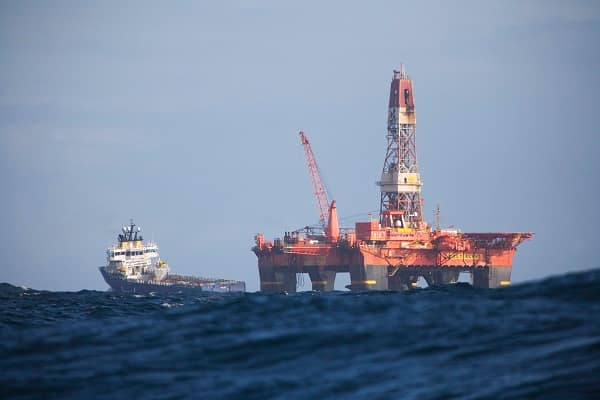
The future of Rosebank, the UK’s largest undeveloped oilfield, has become a defining test of the government’s approach to energy security, investment and the transition to net zero.
Work on the North Sea project has been halted following a legal challenge arguing that its development is incompatible with Britain’s climate commitments. A government consultation on Rosebank closed on Monday, with a parallel process concerning the Jackdaw gasfield having concluded last week.
The decisions will offer an early indication of how Prime Minister Andy Burnham intends to balance the competing demands of climate policy and a declining domestic oil and gas industry.
Offshore industry leaders argue that the debate risks overlooking a basic economic reality: Britain is expected to continue consuming oil and gas for decades, even as production from the UK Continental Shelf falls sharply.
Russell Borthwick, chief executive of Aberdeen & Grampian Chamber of Commerce, said the debate had become dominated by “slogans rather than evidence”.
“Every credible forecast shows Britain will continue to need oil and gas for decades to come,” he said. “The real question is whether we produce more of that energy ourselves, under some of the world’s highest environmental standards, or increasingly rely on imports from overseas.”
UK Continental Shelf production is declining by about 10 per cent a year, according to the chamber. Without further investment, proponents of Rosebank argue, the shortfall will increasingly be met by overseas suppliers, leaving Britain more exposed to international prices while exporting investment, employment and potential tax receipts.
The Offshore Energies UK trade body describes Rosebank as the UK’s “biggest new energy project”. It estimates that the field could account for about 10 per cent of domestic crude production over the next decade and around 4 per cent of UK gas supply.
The project represents an estimated £8.7bn of private investment and could generate more than £24bn in economic value, according to OEUK.
For climate campaigners, those benefits do not outweigh the environmental cost. They argue that most of Rosebank’s oil would be exported and that new North Sea production would do little to reduce household energy bills.
The opposition has attracted prominent support from musicians including Brian Eno, Robert Smith, Thom Yorke and Bobby Gillespie. More than 200 artists have signed an open letter warning that approving the project would contribute to climate risks that are already disrupting the live music industry.
The debate has intensified after a summer of heatwaves, wildfires and extreme weather across Britain and Europe.
Suzi Shingler, campaign manager at Stop Rosebank, accused the government of remaining silent on climate change while considering approval of the project.
The political calculation is particularly delicate for Burnham. A decision to approve Rosebank could reassure an offshore industry facing rapid decline and reinforce the government’s emphasis on energy security. But it would also risk reopening a confrontation with environmental groups and raising questions over the credibility of its net-zero commitments.
Jackdaw presents a similar, though predominantly gas-focused, dilemma. Reports that Burnham is minded to approve the project have heightened expectations that the government may favour domestic production where it believes it can strengthen energy resilience.
The government has yet to make a final decision on either field.
A Department for Energy Security and Net Zero spokesperson said the North Sea remained “a vital national asset”, supporting jobs, growth and energy security.
“Oil and gas will continue to play an important role in our energy system for decades to come,” the department said, alongside the transition to clean power.
For Burnham, the central question is increasingly difficult to avoid: if Britain will continue to consume hydrocarbons, can it afford to let its own production disappear while becoming more dependent on imports?
The answer could shape the country’s energy policy — and its industrial strategy — for years to come.


Leave a Comment