
Rumours that North Korean leader Kim Jong-un has suffered a fatal brain haemorrhage have once again turned the spotlight on one of the most consequential unanswered questions in global security; who would take control if the dictator suddenly disappeared?
The claims, which circulated on social media, alleged that Kim had fallen into a coma after being rushed to Beijing for emergency treatment. They echoed previous speculation in 2020, when his prolonged absence from public view prompted reports that he had died or was gravely ill.
North Korean state media subsequently released photographs purporting to show Kim attending a garment and footwear exhibition. The images have not been independently verified, and the reports of his death remain unsubstantiated.
North Korea expert Dr. Sung-Yoon Lee previously stated that Yo Jong wants to keep the “power to have people executed on a whim [and] play God, deciding who lives and dies just because they look at [her] in a way,” the Asia Society reported.
Dr Yoon Lee told the organisation that she publicly spoke about unleashing a nuclear force; he warned: “This is why I say she is the most dangerous woman in the world.”
Read more related news:
Kim Jong-un death claims escalate online potentially plunging North Korea into civil war’
North Korea is building Putin’s war machine as 50,000 more troops loom
North Korea’s nuclear arsenal may be far bigger than Trump thinks
Kim Jong-Un’s sister signals ‘tactical strike’ in chilling border warning as leader feared dead
Dr Lee further warned: “We’ve never seen a despotic for life armed with nuclear weapons issuing threats of pre-emptive nuclear attack against a peaceful neighbour in South Korea. So she is to be watched out for and taken very seriously.”
Yet the episode has renewed scrutiny of his younger sister, Kim Yo Jong, widely regarded as one of Pyongyang’s most influential figures and a potential central player in any succession crisis.
At 38, she holds senior positions in the ruling Workers’ Party and has become a prominent voice in the regime’s dealings with South Korea and the wider international community. However, her political authority does not automatically guarantee a smooth transfer of power in a system built around the Kim family’s hereditary rule.
For analysts, the prospect of her elevation raises difficult questions about the direction of a government that controls nuclear weapons while tightly restricting information about its leadership.
Sung-Yoon Lee, a professor at Tufts University and author of The Sister: The Extraordinary Story of Kim Yo Jong, the Most Powerful Woman in North Korea, has previously described her as “ambitious and smart”.
He also observed that she “does cast a softer feminine glow on the brutish facade of her regime”.
That apparent contrast between presentation and political rhetoric has helped make Kim Yo Jong an object of international scrutiny. Her public statements have frequently been uncompromising, particularly towards Seoul.
In 2022, she told then South Korean president Yoon Suk Yeol to “shut his mouth”, dismissing him as “really simple and still childish”.
During the Covid-19 outbreak, she also accused South Korea of introducing the virus into the North and threatened a severe response.
“We have cleared out the virus spread by the South Korean scum. We must counter it toughly,” she declared. “We have already considered various counteraction plans, but our countermeasure must be a deadly retaliatory one.”
Such language has fuelled assessments that her leadership could preserve or intensify the regime’s confrontational approach. But it remains uncertain how much she would alter North Korea’s domestic or foreign policies.
Retired US Army Colonel David Maxwell has argued that Washington should approach any succession with caution.
“We have to assume that every successor is worse than the last,” he said.
“I haven’t seen any evidence, any indication of how she might rule, but my speculation — given the reputation and history of the family — is that she would rule with an iron fist.”
The comments reflect the difficulty of predicting political change inside a state where independent information is scarce, and decision-making is concentrated among a narrow ruling elite.
Kim Yo Jong is not the only potential consideration in the succession question. Kim Jong-un’s daughter, Kim Ju Ae, has appeared alongside her father at prominent military events and official engagements, prompting speculation about her eventual role in the regime.
Some analysts have suggested that, if Kim Jong-un were to die before his daughter reached adulthood, his sister could emerge as a temporary leader or power broker. There is, however, no publicly established succession arrangement confirming that scenario.
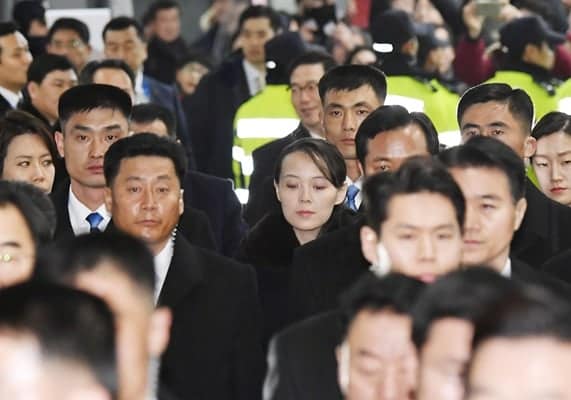
Kim Yo Jong’s rise has been gradual but significant. She first attracted international attention during the 2018 Winter Olympics in South Korea, when she joined the North Korean delegation. She has since held senior party and state roles and was placed on a US sanctions list in 2017 over human rights abuses attributed to the regime.
Much of her private life remains unverified, underscoring the opacity surrounding even the most powerful figures in North Korea.
For now, claims of Kim Jong-un’s death should be treated with caution. But the recurring speculation reveals a genuine strategic vulnerability: the world has limited visibility into the health, internal politics and succession planning of a nuclear-armed state.
The immediate question is whether Kim Jong-un is seriously ill. The more consequential question is what happens if he can no longer rule—and whether the system he commands could withstand the uncertainty that follows.


Leave a Comment