
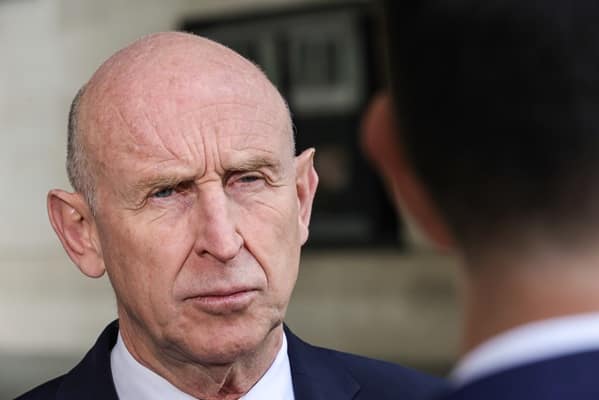
Chancellor John Healey is preparing to scale back a tax break used by entrepreneurs selling their companies, with the savings potentially redirected towards founders who reinvest in British businesses and create jobs.
Business owners planning to sell their companies could face a fresh tax hit as the Chancellor prepares to curb a relief that has long helped entrepreneurs turn years of work into retirement funds.
Business Asset Disposal Relief (BADR), which reduces capital gains tax on qualifying business sales, could be significantly restricted in next week’s Budget, according to The Telegraph.
The move would mark a shift in the Government’s approach to supporting business, moving away from rewarding owners when they sell towards incentivising those who reinvest Johprofits, expand their companies and generate jobs in Britain.
The Treasury is understood to be considering using the savings to fund lower capital gains tax rates or more generous incentives for entrepreneurs who build and scale businesses in the UK.
HMRC estimates that the relief cost the Treasury £800million in the most recent tax year.
Introduced by Labour in 2008 under the name entrepreneurs’ relief, the scheme originally allowed eligible business owners to pay capital gains tax at 10 per cent on qualifying disposals, subject to a lifetime limit of £1million.
The Coalition government subsequently raised that allowance to £10million before Rishi Sunak cut it back to £1million in 2020, following criticism that the relief disproportionately benefited wealthy business owners.
Rachel Reeves, Healey’s predecessor as Chancellor, later increased the tax rate to 14 per cent, before it rose again to 18 per cent in April 2026. The changes came alongside inheritance tax reforms affecting farmers and business owners.
Further restrictions would intensify the debate over whether the tax system should prioritise rewarding entrepreneurs when they exit a business or encouraging them to reinvest their wealth into new ventures.
The Resolution Foundation, whose former chief executive Torsten Bell is now a Treasury minister, has described BADR as “Britain’s worst tax break”.
A review commissioned by Reeves also questioned whether the relief was doing enough to stimulate investment and economic growth.
One alternative under consideration draws on the American experience, where successful entrepreneurs have used the proceeds from one venture to finance the next generation of companies.
The so-called “PayPal Mafia” — a group of former PayPal executives and founders including Elon Musk and Peter Thiel — has become a prominent example of how wealth generated by one successful business can help fund others.
The Treasury has been studying proposals from the Start Up Coalition and the Centre for British Progress, both of which have advocated tax incentives aimed at founders who reinvest their gains into new enterprises.
Dom Hallas, of the Start Up Coalition, said the tax system did more to encourage people to invest in start-ups than to support those who created them.
“We rightly do lots in the tax system to incentivise those investing in start-ups in the UK, but a lot less to support the founders that actually build them,” he said.
He added that the priority should be to encourage entrepreneurs not only to establish companies but to expand them and remain in Britain.
“We’d love to see anything that encourages entrepreneurs themselves to not just start, but to scale and actually stay in the UK.”
But business groups have warned that restricting the relief further could penalise owners who have spent decades building companies and rely on the proceeds from a sale to fund their retirement.
Craig Beaumont, of the Federation of Small Businesses, said entrepreneurs’ relief remained important to owners preparing to leave their businesses.
“Small business owners work hard through their lives and rely on entrepreneurs’ relief when selling their business to fund their retirement,” he said.
“This relief has already been reduced and limited it must not be thoughtlessly discarded.”
The proposals could prove particularly contentious for family-owned businesses, which account for a substantial share of Britain’s private sector.
According to the Family Business Research Foundation, family firms employ nearly 60 per cent of private sector workers and pay more than £400billion in taxes.
Meanwhile, analysis by wealth manager Rathbones found that just under 5,800 businesses were sold in 2025, the highest number in eight years and 70 per cent above the level recorded in 2018.
The figures suggest that a growing number of owners are reaching the point of selling, putting the future treatment of business-sale proceeds under renewed scrutiny.
Healey has promised a Budget for Britain’s “bloody-minded entrepreneurs”, pledging to cut red tape and “back business in Britain making a profit”.
The challenge for the Chancellor will be to convince founders that changing the relief will encourage more investment and growth, rather than simply reducing the reward for those who have already taken the risks of building a successful company.


Leave a Comment