
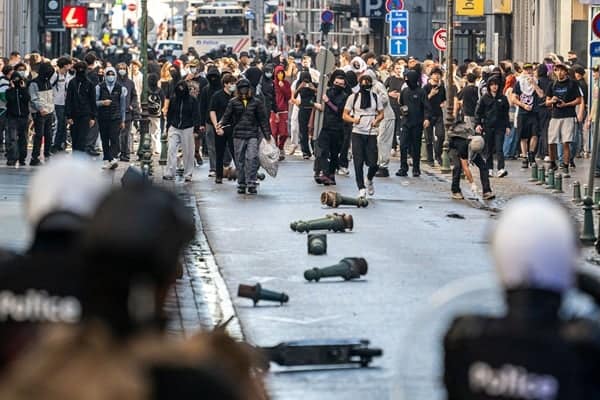
Reform UK leader Nigel Farage has backed deploying the British Army to confront violent unrest, warning that political intolerance and a growing disregard for democracy could push Britain towards French-style riots.
Farage said troops should be used swiftly if disorder escalated, questioning why French President Emmanuel Macron had appeared reluctant to deploy the military during unrest in France.
“The mystery to me is why Macron did not call the army in more quickly, and I hope if we even begin to descend to those levels that we use the military as quickly as possible,” Farage told GB News ahead of a rally in Plymouth.
The Clacton MP rejected the suggestion that migration alone explained France’s unrest, instead highlighting what he described as an increasingly volatile political climate in Britain, where demonstrations and confrontational activism risk spilling into violence.
“There is now such an intolerance, political intolerance, on the new left of British politics, and by the way, elements of the right, too,” he said.
“We don’t respect democracy anymore, or some people don’t. And they think direct action and violence is acceptable.”
Read more related news:
France in crisis mode as Macron weighs emergency powers as riots leave thousands of businesses damaged
Macron rejects interior minister’s resignation as France struggles to contain wave of riots
Emmanuel Petit savages foreign rioters in France and tells foreigners ‘go back from where you came’
‘We will have no choice but to leave’: Trump links France’s riots to a fresh NATO ultimatum
Farage invoked the riots that swept London in 2011, when looting, arson and clashes with police exposed the speed at which disorder could spread through urban communities.
“Cast your mind back to 2011, when we did have some quite serious rioting and arson and looting taking place in London, I’m genuinely concerned,” he added.
His remarks place the use of military force at the centre of a politically charged debate over public order, civil liberties and the state’s response to violent demonstrations. Deploying troops domestically would raise significant questions about the appropriate role of the armed forces in civilian policing, as well as the circumstances in which such intervention could be justified.
Conservative leader Kemi Badenoch offered a broader explanation for the risk of unrest, arguing that economic hardship and cultural divisions were reinforcing one another.
“I do worry that things like that could happen here,” she told GB News, pointing to protests that had already flared across the country.
“That is why it is very important that we get our economy growing again. People are feeling poorer.”
Badenoch argued that declining living standards could not be separated from wider disputes over national identity, patriotism and Britain’s historical legacy.
“Our economic problems and our cultural problems are two sides of the same coin,” she said.
She criticised what she described as narratives portraying Britain as inherently racist, arguing that hostility towards national identity could contribute to vandalism and attacks on symbols of British heritage.
“If you tell young people that their country is terrible, that it’s okay to hate their country, that Britain is a racist place, and end up going on about imperialism, white privilege and all of that rubbish, then you see them burning down churches and spraying graffiti on war memorials,” Badenoch said.
“I will fight for British culture. It’s very important.”
The competing interventions underline the political sensitivity surrounding public disorder. Farage has emphasised enforcement and rapid military intervention, while Badenoch has linked the threat to economic insecurity and cultural conflict.
Neither argument establishes that Britain is destined to experience the scale of unrest seen in France. But their warnings reveal how concerns about violence, social cohesion and declining trust in democratic institutions are becoming increasingly prominent in the debate over Britain’s security.


Leave a Comment