
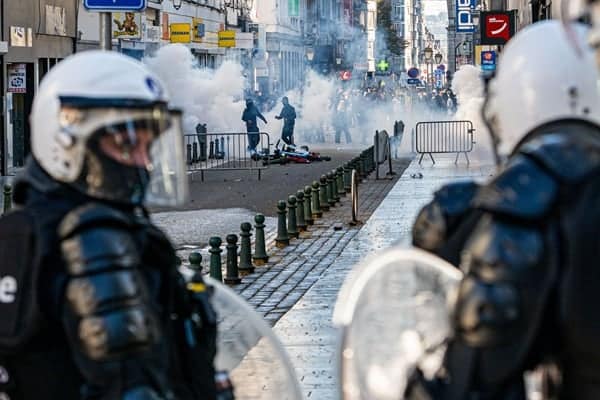
France is considering tougher emergency measures to contain a wave of civil unrest that has damaged thousands of businesses, injured hundreds of emergency workers and left the government facing mounting questions over public order.
Prime Minister Sebastien Lecornu said local mayors could impose partial curfews to protect residents and commercial districts, as authorities assessed the scale of destruction after a weekend of violent protests.
“The prefects will discuss this with the mayors and their local chambers of commerce and industry,” Lecornu told a press conference on Monday. He added that the government would declare a state of emergency if circumstances required it.
The measures underline the pressure on President Emmanuel Macron’s administration to restore order while limiting the economic damage. An estimated 3,000 businesses have been damaged or looted, prompting the government to make furlough support available from Tuesday for companies affected by the violence.
More than 2,400 people have been arrested, according to figures cited by the government, while almost 1,000 emergency workers have been injured. Lecornu said about 80 per cent of those arrested during the weekend’s unrest now faced criminal charges.
The prime minister blamed what he described as the “ultra-left” and other criminal elements for their role in the disorder, while distinguishing violent acts from legitimate political dissent.
“We can’t allow people to teach you to riot,” he said, referring to demonstrators, including those under 18. Young people must be able to disagree with the government, he added, but within a framework that does not descend into violence.
Lecornu also announced a major investigation into the weekend’s events. About 200 investigators are beginning an operation in Paris to analyse footage of the destruction and establish how the violence unfolded.
“The French people want to know how the disorder came about, how it all unfolded, and how this violence came about our country,” he said.
The damage has extended beyond shops and commercial premises. In Limoges, a fire left the city’s 19th-century town hall, built in 1883 and designated a historic landmark in 1975, “largely lost”, according to reports. The destruction has become a potent symbol of the scale of the unrest and the challenge facing authorities seeking to protect public institutions.
Macron, addressing the country on Sunday, said the scenes had left France feeling “both anger and shame”.
“To see the cities, the streets of our cities, ransacked like this is unbearable,” he said, adding that nothing justified or excused the violence.
The political consequences have also reached the security establishment. Interior Minister Laurent Nunez offered his resignation, but Macron rejected it and asked him to remain in office to preserve the chain of command across police and security forces. The president also instructed him to develop new approaches to tackling looting.
Lecornu said it was a “miracle” that nobody had been killed in the unrest. Yet with curfews under consideration, emergency assistance being mobilised and investigators beginning to reconstruct the violence, the government faces an urgent test: restoring public confidence while preventing further damage to communities and businesses.


Leave a Comment