
For nearly five years, Vladimir Putin has tried to convince the world that Russian victory in Ukraine is inevitable; his justifications may have shifted- Nazis, “saving Russian speakers” and supposed biolabs- but the underlying message has remained remarkably consistent; that Russia can outlast Ukraine, absorb any losses and eventually dictate the terms.
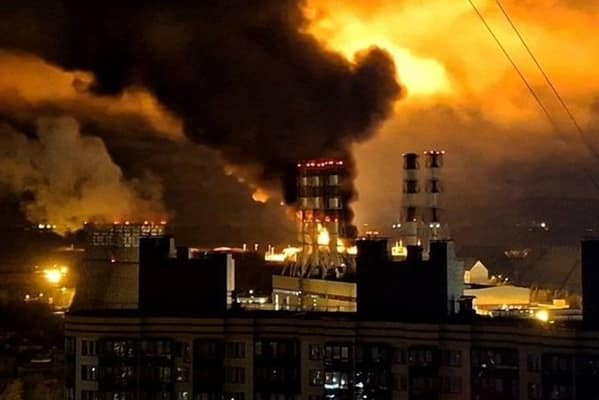
Images from St Petersburg this weekend tell a different story.
Ukraine’s overnight drone attack struck the St Petersburg Oil Terminal and Ruchyi oil depot, with fires also reported at industrial warehouses.
An Ozon logistics centre and a VK data centre in the surrounding Leningrad region were also reported hit. The full extent of the damage remains unclear, but the significance is already apparent: the distance from Ukraine no longer guarantees protection for the infrastructure supporting Russia’s economy.
For a Kremlin that built its reputation on strength and security, that is an uncomfortable development. Putin can bombard Ukrainian cities, but he cannot promise that the consequences of his invasion will remain outside Russia.
For businesses, insurers and energy markets, this carries implications beyond the immediate damage; facilities once considered safely removed from the fighting now face disruption. Security costs rise, operations become less predictable, and the commercial consequences of continuing this war spread further into Russia.
Read more related news:
Britain prepares troops for Ukraine deployment as Trump deepens rift with NATO allies
Army chief warns ‘war is no longer unthinkable’ and MPs will have to tell Brits ‘where the risk lies’
A breached fence, grounded Russian aircraft and Leipzig Airport under a cloud of suspicion
Britain’s warning of a silent war on an ‘ordinary Monday’ and ‘the attack you may never see’
Ukrainian officials surprisingly reported sudden restrictions on the battlefield use of SpaceX satellite terminals last week, disrupting drone operations. The Associated Press reported that the changes affected drones’ ability to operate at speed, raising concerns about capabilities Ukraine relies upon in combat, especially in areas around the southern land corridor.
Responsibility for the satellite restrictions remains contested, but Washington’s contradictory explanations deserve scrutiny, with Marco Rubio rejecting that the disruption was deliberate and saying of the Starlink slowdown: “It sort of happened.” He added that his understanding was that the service had been restored
On intelligence sharing, Zelensky said on Sunday that information had been “de-blocked”, adding: “We are very thankful for this, now it works.” But on Monday, 19 October, Rubio flatly contradicted him, “There’s been no pause.” The US secretary of state then said Zelensky should concentrate on ending the war.
An extraordinary response given Zelensky’s stated willingness to hold elections if a 60-day ceasefire made them possible, Russia flatly rejecting the proposal.
From here in Ukraine, that dependency is measured in the ability to protect people and keep military operations functioning, the wider diplomatic picture makes this harder to ignore while Washington has eased restrictions on Russian diesel exports while pressing for an end to attacks on energy infrastructure, meanwhile, President Volodymyr Zelensky said Russia attacked Ukraine’s energy sector 76 times over the preceding week with Reuters reporting that neither Kyiv nor Moscow had formally confirmed the energy ceasefire announced by Donald Trump.
That leaves an obvious question, what incentive does Moscow have to stop if economic relief arrives while its attacks continue?
Managing energy prices is a legitimate concern, but Trump’s attempt to present Ukraine’s strikes as the explanation for expensive fuel deserves far greater scrutiny, particularly when his own war with Iran has disrupted supplies, endangered shipping and inflicted costs on businesses and households far beyond the Middle East.
The International Energy Agency’s October assessment explicitly connects the Iran war with restricted fuel availability, soaring prices and a deteriorating economic outlook. This is an economic consequence of a conflict in which Trump’s administration is directly involved.
The disruption also extends beyond damaged refineries, threats to shipping through the Strait of Hormuz affect the movement of oil itself, while higher freight and insurance costs add to the price of getting supplies to market. On Friday, Brent reached $110 a barrel amid fears of further Middle Eastern disruption. Reuters reported that Iran said it was escalating attacks in response to the US blockade of its ports and tighter sanctions.
Another “special military operation” that’s very special indeed.
Ukraine’s attacks on Russian refineries have also contributed to tighter fuel supplies, particularly diesel, that should be acknowledged, but acknowledging a contribution does not establish that Ukraine is chiefly responsible for the global energy crisis, nor does it absolve Washington of responsibility for the consequences of its own decisions. Reuters describes Russian refinery outages as compounding the squeeze caused by the Middle East conflict.
With also the US midterm elections on 3 November approaching, expensive fuel also presents Trump with an immediate political problem. Iranian officials have told The Washington Post that they see pressure on oil supplies as a means of inflicting electoral damage on his administration, so in my view, blaming Kyiv looks increasingly like deflection from Trump’s Iran debacle.
It gives the administration an external culprit for rising costs while allowing it to present a deal with Putin as the solution, yet, Associated Press reporting suggests the Russian diesel arrangement is unlikely to transform global prices, even as it delivers political benefits to the Kremlin, however, Ukraine should not be expected to absorb continuing Russian attacks so that Trump can seek relief from the political consequences of his own foreign policy.
Protecting Russian export revenues without securing meaningful restraint gives Putin more room to continue his war, and Russia’s manpower position provides another reason to question whether this is the moment to offer him that relief.
The familiar claim that Moscow possesses an effectively unlimited supply of soldiers confuses population size with deployable military strength. Recruiting a man, training him, equipping him and turning him into an effective member of a combat unit are different tasks.
An assessment published by the Institute for the Study of War and Critical Threats in September described difficulties replacing Russian losses through volunteer recruitment and identified preparations for possible mobilisation. That supports concern about Russia’s ability to sustain its campaign; it does not establish that a new nationwide mobilisation has already begun.
This is why quieter recruitment measures and mobilisation preparations matter, they reveal the continuing demands of a war the Kremlin originally expected to resolve far more quickly. As someone who has served in combat, I know that replacing personnel on a spreadsheet does not replace experience within a unit. Leadership, judgement and trust take time to develop. Repeated losses erode that foundation, even when new recruits continue to arrive.
None of this means Russia is about to collapse, nor should every Ukrainian success be turned into a prediction of imminent victory. Russia retains substantial destructive capacity, and Ukrainians continue to pay an appalling price.
But those realities do not justify treating Putin’s preferred outcome as inevitable.
Ukraine is still adapting, it’s extending its reach and forcing Russia to confront costs far beyond the frontline, with the fires in St Petersburg evidence of that changing reach, even while the broader war remains difficult and uncertain.
My concern is that Western policy is failing to respond to this opportunity, pressure now should be directed towards making continued aggression less sustainable for Moscow. Restricting Ukrainian capabilities while easing Russia’s economic position risks achieving exactly the opposite, so we have to ask why is this happening?
What strategic purpose is served by weakening Ukraine’s ability to defend itself while giving the country attacking it greater economic breathing room?
Putin’s vulnerabilities should strengthen the case for sustained support for Ukraine.
They should not become the moment we help him recover.


Leave a Comment