
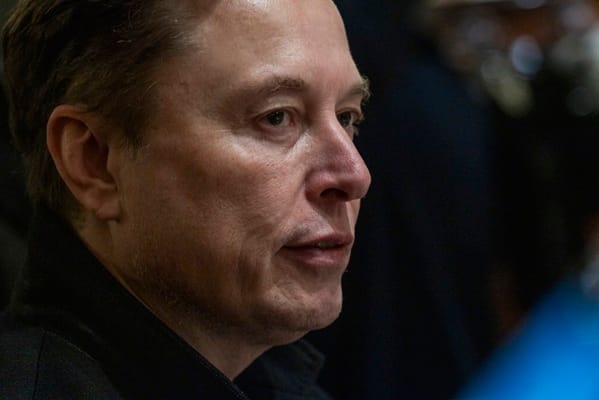
Elon Musk has reignited a dispute over the role of private technology in Ukraine’s war with Russia, accusing Kyiv’s military of violating the terms of service governing SpaceX’s Starlink satellite network to conduct offensive drone strikes.
The billionaire entrepreneur said a loophole allowing commercial satellite connectivity for lethal operations had been closed, while insisting Starlink remained indispensable to Ukraine’s defence against Russian forces.
Writing on X on Saturday, October 24, Musk drew a distinction between Starlink, SpaceX’s commercial communications service, and Starshield, a separate system controlled by the US government.
“Using Starlink, a civilian commercial service, for offensive drone strikes to kill people has never been allowed, nor should it be,” he wrote.
“Ukraine military violated Starlink terms of service and used it for offensive drone strikes to kill people. That loophole was closed last week.”
The allegations were swiftly challenged by Ukrainian defence specialists, who argued that technical and regulatory safeguards already prevented ordinary commercial Starlink terminals from being used on moving platforms for the types of attacks Musk described.
Read more related news:
Who commands America’s battlefield communications, the Pentagon, Trump or Musk?
‘Who gave the order?’ Congress probes Starlink restrictions as pressure mounts on Musk
UK prepares for full-scale war as ‘Britain is back in the business of making weapons’
Brits warned ‘we have a little over 1,000 days’ to prepare for war with Russia
The dispute highlights the strategic sensitivity of Ukraine’s reliance on satellite communications supplied by a private company whose founder retains considerable influence over the system’s operation.
Musk has repeatedly emphasised Starlink’s importance to Ukraine, describing it as the only communications network resilient enough to withstand Russian jamming and physical disruption. He also warned that terminating the service would cause an immediate collapse of Ukraine’s front line, presenting the assessment as a statement of fact rather than a threat.
SpaceX, he argued, had done more to defend Ukraine than any other private enterprise globally.
Yet the latest confrontation has underscored the complications created when a commercial technology platform becomes critical military infrastructure.
Kyiv disputes Musk’s account
Serhii Sternenko, a Ukrainian defence specialist, volunteer and former adviser to the defence ministry, disputed Musk’s claim that commercial Starlink had been used for offensive drone operations.
He said technical restrictions introduced in February had established separate registration requirements for stationary commercial terminals and equipment intended to operate while moving.
“In February of this year, whitelists were introduced,” Sternenko said.
“Stationary terminals could be registered by both military personnel and civilians. But for any satellite terminal to function in motion, it had to be placed on a special list and connected to the military Starshield system. Otherwise, satellite communication terminals in Ukraine would not function.”
According to Sternenko, those arrangements meant standard commercial Starlink terminals could not operate on Ukrainian unmanned aerial vehicles under the existing protocols. Drone missions requiring satellite guidance, he said, relied on Starshield instead.
Serhii Beskrestnov, a presidential adviser on defence technology known by the call sign “Flash”, also rejected Musk’s allegations.
In a Telegram post on Saturday evening, Beskrestnov said commercial Starlink terminals operating in Ukraine and occupied territories had faced strict operational restrictions since early 2026.
These included an automatic velocity cutoff calibrated between 70 and 90 kilometres per hour, as well as geographical restrictions that deactivate commercial connectivity across Russian sovereign territory.
“Very strange that Elon Musk does not know about the restrictions on Starlink operations in Ukraine,” Beskrestnov wrote.
“Thus, we are physically unable to use commercial Starlink for deep strikes and medium-range strikes.”
The competing accounts leave a central question unresolved: whether Ukraine’s military exploited a vulnerability in the commercial system, as Musk alleges, or whether existing technical safeguards already prevented the operations he described.
Speed restrictions expose military dependence
The argument follows days of operational disruption after Ukrainian President Volodymyr Zelensky disclosed on October 17 that a speed restriction of 161 kilometres per hour had been imposed on satellite terminals operating within Ukraine.
Ukrainian military specialists reported that the change severed telemetry connections and grounded domestic interceptor drones used against Russian jet-powered Shahed loitering munitions, which can travel at speeds exceeding 400 kilometres per hour.
The reported disruption exposed the consequences of applying technical restrictions to a network used not only for conventional communications but also to support military operations involving fast-moving equipment.
Comparative trials by Ukrainian engineers reportedly showed that vehicles equipped with Starlink continued operating normally at speeds above 180 kilometres per hour in neighbouring European Union territory. The results suggested that the restriction was geographically confined to Ukraine.
The immediate operational dispute eased on Saturday, when Ukrainian defence officials confirmed that Starlink and Starshield speeds had returned to their previous levels. Domestic interceptor units and uncrewed logistics platforms were consequently able to resume standard operations.
But the restoration of service has not resolved the wider disagreement over how commercial satellite infrastructure should be used in wartime, who determines its operational limits and how those decisions affect Ukraine’s military capabilities.
A strategic vulnerability
For Kyiv, Starlink’s resilience against Russian interference has made it an important communications asset. Its importance, however, also creates exposure to decisions made by a company operating outside Ukraine’s direct control.
Musk’s latest statements demonstrate the competing pressures surrounding that relationship. SpaceX has helped provide communications capacity that Ukraine considers vital, while the company maintains that its commercial service must operate within defined terms and restrictions.
The distinction between Starlink and the US government-controlled Starshield system is therefore more than a technical question. It goes to the heart of how commercial technology, military requirements and private control intersect during a major conflict.
Ukraine’s specialists insist that existing safeguards already prevent commercial terminals from performing the offensive role Musk described. Musk, meanwhile, maintains that the military violated the service’s terms and that the loophole has now been closed.
With the latest speed restrictions reportedly reversed, the immediate disruption has subsided. The underlying dispute remains a reminder that a military’s dependence on privately controlled infrastructure can turn a technical adjustment or disagreement over acceptable use into a matter of national security.


Leave a Comment