
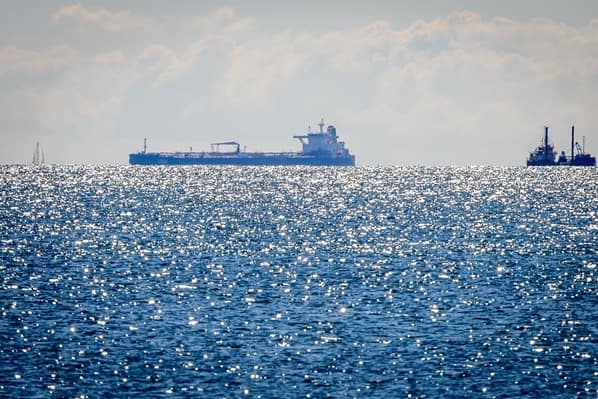
A Russian tanker sanctioned by Britain a year ago has sailed past Shetland carrying about 300,000 barrels of Russian diesel destined for North America, highlighting the limits of efforts to choke off the energy revenues sustaining Moscow’s war against Ukraine.
The Leruo’s passage comes as Russia continues to bombard Ukrainian homes and power plants with missiles and drones, while the sale of its energy helps finance the assault.
On Saturday, the RAF was also dispatched to monitor another sanctioned tanker, the Myra, west of Scotland. The vessel subsequently continued towards Egypt.
The voyages raise uncomfortable questions about the enforcement of sanctions and the willingness of Western governments to prevent sanctioned vessels from moving Russian fuel through international shipping routes.
The Leruo’s cargo is among shipments enabled by a US Treasury licence temporarily easing sanctions on Russian diesel until 7 April. Reuters reports that the first such cargo destined for the US is due to arrive in New York on 7 November.
Read more related news:
‘We outplayed Russia on their own ground’: Ukraine’s daring 15km underground assault behind enemy lines
‘Brace for battle’: British and French troops unite in major NATO drill against drone warfare
Brits warned ‘we have a little over 1,000 days’ to prepare for war with Russia
‘Banning everything from Russia is stupidity’ as Putin moans at Western sanctions
The apparent contradiction is stark: Western governments condemn Russia’s invasion and seek to restrict the revenues that support it, yet Russian petroleum products continue moving towards overseas markets under regulatory exemptions.
Ukraine campaign group Razom We Stand has called on Britain to stop allowing sanctioned tankers to pass through its waters unchallenged.
Britain has demonstrated that intervention is possible. In June, UK forces boarded and detained the sanctioned tanker Smyrtos in the English Channel. The operation provides a precedent for action, even as the latest voyages raise questions about when that power will be used.
The issue is not simply whether sanctions exist on paper, but whether they meaningfully constrain the flows of money and fuel that sustain Russia’s war.
As sanctioned tankers continue their journeys, the credibility of Western pressure on Moscow increasingly depends on the gap between declaring restrictions and enforcing them.
Dr Svitlana Romanko, Founder and Executive Director of Razom We Stand, said: “Every barrel on board these ships exporting Russian fossil fuels is money for the missiles and drones Russia fires at Ukrainian homes every night, bringing more civilian casualties.
“Britain sanctioned this tanker a year ago, yet it sails past Shetland unchallenged, and Washington’s new diesel licence now gives it a buyer. Sanctions only work when they are enforced at sea, so the UK must stop and inspect sanctioned vessels in its waters, and the US must withdraw General License 135 and enforce the sanctions law Congress passed. Until this is done, those who do not actively curtail Russia’s energy export business must realise that they have Ukrainian blood on their hands.
HM Coastguard said the Myra’s crew confirmed their distress alert on Saturday was a false alarm, set off as they left an area of heavy swell, and the empty tanker continued on its route, TheJournal.ie reports.
Britain’s own rules also leave a door open to Russian fuel. General Trade Licence GBSAN0004 still lets diesel and jet fuel refined from Russian crude in third countries into the UK until 1 January 2027.


Leave a Comment