
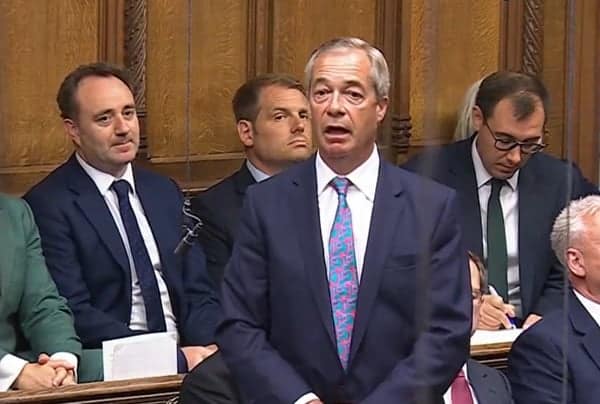
Nigel Farage faces a significant obstacle to his ambitions of reaching Downing Street, with almost a third of voters saying they would consider voting tactically to prevent Reform UK from taking office.
Research by pollsters More in Common found that 32 per cent of the British electorate would look at ways of keeping Reform out of government, highlighting the potential challenge tactical voting could pose to the party’s electoral prospects.
Luke Tryl, director of More in Common, said voters were “terrified” of the prospect of a government led by Farage as tactical voting increasingly shapes political behaviour.
“Tactical voting has begun to play a more decisive role in our politics,” he said.
The willingness to vote tactically was strongest among supporters of parties on the centre-left. Some 54 per cent of Liberal Democrat voters said they would consider voting tactically, compared with 51 per cent of Labour voters and the same proportion of Green supporters.
By contrast, tactical voting was less prevalent among supporters of the Conservatives and Reform. Some 35 per cent of Conservative voters said they would be willing to vote tactically, compared with 30 per cent of Reform supporters.
The figures point to a potentially important dynamic in a future election, particularly in constituencies where Reform is challenging established parties but has not yet built a sufficiently broad electoral base to win outright.
For the Liberal Democrats, the willingness to vote tactically against Reform was particularly pronounced. Some 53 per cent of the party’s supporters said they would be prepared to vote Conservative if doing so would prevent Farage from becoming prime minister.
The findings suggest that Reform’s support could face a countervailing coalition of voters whose primary objective is not necessarily to back a particular party, but to prevent Farage from entering government.
Such tactical voting could become increasingly important in closely fought constituencies, where relatively small shifts between competing parties can determine the winner under the UK’s first-past-the-post electoral system.
For Farage, the challenge is therefore not simply to expand Reform’s support but to persuade voters who are currently motivated by opposition to the party that it represents a viable governing alternative.
Tryl’s warning that tactical voting is becoming more decisive points to a potentially volatile electoral landscape in which headline support for Reform may not translate directly into parliamentary seats.


Leave a Comment