
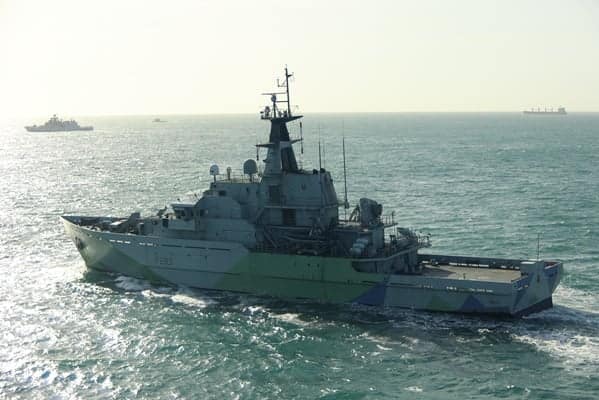
Labour is preparing to reshape Britain’s naval strategy by prioritising drones and autonomous technology over replacing a fleet of ageing warships, in a move that has intensified criticism of the Government’s long-delayed Defence Investment Plan.
Sir Keir Starmer is set to abandon plans to replace much of the Royal Navy’s ageing surface fleet, instead directing investment towards drones and autonomous systems as ministers seek to modernise Britain’s armed forces.
The decision, expected to form part of the long-awaited Defence Investment Plan (DIP), marks one of the most significant changes to British naval policy in decades.
Funding previously earmarked for up to eight Type 83 destroyers and five Type 32 frigates is understood to have been withdrawn, with resources instead redirected towards at least six “common combat vessels” designed to command fleets of uncrewed systems.
The Ministry of Defence argues the shift reflects the changing character of warfare, where drones, autonomous platforms and networked operations are becoming increasingly important alongside traditional naval power.
The new vessels are expected to enter service during the 2030s and will operate as command hubs capable of directing swarms of uncrewed maritime systems.
However, the strategy has prompted concern over whether Britain risks creating capability gaps as existing warships approach retirement.
The Royal Navy’s Type 45 destroyers, which provide the UK’s principal air defence capability at sea, are due to leave service by the end of the next decade. Their planned successor, the Type 83 destroyer, had been expected to form the backbone of the future fleet.
Similarly, the proposed Type 32 frigate programme was intended to expand Britain’s anti-submarine warfare and mine-hunting capabilities while serving as a platform for autonomous technologies.
Critics argue that replacing these programmes with a smaller number of command vessels could leave the Navy with fewer frontline warships at a time of rising geopolitical tension.
Shadow Defence Secretary James Cartlidge described the reported changes as evidence that Labour’s defence ambitions are constrained by limited funding.
He argued that the Government’s Defence Investment Plan contains insufficient additional spending to deliver both modernisation and conventional military capability.
The controversy follows the resignation earlier this month of former Defence Secretary John Healey, who warned that the funding originally allocated to the Defence Investment Plan fell “well short” of what Britain’s armed forces require and risked leaving the country “less safe.
Reports suggest ministers have since increased the package by around £1 billion, although defence analysts continue to question whether this will be sufficient to meet the capability ambitions outlined in the Strategic Defence Review.
The Government insists it is delivering the largest sustained increase in defence spending for a generation and says integrating crewed and uncrewed platforms will produce a more agile and effective Royal Navy.
The Defence Investment Plan is expected to be published before the NATO summit on 7 July, where Britain will seek to demonstrate its commitment to strengthening European security amid Russia’s continuing war in Ukraine.
Its publication is likely to shape not only the future of the Royal Navy but also the wider debate over whether Britain is investing enough to meet an increasingly challenging international security environment.


Leave a Comment