
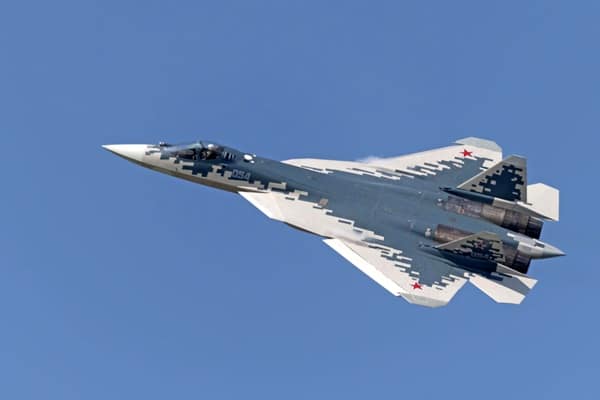
Finland is investigating a suspected Russian airspace violation over the western Gulf of Finland, as a growing number of incidents involving Russian military activity raise tensions along NATO’s eastern flank.
The Finnish Defence Ministry said on August 20 that a Russian aircraft was suspected of entering Finnish airspace over the Baltic Sea.
Defence Minister Antti Häkkänen said an investigation was under way, with the Finnish Border Guard leading the inquiry. Authorities said further details would be released as the investigation progresses.
The aircraft’s type, flight path and the length of time it was allegedly inside Finnish airspace were not immediately disclosed.
The incident comes amid heightened concern among NATO members over Russian military flights and drone activity close to the alliance’s eastern borders.
Finnish authorities previously reported a suspected Russian airspace violation on May 27, when a Russian military aircraft was believed to have entered Finnish airspace near Porkkala while attempting to avoid thunderstorms. Finland’s Air Force conducted an operational flight in response.
NATO countries have repeatedly scrambled fighter aircraft to investigate or intercept unidentified or suspicious Russian military activity in and around alliance airspace.
The latest incident comes as NATO’s eastern flank faces a series of drone-related security alerts.
Earlier on August 20, Romania deployed F-16 fighter jets after an explosive-laden naval drone was detected near the Neptun Deep gas project in the Black Sea.
Romanian President Nicusor Dan blamed Russia for the incident and described the wider pattern of activity as part of a campaign of hybrid warfare.
Days earlier, on August 16, a NATO fighter shot down a drone in Romanian airspace after it entered from the direction of Moldova.
For Finland, which shares a roughly 1,340-kilometre land border with Russia and joined NATO in 2023, any suspected breach of national airspace carries particular significance.
The latest episode is unlikely to be treated in isolation as allied governments monitor what they see as an increasingly assertive pattern of Russian military activity around NATO territory.
Any confirmed violation could further intensify pressure on the alliance to maintain high levels of surveillance and air policing across its eastern and northern approaches.
Finnish officials have so far stopped short of assigning blame beyond identifying the aircraft as suspected Russian, with the investigation expected to establish precisely what happened.


Leave a Comment