
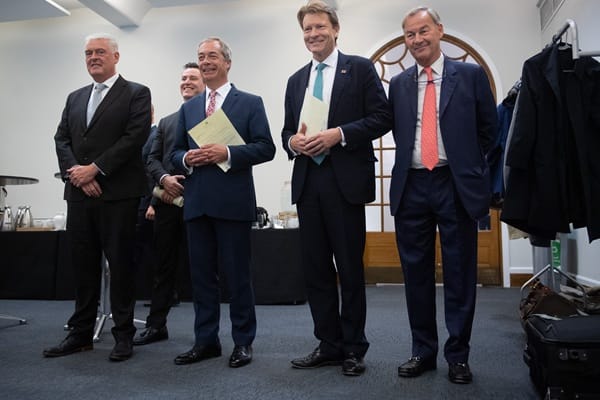
Nigel Farage’s political project is facing a defining test as a breakaway movement attempts to force a reunion of Britain’s fragmented right-wing vote.
Reform UK MP Andrew Rosindell has backed calls for reconciliation after former party colleague Rupert Lowe offered Farage a deal to bring his newly formed Restore Britain movement closer to the Reform fold.
The intervention comes after Labour’s victory in the Manchester mayoral by-election exposed both the strength and weakness of the populist right. Reform candidate Sian Astley secured 111,928 votes, taking 21 per cent of the electorate and finishing second.
But Restore Britain’s Marlon West also attracted significant support, winning 46,289 votes, or 8.7 per cent, in the first round.
For Lowe, the result demonstrated that his breakaway party had political traction — but also highlighted the danger of splitting the anti-Labour vote.
“The next step is how we maximise the chances of delivering the change Britain needs – it means putting personal differences aside,” Lowe said as he issued a public offer to Farage and Reform.
Rosindell, who represents Romford, argued that continued division would hand an advantage to Labour and other progressive parties at the next general election.
“Clearly there’s common ground on lots of issues,” he said, noting that Lowe had originally been elected as a Reform MP under Farage’s leadership.
The Reform MP warned that Britain was moving towards what he described as a dangerous political direction under Labour, with the possibility of future alliances between Labour, the Liberal Democrats and Greens.
“We do somehow have to bring the right of centre in British politics together,” he said.
The potential deal, however, comes with major ideological demands. Lowe has insisted that any agreement must include a commitment to large-scale deportations, tighter immigration controls, action against Islamist extremism and a renewed emphasis on Britain’s Christian heritage.
Rosindell said many of those themes would resonate with Reform supporters, arguing public concern over immigration and cultural change had reached a critical point.
The broader question facing Farage is whether he can turn Reform’s growing popularity into an electoral machine capable of defeating Labour — or whether divisions on the right will once again prevent a breakthrough.
Rosindell said a united movement would ultimately stand behind Farage as prime minister, but the negotiations ahead could prove as difficult as the political battle itself.


Leave a Comment