
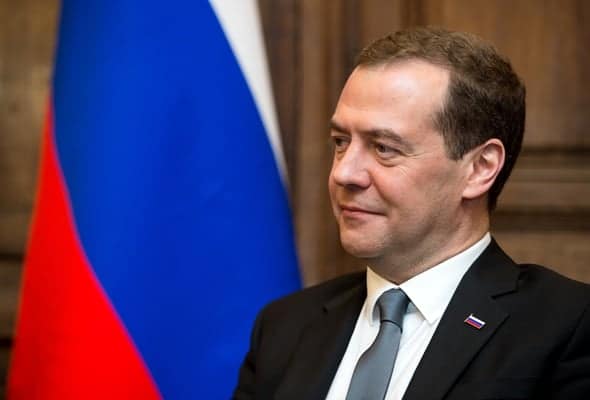
Russia has issued a stark warning that Lithuania could “disappear from the map of the world” if Moscow attacked the NATO member, as tensions escalate over discussions about potentially hosting US nuclear weapons.
Dmitry Medvedev, deputy chairman of Russia’s Security Council and a close ally of President Vladimir Putin, made the threat amid a debate in Lithuania over whether to remove constitutional restrictions on nuclear weapons and foreign military bases.
Mr Medvedev questioned whether other NATO members would invoke Article 5, the alliance’s collective-defence clause, if Russia attacked Lithuania, suggesting that doing so could risk a wider global conflict.
The warning follows comments from Lithuania’s Defence Ministry in June that it was holding discussions with the US about nuclear weapons. Media reports have suggested the talks could include the possible deployment of US bombers capable of carrying nuclear weapons.
Read more related news:
Germany orders troops into Lithuania as Russia threatens NATO’s Eastern flank
Warsaw warns the next months ‘could truly be critical’ for NATO
Explosions rock Poland as Russian ‘missile drones’ cross the border
Poland warns Russia could face rapid defeat in direct NATO war
Lithuania’s constitution currently prohibits both weapons of mass destruction and foreign military bases from being stationed on its territory.
But Juozas Olekas, speaker of the Seimas, Lithuania’s parliament, has indicated that lawmakers are considering removing the restrictions as the country reassesses its security needs.
The move has drawn a warning from Moscow. Kremlin spokesman Dmitry Peskov has previously said that stationing nuclear weapons in Lithuania would represent a serious escalation and would make the Baltic state a potential target for Russian nuclear weapons.
The Kremlin has nevertheless maintained that Russia does not threaten European countries. Putin has repeatedly said Moscow has no intention of attacking European states, while warning that the deployment of European military personnel in Ukraine could amount to direct European participation in the war against Russia.
Lithuania’s position makes it particularly sensitive to any confrontation with Moscow. The country sits on NATO’s eastern flank between Russia’s Kaliningrad exclave and Belarus, both of which have close military ties to Moscow.
Vilnius has significantly increased defence spending since Russia’s full-scale invasion of Ukraine in February 2022 and has sought to strengthen its position within NATO.
Lithuanian political parties agreed in July to pursue the removal of the constitutional prohibition on nuclear weapons and foreign military bases. Any constitutional amendment would require a two-thirds majority in two separate parliamentary votes.
President Gitanas Nauseda has said there are no immediate plans to station nuclear weapons in Lithuania, but argued that removing the constitutional restriction would give the country greater flexibility if the security environment deteriorated.
The government is also preparing to host a permanent German brigade, with the force expected to be fully stationed in Lithuania by 2027.
The nuclear debate comes as NATO’s Baltic members continue to strengthen their defences amid fears that Russia could test the alliance’s commitment to collective defence. Medvedev’s warning adds a further layer of nuclear brinkmanship to an increasingly tense security environment on NATO’s eastern frontier.


Leave a Comment