
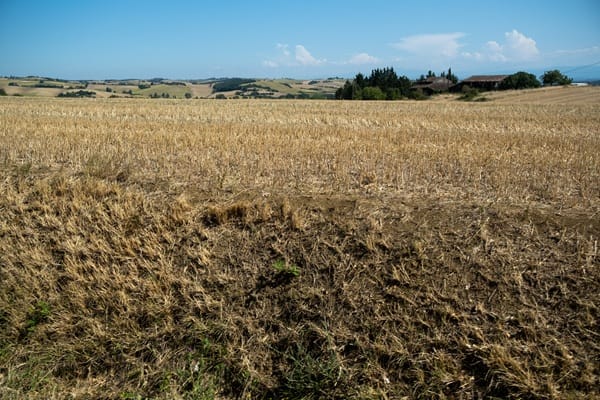
Britain is facing a fresh food inflation shock as extreme heat and drought across the UK and Europe threaten harvests of fruit, vegetables and grain, raising the prospect of higher supermarket prices well into 2027.
The Food and Drink Federation warned that increasingly severe weather is disrupting supplies of key agricultural commodities, with shortages already emerging in some UK-grown crops and poor grain harvests pushing up the cost of animal feed.
The pressure is expected to work its way through the food supply chain over the coming months, potentially reversing some of the progress made in bringing food inflation under control.
Dr Liliana Danila, chief economist at the FDF, said producers across much of Europe were becoming increasingly concerned about the availability of agricultural inputs.
“Competition for fewer resources will in turn push up the price of ingredients for manufacturers,” she said.
The warning comes as another heatwave approaches the UK, with the Met Office forecasting temperatures in the mid-30s in parts of the country on Thursday.
The immediate concern is increasingly tight supply.
UK production of crops including broccoli and cherries has already come under pressure, while drought and extreme temperatures across continental Europe threaten supplies of other ingredients on which British manufacturers and retailers depend.
The consequences extend beyond the fruit and vegetable aisles.
Poor grain harvests are increasing the cost of animal feed, creating a second-round effect for meat and dairy producers. Higher feed costs can encourage farmers to reduce herd sizes, tightening supplies and increasing prices further down the chain.
The Agriculture and Horticulture Development Board has already reported disruption to milk production, with heat-stressed cattle producing lower yields while deteriorating grass-growing conditions have made grazing more difficult.
The result is a food system being squeezed simultaneously from several directions: lower crop yields, higher input costs, rising energy and transport expenses and continuing geopolitical disruption.
David Thomson of FDF Scotland told the BBC that price rises were “inevitable”, citing “significant concerns” over the availability of a wide range of fruit and vegetables.
For food manufacturers, the timing is particularly uncomfortable.
Producers are already dealing with higher costs linked to the wars in Ukraine and Iran, while consumers remain sensitive to even modest increases in grocery prices after several years of elevated food inflation.
Dr Danila said manufacturers had absorbed costs where possible but warned that the latest supply shock would be increasingly difficult to contain.
“The UK’s food and drink manufacturers work hard to absorb costs where they can,” she said, “but are already grappling with rising costs as a result of war in Ukraine and in Iran.”
She added that the additional pressure created by reduced crop yields was expected to be reflected in retail prices into next year.
Retailers are attempting to limit the impact.
Andrew Opie, director of food and sustainability policy at the British Retail Consortium, said retailers were accustomed to managing supply disruptions and would seek alternative sources where possible.
But climate volatility is making that task progressively harder.
“Extreme weather, including drought, can affect crop yields and place upward pressure on prices,” he said.
The underlying problem is that climate shocks are no longer occurring as isolated agricultural events. When several major producing regions experience extreme heat or water shortages at the same time, international markets have fewer alternative sources to fall back on.
For Britain, which imports substantial quantities of food and agricultural inputs, that creates an additional vulnerability.
The immediate effect may be higher prices for individual crops. The broader risk is that repeated weather shocks become embedded in food producers’ cost structures, making inflation more persistent even after the original heatwave has passed.
That would complicate the task facing policymakers already trying to bring inflation under control.
The next test will come after the summer harvests. If crop failures translate into tighter supplies of grain, fruit and vegetables — while dairy and livestock producers continue to face heat-related losses — Britain could enter 2027 with a food inflation problem that has little to do with consumer demand.
The threat is no longer simply that British shoppers will pay more for a punnet of cherries or a head of broccoli.
It is that a hotter, drier climate is beginning to rewrite the economics of what Britain can afford to put on its shelves.


Leave a Comment