
Volodymyr Zelensky says Russian forces have repeatedly targeted Ukraine’s energy infrastructure despite Donald Trump’s announcement of an energy truce, while Romanian F-16s shoot down two drones over national waters.
Russia has launched 76 attacks on Ukrainian energy and oil and gas facilities since Donald Trump announced an energy ceasefire, according to Volodymyr Zelensky, intensifying questions over Moscow’s commitment to a truce that the US president has so far struggled to enforce.
The Ukrainian president said tens of thousands of families had been left without electricity as Russian forces continued striking the country’s energy infrastructure, despite Trump’s announcement on October 11 that Russia and Ukraine had agreed to halt attacks on energy targets.
“The Russians are trying to cause a blackout,” Zelensky said on October 18, arguing that Washington needed to recognise that Moscow was making no meaningful concessions.
“It is Russia that must face pressure to give peace a chance,” he added.
Read more related news:
Trump ‘surrenders to Putin’ waives Russian sanctions betraying Ukraine and defies congress
Musk went to Trump, then Trump reportedly agreed, then both denied it, so who is lying over Starlink?
Trump’s diesel deal ‘is a slap in the face’ triggering EU rage ‘as he has put us all in a difficult position’
The allegations expose a growing fault line in Trump’s efforts to broker an end to the war: while the US president has pressed Kyiv to stop attacking Russian oil facilities, Ukraine says Moscow has continued to target its power network, leaving civilians facing the prospect of further disruption as winter approaches.
Trump announced the proposed energy truce without publicly defining its precise scope, taking Ukrainian officials by surprise. The Kremlin subsequently said the agreement’s terms had not been specified, while Russian attacks on Ukrainian energy infrastructure continued.
Zelensky has said Kyiv is prepared to observe a comprehensive energy ceasefire if Russia does the same. He also said Ukrainian forces had refrained from attacking Russian refineries for several consecutive days after Trump’s announcement.
The Ukrainian government argues that the continued Russian strikes demonstrate the need for Washington to put pressure on Moscow rather than demand further restraint from Kyiv.
Trump, however, has so far avoided directly blaming Russian President Vladimir Putin for the reported violations. His administration has also threatened to restrict intelligence-sharing and military assistance unless Ukraine halts attacks on Russian oil refineries, according to reports cited by the Kyiv Independent.
The competing demands have exposed the difficulty of implementing an energy truce without an agreed definition of the targets covered, a monitoring mechanism or clear consequences for violations.
For Ukraine, strikes on Russian refineries and export infrastructure are intended to disrupt a major source of revenue supporting Moscow’s war effort. Russia’s attacks on Ukrainian power plants and substations, meanwhile, threaten electricity supplies and heating for civilians.
The two sides’ campaigns against energy infrastructure have therefore become both a military strategy and a source of pressure on the wider population. The latest allegations came as Romania reported that two fighter jets had shot down two drones over its national waters in the Black Sea, underscoring the risks posed by Russia’s sustained aerial campaign against Ukraine.
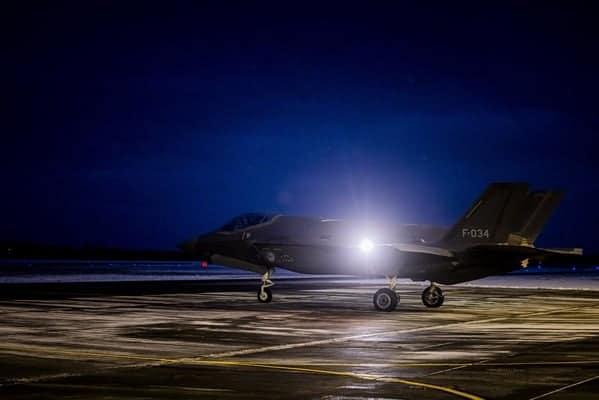
Romania’s defence ministry said on October 17 that its radar had detected a group of aerial targets approximately 120 kilometres east of Snake Island. Two F-16 fighter jets were scrambled from Borcea Air Base at 5.43pm local time the following day, according to the ministry’s account of the incident.
The jets shot down two drones between 6.01pm and 6.05pm over Romanian national waters. The ministry said the aircraft were jet-powered drones belonging to the Geran family, which Russia frequently uses in attacks on Ukrainian targets. It did not explicitly identify the country responsible for the two drones.
Romania, a member of Nato, has repeatedly faced incidents involving Russian drones entering or approaching its airspace during attacks on neighbouring Ukraine. Each incursion creates the potential for a dangerous miscalculation between Russian forces and the military alliance.
The latest incident does not, by itself, establish that Moscow deliberately targeted Romania. It nevertheless highlights how Russia’s attacks on Ukraine can carry military risks beyond the immediate battlefield.
Geran-family drones are among the faster systems deployed in Russia’s campaign, with some models reportedly capable of reaching speeds of up to 600km/h. Their speed and flight characteristics can complicate interception, particularly when air forces must conserve more expensive air-to-air missiles.
Ukraine has increasingly used its own F-16 aircraft to intercept Russian drones. Zelensky told journalists on October 17 that Ukrainian warplanes were responsible for bringing down approximately 55 to 60 per cent of Russian jet-powered drones, according to the Kyiv Independent.
The immediate danger for Ukraine remains the vulnerability of its electricity and heating systems. Repeated strikes can leave households without power while forcing engineers to repair damaged infrastructure under continued threat.
The reported 76 attacks since Trump’s announcement will add to Kyiv’s argument that a ceasefire cannot rely on unilateral restraint. Ukraine says it is willing to stop targeting energy facilities, but only if Russia commits to the same restrictions.
Moscow’s position that the proposed truce lacks a clearly defined scope leaves uncertainty over which attacks would constitute a violation and how compliance could be verified.
For Trump, that ambiguity presents a diplomatic challenge. A ceasefire announcement can create momentum, but without agreed terms and a mechanism for accountability, it risks becoming a source of competing accusations rather than a durable reduction in hostilities.
For Nato, meanwhile, the drone incident in Romanian waters reinforces the danger that the conflict’s aerial campaign could spill beyond Ukraine’s borders, even without evidence of a deliberate attack on alliance territory.
The central test is whether Washington can turn its proposed energy truce into an enforceable arrangement — and whether pressure will be applied consistently to both sides.
For Ukrainian households facing power cuts, and for neighbouring Nato states monitoring Russian drones near their borders, the distinction between an announced ceasefire and one that is actually observed remains critical.


Leave a Comment