
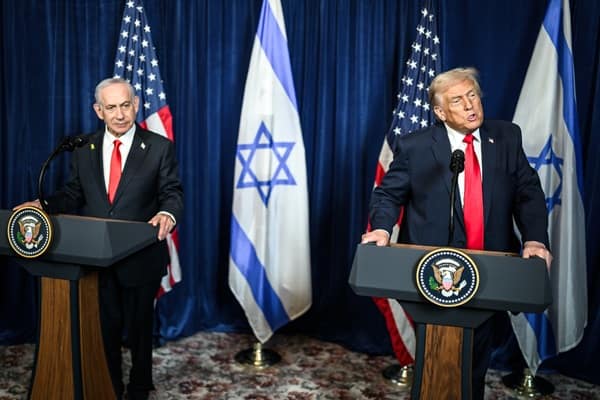
The United States and Israel have decisively launched what President Donald Trump has characterised as “major combat operations” against Iran, which has sparked retaliatory missile attacks across the Gulf region.
Trump confirmed the commencement of joint US-Israeli strikes shortly after 6 AM UK time, boldly calling for regime change in Tehran.
This development highlights the gravity of the conflict and its potential impact on regional stability, urging policymakers and the public to stay informed.
In his address, the US president made it clear that Iran’s “menacing activities” are a direct threat to American troops, overseas bases, and global allies.
Iran’s retaliation targeted multiple US and allied facilities across the Gulf region, with missile strikes near Abu Dhabi, Dubai, Manama, Juffair, Doha, Riyadh, Jerusalem, and Kuwait, emphasising the widespread regional impact.
Israeli Prime Minister Benjamin Netanyahu emphasised that Iran must not be permitted to obtain nuclear weapons, denouncing Tehran as a “murderous terrorist regime.” Trump urged the Iranian populace to “take over” their government, asserting, “It will be yours to take. This will probably be your only chance for generations.”
US and Israeli officials announced the operations as ‘Operation Epic Fury’ and ‘Operation Roar of the Lion,’ signalling a major escalation that could alter regional power balances and security policies.
Images circulating online have shown significant damage to compounds in Tehran, including sites thought to house the offices of Iran’s Supreme Leader Ali Khamenei and the Iranian presidential administration, underscoring the gravity of the strikes.
Although Iranian authorities have not released detailed casualty figures, the damage to key sites and Iran’s internet disconnection suggest a significant escalation, which could destabilise the region further and lead to additional retaliations or defensive measures. This underscores the importance of regional stability and the need for vigilance among policymakers and the public.
The United Kingdom has confirmed its non-participation in the strikes, aiming to reassure the public and policymakers about the current scope of involvement.
The Foreign, Commonwealth & Development Office has advised British citizens in Gulf cities to shelter in place immediately, as Iran’s government may restrict internet access to control communication during the attacks.
The British Foreign, Commonwealth & Development Office stated on Saturday: “Due to reported missile attacks, British nationals in Bahrain, Kuwait, Qatar and the United Arab Emirates (UAE)should immediately shelter in place.
“Remain indoors in a secure location, avoid all travel and follow instructions from the local authorities.”
Military analysts warn that the ongoing missile exchanges could escalate into a wider regional conflict, raising concerns about stability and future security in the Middle East if further missile launches or counterstrikes occur.


Leave a Comment